
































































 Author: Radomskyi Maksym Vasyliovych
SEAT cars are built in Spain: Ibiza, Arona and Leon are assembled at the main SEAT S.A. plant in Martorell near Barcelona, from which 470,347 group vehicles rolled out in 2025. The Ateca crossover was produced at the Škoda plant in Kvasiny (Czechia), and Tarraco at the Volkswagen plant in Wolfsburg (Germany), but both models have already been discontinued. The SEAT brand has been part of Volkswagen Group since 1986, and since 2018 a separate CUPRA brand from the same company SEAT S.A. has operated alongside it.
Contents
- Where SEAT is made in 2026
- Which SEAT model is built at which plant
- How SEAT differs from CUPRA
- What will happen to the SEAT brand after 2030
- How SEAT ended up in Volkswagen Group
- What to install on Leon and Ateca
Where SEAT is made in 2026
The main production base is the plant in Martorell, about 30 km from Barcelona. SEAT S.A. has three production sites in Catalonia: Martorell, El Prat de Llobregat and Barcelona (Zona Franca). According to official data, in 2025 SEAT S.A. produced 584,693 vehicles worldwide, of which 470,347 were built in Martorell, together with the Audi A1, which is assembled there as well. Output held up even though line 1 was temporarily stopped for conversion for electric vehicles.
Some group models are produced outside Spain: at Volkswagen, Audi and Škoda plants. So the answer to the question “where was my SEAT made” depends on the model and the year of production.
Which SEAT model is built at which plant
| Model | Plant | Status as of 2026 |
|---|---|---|
| SEAT Ibiza | Martorell, Spain | updated version on sale since January 2026 |
| SEAT Arona | Martorell, Spain | updated version on sale since January 2026 |
| SEAT Leon (hatchback and Sportstourer) | Martorell, Spain | in production; a full hybrid is announced for 2028 |
| SEAT Ateca | Kvasiny, Czechia (Škoda plant, one line with Karoq) | according to Motor.es, production ended on 30 April 2026, no successor planned |
| SEAT Tarraco | Wolfsburg, Germany (alongside the VW Tiguan) | discontinued in Q2 2024; its place in the range was taken by the CUPRA Terramar |
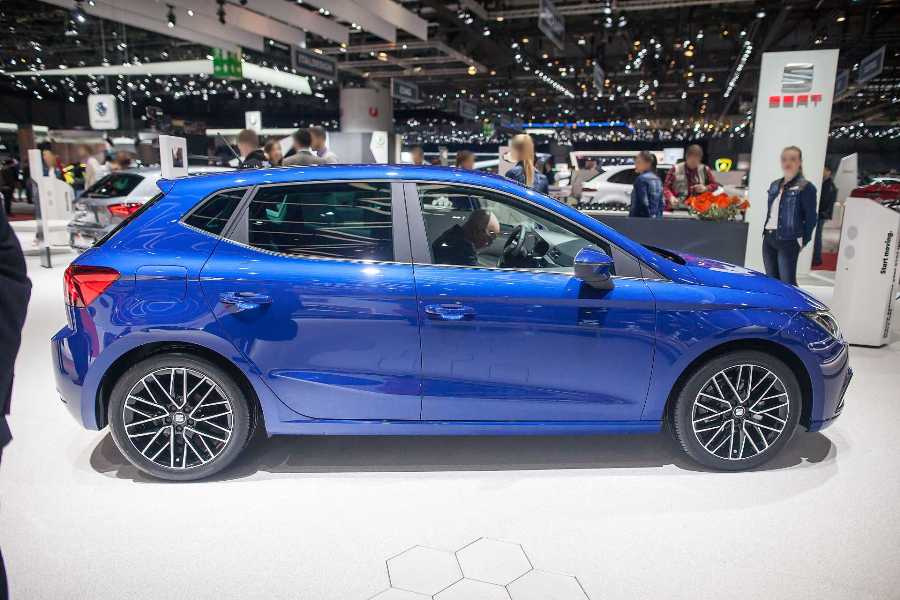
Ibiza and Arona are SEAT’s bestsellers: in 2025 customers received 94,800 Ibiza and 72,400 Arona. Across five generations, more than 6 million Ibiza have been sold, and Arona since 2017 — over 750 thousand. On 10 December 2025, assembly of the updated versions of both models began in Martorell. Details are in the reviews SEAT Ibiza 2026 and SEAT Arona 2026.
The fourth-generation Leon went onto Martorell line 2 in 2020 together with the CUPRA Leon and CUPRA Formentor. Ateca has been assembled in Czechia since 2016, and the seven-seat Tarraco since 2018 — in Germany.
How SEAT differs from CUPRA
CUPRA used to be the sport versions of SEAT; since 2018 it has been a separate brand of the same company SEAT S.A. Both brands share the group’s plants, platforms and engines, but CUPRA is responsible for pricier, sportier and electric models. In 2025 CUPRA surpassed SEAT in sales for the first time: 328,800 vehicles versus 257,400. Together the brands delivered 586,300 cars — a company record.
CUPRA models are produced in different countries: Formentor and Leon — in Martorell, the Terramar crossover — at the Audi plant in Győr (Hungary), the Born electric car — in Zwickau (Germany), Tavascan — in China at Volkswagen Anhui. In 2026, the group’s small electric-vehicle family is set to start in Martorell, including the CUPRA Raval.
What will happen to the SEAT brand after 2030
In September 2026, the German press reported that Volkswagen Group may drop the SEAT brand. The group’s official position is that no decision has been made yet: the brand’s continued existence after the current model cycle is being assessed, and different scenarios are possible after 2030. Volkswagen Group CEO Oliver Blume linked this to tighter regulation and the cost of switching to electric vehicles. At the same time, the group emphasizes that SEAT S.A. has a “stable future,” and the main driver of its growth remains CUPRA; the Martorell plant is being converted for electric vehicles.
Already planned SEAT models are coming out on schedule: mild hybrids (MHEV) for Ibiza and Arona — in 2027, a full hybrid for Leon — in 2028, updates for Leon and Leon Sportstourer — in 2029. SEAT & CUPRA CEO Markus Haupt in January 2026 called SEAT the “cornerstone of the company.”
How SEAT ended up in Volkswagen Group
- 1950 — on 9 May, SEAT was founded with the participation of the state holding INI, Spanish banks and Fiat, which provided the technology;
- 1953 — production began of the first model, the SEAT 1400, a licensed Fiat 1400;
- 1957 — the SEAT 600 was launched, which made cars массовым in Spain;
- 1982 — after Fiat left the partnership, SEAT signed a cooperation agreement with Volkswagen;
- 1986 — Volkswagen bought 51% of the shares, the same year — 75%, and by 1990 it gained full control;
- 2016–2018 — the Ateca, Arona and Tarraco crossovers appeared;
- 2018 — CUPRA became a separate brand;
- 2025 — record combined sales of SEAT and CUPRA — 586,300 vehicles.
What to install on Leon and Ateca
Leon and Ateca are the most common SEATs in Ukraine, and there are model-specific accessories for them. For SEAT Leon 2013–2020, Stingray Premium rubber mats and a stainless-steel rear bumper edge are suitable — it protects the paintwork when loading the trunk. For SEAT Ateca 2016+, there are aluminum side steps Fullmond and Allmond Grey. All models of the brand are in the SEAT tuning section.
We deliver with Nova Poshta throughout Ukraine.