


































































 Author: Radomskyi Maksym Vasyliovych
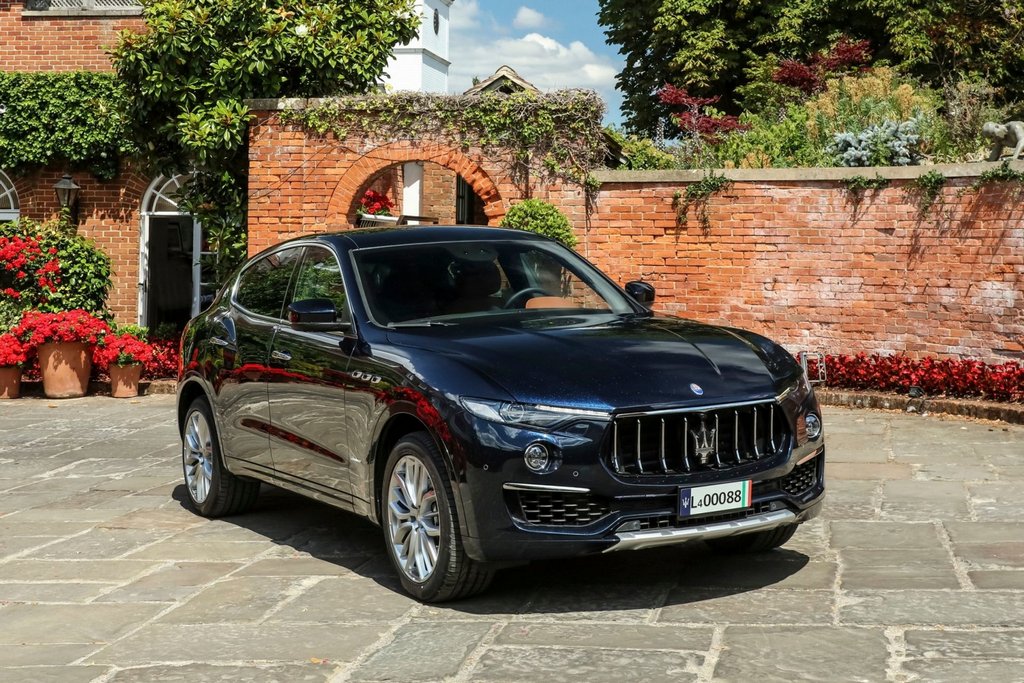
Maserati Levante is the first crossover in the brand’s history: it was unveiled on March 1, 2016 at the Geneva Motor Show, produced at the Mirafiori plant in Turin, and production ended on March 31, 2024. Over eight years, the Levante came with petrol V6 3.0 l (350 and 430 hp), V8 3.8 l (530 and 580 hp), diesel V6 3.0 l (250 and 275 hp), and a 2.0 l hybrid with 330 hp — always with the 8-speed ZF automatic and all-wheel drive. There is no direct successor yet: Maserati has announced a new Levante as a concept, while the smaller Grecale remains on sale.
Contents
- What the Maserati Levante is and its dimensions
- Which engines were fitted to the Levante 2016–2024
- What changed in the Levante over the years
- Why the Levante was discontinued and who succeeds it
- What to check when buying a used Levante
- How to protect the Levante’s body and interior
What the Maserati Levante is and its dimensions
The Levante is a large E-segment crossover, a rival to the Porsche Cayenne, BMW X5, and Mercedes-Benz GLE. Technically, it is closely related to the sixth-generation Ghibli and Quattroporte sedans: from the Quattroporte it borrowed the ZF 8HP 8-speed transmission, and the drivetrain is all-wheel drive only, with a rear limited-slip differential.
| Parameter | Value |
|---|---|
| Length | 5 003 mm |
| Width (without mirrors) | 1 968 mm |
| Height | 1 679 mm |
| Wheelbase | 3 004 mm |
| Trunk volume | 580 l |
| Curb weight | 2 109–2 205 kg |
| Drag coefficient | 0,33 |
Which engines were fitted to the Levante 2016–2024
Over eight years, the range changed several times, but the transmission (8-speed ZF automatic) and all-wheel drive remained on all versions. The power figures below are for European versions.
| Engine | Versions | Power | Torque |
|---|---|---|---|
| Petrol V6 3.0 l, twin turbochargers | Levante, GranLusso, GranSport, from 2022 — GT and Modena | 350 hp | 500 N·m |
| Petrol V6 3.0 l, uprated | Levante S, from 2022 — Modena | 430 hp | 580 N·m |
| Petrol V8 3.8 l | GTS, from 2022 — Modena S | 530 hp | 730 N·m |
| Petrol V8 3.8 l, uprated | Trofeo | 580 hp | 730 N·m |
| Diesel V6 3.0 l (VM Motori) | Levante Diesel | 250 or 275 hp | up to 600 N·m |
| Petrol 2.0 l, 48 V mild hybrid | Levante Hybrid / GT Hybrid | 330 hp | 450 N·m |
For the US market, the same V8 engines were listed as 550 and 590 hp — this is due to differences in measurement methodology and market-specific tuning, not separate engines. The Trofeo accelerates to 100 km/h in 3.9 s and was the fastest Levante version.
What changed in the Levante over the years
The Levante never received a full generational change — only model updates:
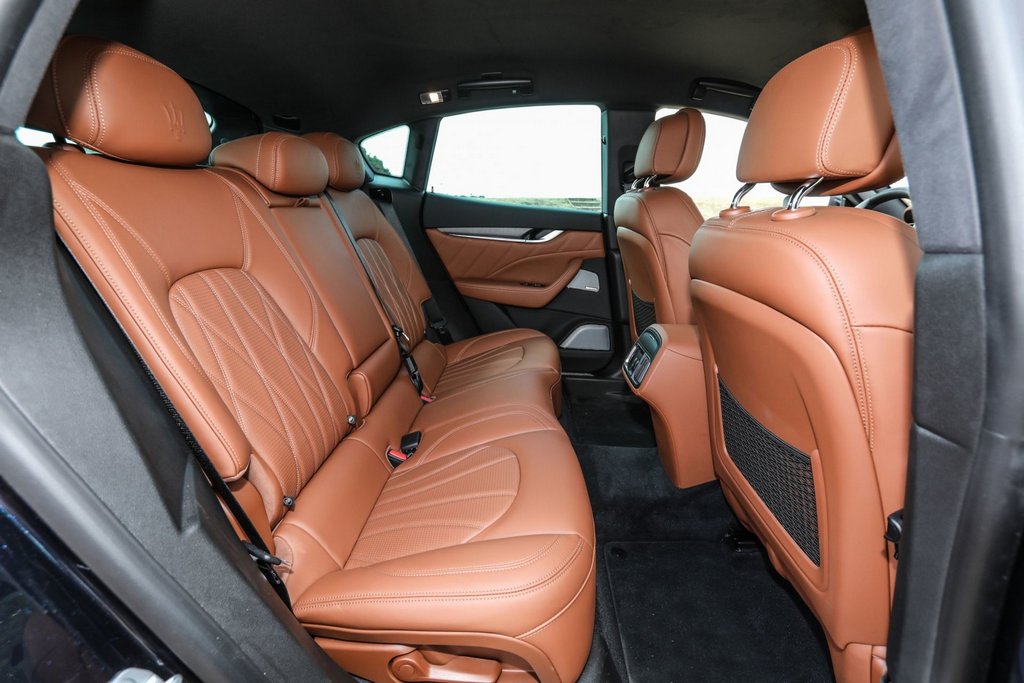
- 2018 model year. The hydraulic power steering was replaced with electric, the GranLusso (more leather and wood in the cabin) and GranSport (sportier bumpers and seats) trims appeared, and multimedia came with an 8.4-inch screen.
- 2019 model year. The range was expanded with V8 versions: Levante GTS (world premiere — the Goodwood Festival of Speed in July 2018) and Levante Trofeo. The multimedia graphics and the rotary control selector were updated.
- 2021 model year. Facelift: a new grille, boomerang-shaped rear lights like on the 3200 GT coupe, Android-based multimedia, and an 8.4-inch screen with higher resolution (unlike the Ghibli and Quattroporte, the Levante did not get the wide 10.1-inch screen). The diesel was dropped in many markets.
- Spring 2021. The Levante Hybrid was introduced: a 2.0-liter petrol engine with a 48-volt system, 330 hp and 450 N·m; production for Europe started in June 2021. More details are in the Levante Mild Hybrid review.
- 2022 model year. New trim names: GT, Modena, Modena S, and Trofeo instead of GranLusso and GranSport. About the updated version — in the updated Levante review.
Why the Levante was discontinued and who succeeds it
The last Levante rolled off the Mirafiori line on March 31, 2024. Stellantis did not name an official reason; at its peak the plant assembled up to 25 Levante per day, and after the model was stopped, Maserati’s daily output at Mirafiori fell to eight cars. That same year, the sixth-generation Quattroporte was also discontinued. Now the crossover side of the lineup is carried by the mid-size Grecale, assembled in Cassino.
The press expected an electric Levante successor in 2027, but after Stellantis scaled back investments in 2025, the plans changed. For now, only this is known: Maserati is preparing a concept that will be shown in December 2026 in Modena, and it will take the place of the large crossover. Engines, platform, dimensions, and the sales date have not been announced — everything known to date is compiled in the article “A new Maserati concept will preview the next Levante and Quattroporte: what we know about the future models”.
What to check when buying a used Levante
With Levante production halted, 2016–2024 cars are now available only on the used market. Before buying, it is worth checking:
- Service history. A luxury crossover with high-output engines is sensitive to missed maintenance — a car with a complete service record usually ends up cheaper than one that “fell out of warranty” with no documentation.
- Air suspension. The car should sit level after a night in the parking lot, and ride-height changes should work without errors. Air-system repairs are among the most expensive cost items.
- Electronics. The most common owner complaints are multimedia freezes and sensor/camera errors. Check all screens, the surround-view cameras, parking sensors, and keyless entry.
- Recall campaigns. Completed actions can be checked by VIN at the dealer or in the NHTSA database for US cars.
- Engine and transmission. Look for signs of oil leaks, and check the shifting of the 8-speed automatic on a warmed-up car. Diesel and hybrid used cars are less common than petrol V6 versions.
- Brakes and tires. On a heavy crossover with powerful engines they wear quickly, and owners complain about uneven tire wear — this is a reason to check alignment.
The most common used-market choice is the 350 or 430 hp petrol V6: it is cheaper to maintain than the V8 and does not have the diesel’s particulate-filter issues. Another look at the model is in the article “Maserati Levante: an updated look at the luxury crossover”.
How to protect the Levante’s body and interior
The Levante’s large wheels and low sills quickly pick up dirt and small stones, and a light interior shows shoe marks. The most practical solution is Premium mud flaps for the factory wheel arches, EVA mats for the cabin and trunk that are easy to wash, and side steps for easier entry. For trips with luggage, a roof basket with crossbars will come in handy. Everything available for this model is collected in the Maserati Levante tuning section, and for other models of the brand — in the Maserati tuning section.
We deliver via Nova Poshta across Ukraine.