

































































 Author: Radomskyi Maksym Vasyliovych
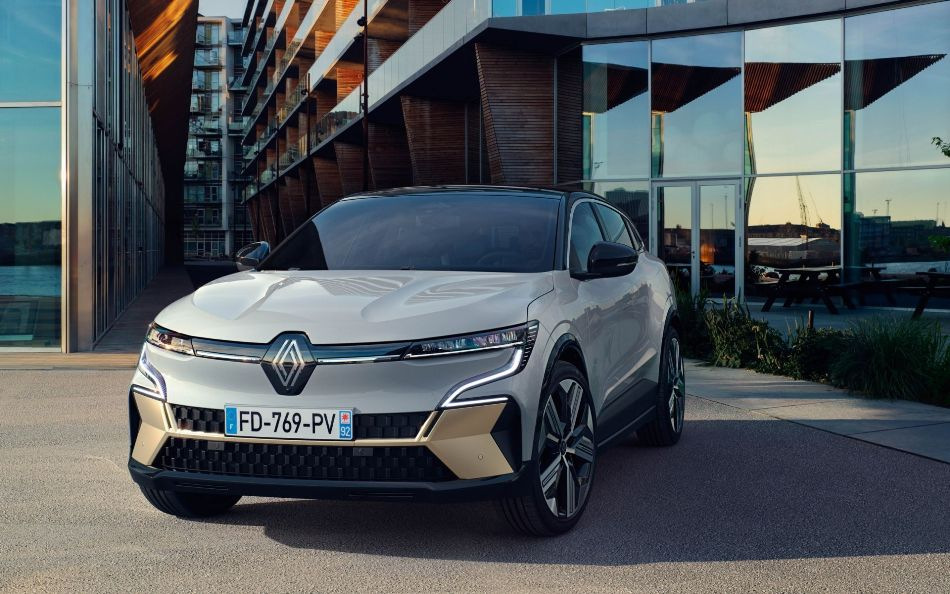
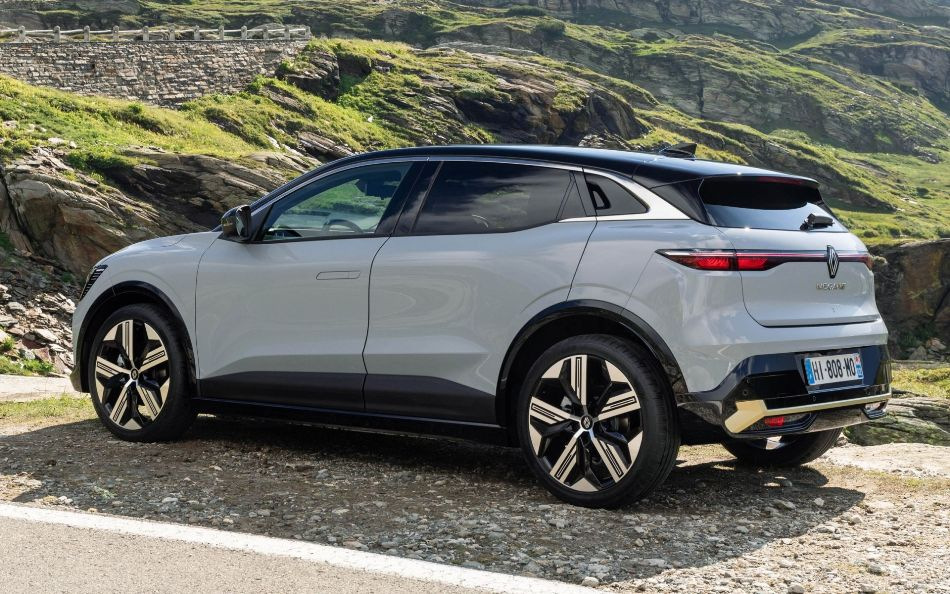
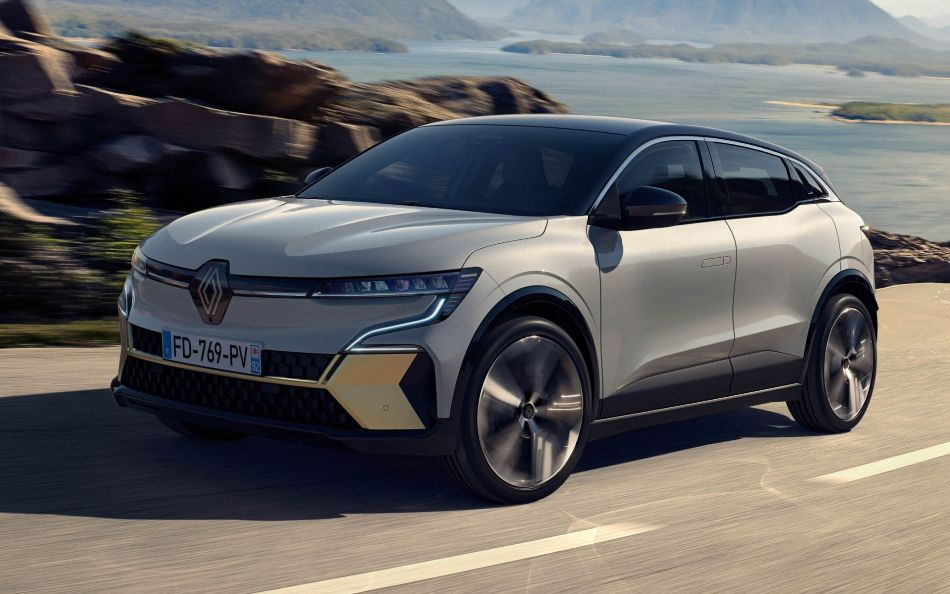
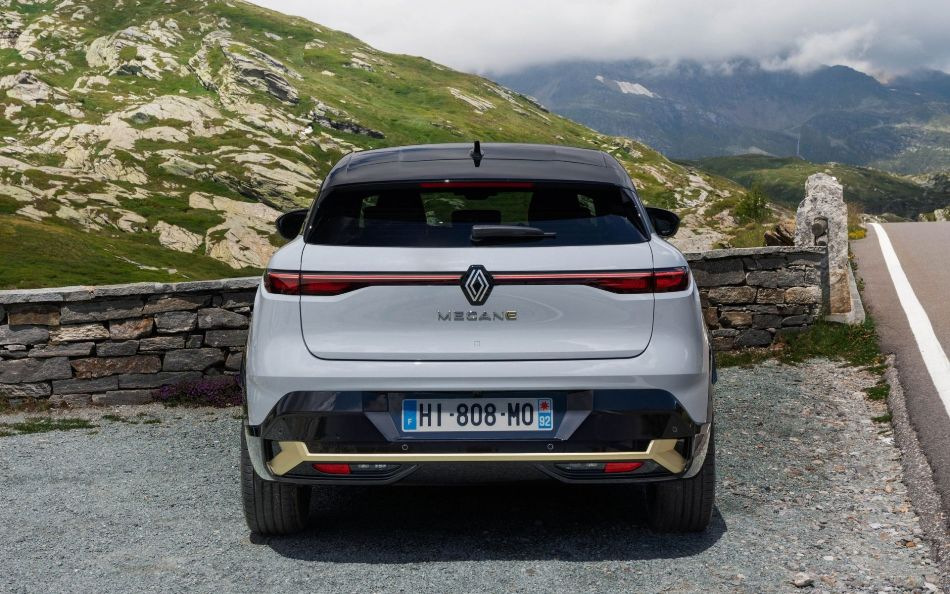
Renault Megane E-Tech Electric is a five-door compact-class electric hatchback that Renault has been producing since 2022 at the Douai plant (France) on the CMF-EV platform, shared with the Nissan Ariya. At launch, two motors were offered — 96 kW (130 hp) and 160 kW (218 hp) — and two batteries, 40 and 60 kWh, with ranges of 300 and up to 470 km WLTP. In 2025, the lineup was reduced to a single 60 kWh version with 220 hp, and on June 22, 2026 Renault unveiled a facelift with a 67 kWh LFP battery, a range of over 500 km, and 165 kW fast charging. Below are the specifications by version, charging details, and what to check when buying a used Megane E-Tech.
Contents
- What Megane E-Tech Electric is and how it differs from the regular Megane
- Which motors and batteries Megane E-Tech has
- Technical specifications by version
- How Megane E-Tech charges and how long it takes
- What changed in 2024, 2025, and 2026
- Interior, OpenR Link, and safety systems
- Megane E-Tech in Ukraine: what to check before buying
- Which accessories people fit to the Megane E-Tech
What Megane E-Tech Electric is and how it differs from the regular Megane
Despite the name, the electric Megane shares no body panels with the gasoline or diesel Megane IV hatchback. It was unveiled at the IAA motor show in Munich in September 2021, and went on sale in Europe in February 2022. The body is 4,199 mm long — shorter than the Megane IV — but the 2,685 mm wheelbase is longer, and the seating position is higher: something between a hatchback and a compact crossover. The 110 mm-thick battery sits in the floor, the trunk is 440 L, and curb weight is 1,624–1,650 kg.
In 2023, the Douai plant built 54,629 Megane E-Tech units; in 2024–2025, when the cheaper Renault 5 and Scenic E-Tech on the same platform arrived, volume fell to 30,260 and 17,660 units — so the model was updated for 2026.
Which motors and batteries Megane E-Tech has
There is one electric motor, a wound-field synchronous unit (no rare-earth magnets), with front-wheel drive only:
- EV40 130hp — 96 kW (130 hp), 250 Nm, 40 kWh battery, range up to 300 km WLTP. Sold in 2022–2024, discontinued in 2025.
- EV60 220hp — 160 kW (218–220 hp), 300 Nm, 60 kWh, up to 470 km WLTP (468 km for 2025 models), 0–100 km/h in 7.4 s, top speed 160 km/h. The most common version; in the UK and a number of markets it is the only one.
- 2026 facelift — the same 160 kW motor, but a new 67 kWh lithium-iron-phosphate (LFP) battery, range over 500 km.
Pre-facelift batteries are nickel-manganese-cobalt (NMC), liquid-cooled. Traction battery warranty is 8 years or 160,000 km with at least 70% capacity remaining.
Technical specifications by version
| Parameter | EV40 130hp (2022–2024) | EV60 220hp (2022–2025) | Facelift 2026 |
|---|---|---|---|
| Motor | 96 kW / 130 hp, 250 Nm | 160 kW / 220 hp, 300 Nm | 160 kW / 220 hp, 300 Nm |
| Battery | 40 kWh, NMC | 60 kWh, NMC | 67 kWh, LFP |
| WLTP range | up to 300 km | up to 470 km (468 km in 2025) | over 500 km |
| DC fast charging | up to 85 kW | up to 130 kW | up to 165 kW, 15–80% in 24 min |
| On-board AC charger | 7 kW (22 kW option) | 7 kW; from 2025 — 11 kW (22 kW option) | bi-directional, V2L/V2G |
| 0–100 km/h acceleration | 10.0 s | 7.4 s | 7.4 s |
| Top speed | 160 km/h | ||
| Length / width / height | 4 199 / 1 768 / 1 505 mm | height +20 mm | |
| Wheelbase | 2 685 mm | ||
| Trunk | 440 L | ||
| Curb weight | 1 624–1 650 kg | not announced | |
How Megane E-Tech charges and how long it takes
The connector is CCS2, on the left side in the front fender. On a DC fast charger, the version with the 60 kWh battery accepts up to 130 kW: Renault claims about 300 km of range in 30 minutes, and 15–80% takes roughly 32 minutes. For the 40 kWh version, the limit is 85 kW. The updated 2026 car with the LFP battery charges at up to 165 kW, and the same 15–80% takes 24 minutes — about a quarter faster.
With AC charging, it depends on the model year. Up to 2025, the standard on-board charger was a single-phase 7 kW unit (60 kWh — overnight from a home wallbox), with a three-phase 22 kW unit as an option, and in some countries as standard. From March 2025, a three-phase 11 kW unit became standard, with 22 kW remaining optional; at the same time V2L (powering devices up to 3.7 kW) and V2G via the Mobilize Powerbox Verso station appeared. A heat pump has been standard on all versions since 2024 and adds up to 9% range at temperatures below +10 °C. Regeneration is controlled by paddles; the fifth level is one-pedal driving, which holds the car on grades up to 20%.
What changed in 2024, 2025, and 2026
- 2024. The heat pump became standard across all trims, the 12-inch OpenR Link screen and adaptive cruise control became standard for Techno and Iconic; in the UK the price was cut by £500. The hardware did not change: 220 hp, 60 kWh, 130 kW.
- 2025. The 40 kWh battery and 130 hp motor were removed from the lineup, leaving a single EV60 220hp powertrain. An 11 kW on-board charger is standard, 22 kW is optional, V2L/V2G, one-pedal mode, Plug & Charge. Trims: Techno, the new Esprit Alpine, and Iconic. In France, the base price rose from €34,000 to €39,500; in Germany, the entry version increased from about €35,600 to €41,000.
- 2026 — facelift. Shown on June 22, 2026: a smooth black grille, a light signature of eight diamonds in the bumper instead of air intakes, rear lights without an outer lens. The 67 kWh LFP cell-to-pack battery (232 cells) raised the body by 20 mm. Two trims — Techno on 19-inch wheels and Esprit Alpine on 20-inch wheels, seven colors including the new matte blue Slate. Inside, there is a camera in the left A-pillar that recognizes the driver and adjusts the seat, and Google Gemini instead of Google Assistant. Production is in Douai; the batteries are French.
So a used 2022–2023 Megane E-Tech is technically almost the same as a new 2025 one — except for the on-board charger and the heat pump, which should be checked on early cars. The 2026 facelift brings a different battery and different charging speed.
Interior, OpenR Link, and safety systems
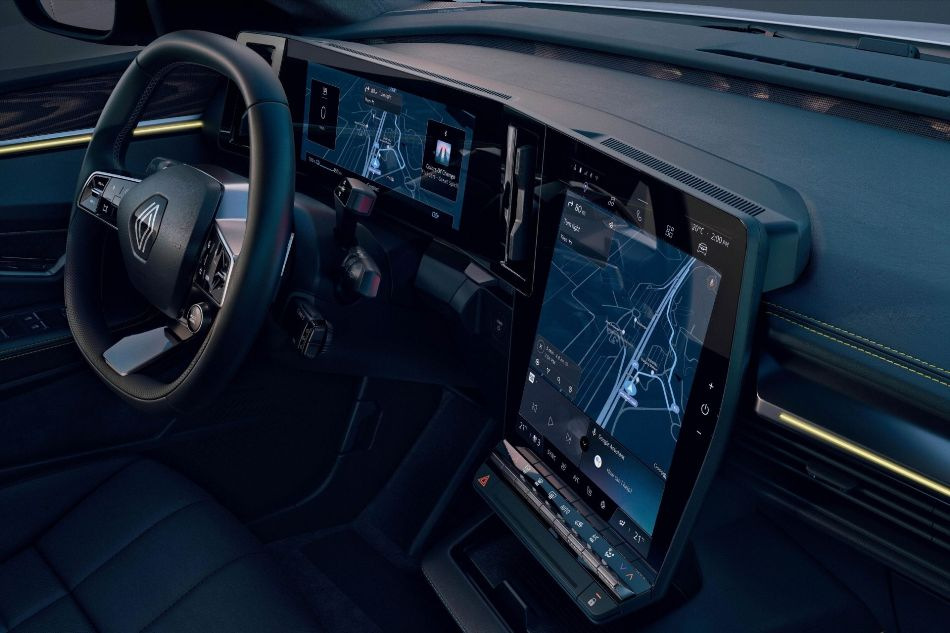
The key feature inside is the OpenR digital environment: a 12.3-inch instrument cluster and a vertical 12-inch touchscreen (on lower trims of the first years — 9 inches). OpenR Link multimedia runs Android Automotive with built-in Google Maps and Google Assistant — the navigation plans a route with state of charge in mind and suggests charging stops on its own. There is a physical climate control panel, wireless phone charging, Harman Kardon audio on top versions; there is no center tunnel, and the floor is flat.
In 2022, Megane E-Tech received five Euro NCAP stars (adults 85%, children 88%, pedestrians 65%, assist systems 79%). Standard equipment includes adaptive cruise with lane centering, automatic braking with pedestrian and cyclist detection, and blind-spot monitoring; in the facelift Renault lists more than 30 driver-assistance systems.
Megane E-Tech in Ukraine: what to check before buying
Renault’s official importer in Ukraine does not sell the Megane E-Tech Electric — as of October 2026, renault.ua lists only Duster, Kardian, and Symbioz. All cars are imported from Europe: on AUTO.RIA there are about a couple of dozen listings, mostly 2022–2023. What to look at:
- Battery and on-board charger. By VIN or in the car menu: 40 or 60 kWh, 7 or 22 kW on-board charger. A car with a 7 kW charger will take only 7 kW even from a three-phase station — at home overnight it is not an issue, but on city chargers it matters.
- Battery health (SOH). Shown by diagnostics or a scanner with access to the BMS; the warranty threshold is 70% for 8 years/160,000 km, and in a healthy 2022 car it is above 90%.
- Heat pump. Up to 2024 it was optional in some markets; without it, winter range drops noticeably more.
- Software. One-pedal mode and OpenR Link fixes arrive over the air on cars from March 2024; earlier ones are updated by the dealer.
- Suspension. More than 1.6 t on 20-inch wheels — inspect the rims for impacts, and the front control arms and bushings for play.
Which accessories people fit to the Megane E-Tech
The EV has a flat floor with no tunnel and light upholstery in many trims, so the first thing people buy is raised-edge floor mats: EVA or textile, tailored to the exact floor contour, with a separate trunk mat — see floor mats for Megane E-Tech. The second item is mud flaps: there are no factory ones, and the wide 20-inch wheels throw dirt onto the sills and rear bumper. The rest of the accessories are in the catalog Renault Megane E-Tech tuning. About the smaller “relative” on the same platform — the Renault 5 E-Tech review, and an earlier review of this model — Renault Megane E-Tech Electric: a compact electric hatchback.
We deliver via Nova Poshta across Ukraine.