




































































 Author: Radomskyi Maksym Vasyliovych
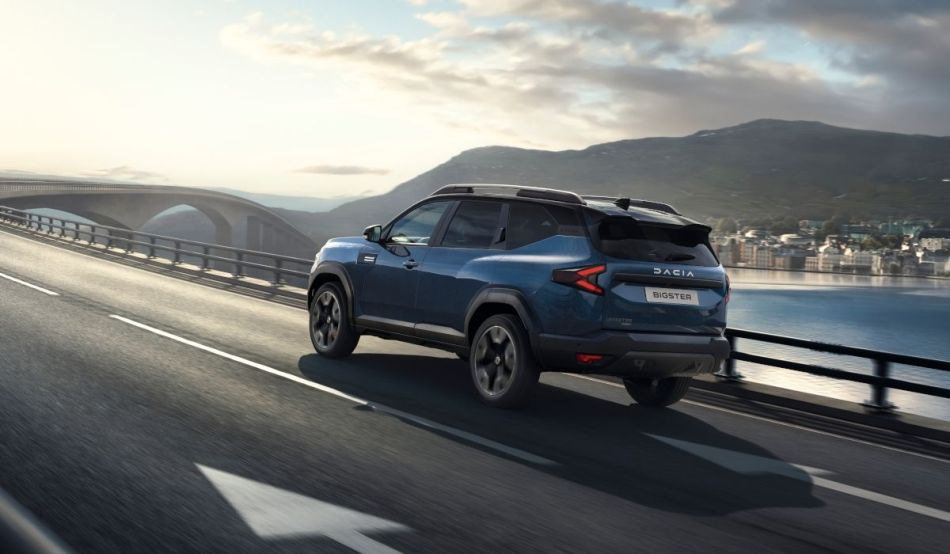
Dacia Bigster is the Romanian brand’s largest crossover: 4.57 m long, a 2.70 m wheelbase, 220 mm ground clearance, and a boot of up to 667 L (VDA). It was unveiled in October 2024, sales in Europe began in early 2025, and for the 2026 model year the range was expanded with the full hybrid Hybrid-G 150 4x4 featuring an electric motor on the rear axle. This is a family SUV in the Toyota RAV4 class, priced closer to compact models.
Contents
- What Dacia Bigster is and when it appeared
- What engines Bigster comes with
- What changed in 2026: Hybrid-G 150 4x4
- Dimensions and boot: spec table
- Trims and equipment
- Safety and prices in Europe
- Which accessories Bigster needs in Ukraine
What Dacia Bigster is and when it appeared
Dacia first showed the idea of a large crossover with the Bigster concept back in 2021, and presented the production version in October 2024. The car is built on the modular CMF-B platform—the same one as the third-generation Duster—but it is about 23 cm longer, and nearly all of that growth went into the rear row and the boot. Bigster is a five-seater: there is no third row; the focus is on passenger and cargo space.
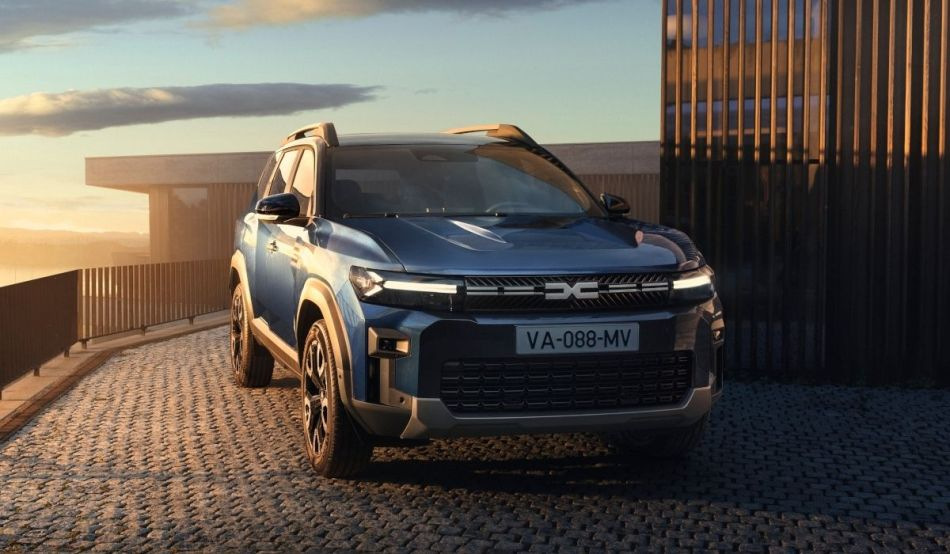
Orders in Romania opened in January 2025, and the car then entered the markets of Germany, France, the United Kingdom, and other EU countries. On the outside, Bigster is easy to recognize by the Y-shaped LED headlamp signature, the rectangular grille with the new Dacia logo, and the massive Starkle plastic body cladding—it is not painted, so scratches are less noticeable.
What engines Bigster comes with
At launch, Bigster received four powertrains—and all of them are electrified in one way or another, or run on gas:
- Hybrid 155 is a full hybrid with no plug: a naturally aspirated 1.8-liter four-cylinder engine, a 37 kW traction electric motor and a starter-generator, a 1.4 kWh battery, and a multi-mode automatic gearbox. Total output is 114 kW (155 hp), front-wheel drive only. This is the version that can cover part of city driving on electricity.
- Mild hybrid 140 is a 1.2-liter turbo three-cylinder TCe with a 48-volt system, 103 kW (140 hp), a 6-speed manual, front-wheel drive.
- Mild hybrid 130 4x4 is the same 1.2 TCe tuned to 130 hp, with a manual gearbox and all-wheel drive with five modes (Auto, Snow, Mud/Sand, Off-Road, Eco) plus hill descent control.
- Mild hybrid-G 140 (Eco-G) is a version of the 1.2 TCe that runs on both petrol and gas (LPG), with two tanks.
There is no diesel in Bigster, and none is planned. If you are not sure how a “mild” hybrid differs from a full hybrid, we have a separate breakdown of types of hybrid cars.
What changed in 2026: Hybrid-G 150 4x4
In September 2025, Dacia announced a new all-wheel-drive powertrain for Duster and Bigster, and for the 2026 model year it joined the lineup. This is no longer a mechanical AWD system, but a hybrid setup:
- at the front: a 1.2-liter turbo three-cylinder engine producing 103 kW (140 hp) and 230 N·m with a 48-volt system, running on both petrol and gas;
- at the rear: a separate 23 kW (31 hp) electric motor with up to 87 N·m and its own two-speed reduction gear; the rear axle can be disconnected to reduce losses;
- combined output: 113 kW (154 hp); transmission: a 6-speed dual-clutch automatic with paddle shifters;
- battery: 0.84 kWh; two 50 L tanks (petrol and gas); claimed range: up to 1,500 km by WLTP;
- all-wheel drive works up to 140 km/h; above that the rear axle disengages; in the city, the car can run on electric power for up to 60% of the time.
According to preliminary manufacturer data, Bigster’s consumption with this setup is 7.2 L/100 km on gas and 5.6 L/100 km on petrol. In parallel, Dacia announced a Hybrid 150 4x4 version without the gas equipment. The trade-off is a smaller boot: in the hybrid AWD version it is the smallest in the range (444 dm³ VDA). For a buyer who needs all-wheel drive with an automatic, Hybrid-G 150 4x4 is effectively the only option, because Mild hybrid 130 4x4 is offered with a manual only.
Dimensions and boot: spec table
Boot volume in Bigster depends on the engine—the hybrid batteries take away part of the floor. Data according to official Dacia tables (VDA, under the parcel shelf / with rear seats folded):
| Parameter | Value |
|---|---|
| Length / width / height | 4 570 / 1 810 (without mirrors) / 1 710 mm |
| Wheelbase | 2 700 mm |
| Ground clearance | 220 mm (4x2), 215 mm (4x4) |
| Turning circle | 10.96 m (11.01 m in Hybrid-G 150 4x4) |
| Boot Mild hybrid 140 | 667 / 1 937 dm³ |
| Boot Mild hybrid-G 140 | 609 / 1 877 dm³ |
| Boot Mild hybrid 130 4x4 | 550 / 1 853 dm³ |
| Boot Hybrid 155 | 546 / 1 851 dm³ |
| Boot Hybrid-G 150 4x4 | 444 / 1 712 dm³ |
| Top speed | up to 180 km/h |
| 0–100 km/h acceleration | 9.7–11.2 s depending on version |
The “667 L” figure often quoted for Bigster as a whole applies only to the Mild hybrid 140 version. In the most popular Hybrid 155, under the parcel shelf it is 546 dm³, which is about 120 L less.
Trims and equipment
In Europe, Bigster is offered in Essential, Expression, Journey, and Extreme trims (the set depends on the country). Even the base trim includes a 7-inch digital instrument cluster and a 10.1-inch multimedia touchscreen with Apple CarPlay and Android Auto; higher trims add a 10-inch instrument cluster, dual-zone climate control, adaptive cruise control, and an expanded set of driver-assistance systems.
Two signature Dacia “features” are here as well. YouClip is a set of mounting points in the cabin for attaching phone holders, hooks, bags, and organizers. Modular roof rails in the Extreme trim can be flipped into crossbars in a few minutes, so you do not need to buy a separate set of bars; in the base version the rails are fixed. The My Safety button lets you configure once which assistance systems to switch off, and restore those settings with a single press.
Safety and prices in Europe
Euro NCAP rated Bigster at 3 stars: 69% for adult occupant protection, 85% for child occupant protection, 60% for pedestrian protection, and 57% for safety assist. The results were carried over from the 2024 Duster crash tests with additional checks—structurally these cars are almost identical. The low overall score is mainly related to the set of driver-assistance systems, not body strength.
Launch prices: in Romania—from about €23,000; in Germany—from €23,990 for Essential; the all-wheel-drive Expression—from €27,990; the Hybrid 155 in the same trim—from €28,590; in the United Kingdom—from £24,995. At the time of the announcement, Dacia did not name the price of the Hybrid-G 150 4x4 version. We did not find official Bigster sales in Ukraine at the time of writing.
Which accessories Bigster needs in Ukraine
Bigster’s plastic body cladding copes well with gravel, but in winter and autumn the cabin and boot suffer from dirt and road salt solutions. The first things to install are 3D rubber floor mats with high sides and a boot liner—there are options for Bigster 2024+ in the floor mats for Dacia Bigster section. Mud flaps will protect the sills and doors from a sandy “shower” thrown up by the wheels, and for long trips you will need crossbars or a roof box—selection is in the roof racks and rails section. All items for the model are collected on the Dacia Bigster tuning page, and for other models of the brand—in the Dacia tuning section. We covered the brand’s history and the current lineup in the article “Whose car is Dacia”.
We ship via Nova Poshta across Ukraine.