 Author: Radomskyi Maksym Vasyliovych
One of the key tools for checking a used car before purchase is a paint thickness gauge. This compact device helps detect whether the body has been repainted or repaired after an accident. In this article, we explain what a paint thickness gauge is, how it works, and why it is indispensable for car enthusiasts. To add elegance to your car and make it stand out on the road, check out the tuning accessories available in our online store.
What is a paint thickness gauge?
A paint thickness gauge is an electronic device designed to measure the thickness of paint, varnish, or filler layers on metal car body surfaces. It operates based on physical principles such as magnetism or ultrasound and helps identify deviations from factory standards.
There are several types of paint thickness gauges:
- Magnetic: Simple and inexpensive, suitable for ferrous metals (steel).
- Eddy current: Versatile, works on aluminum and steel, ideal for modern cars.
- Ultrasonic: The most accurate, measures on any surface, including plastic.
How a paint thickness gauge works
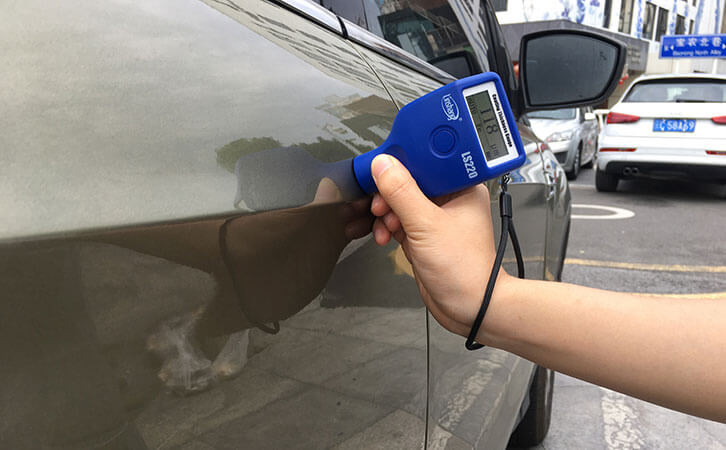
The device is placed against the car body, and the display shows the coating thickness in microns (µm). Factory paint usually measures 80–150 µm. If the value exceeds 200 µm, it may indicate filler or repainting. Abnormally low readings suggest corrosion or a thin layer.
Why do you need a paint thickness gauge?
A paint thickness gauge is a must-have for anyone buying a used car. It helps to:
- Detect hidden damage after accidents.
- Check the originality of the paint and absence of corrosion.
- Save money by avoiding unpleasant surprises.
- Assess the car’s condition before selling or insuring it.
How to choose and use a paint thickness gauge?
When choosing, pay attention to:
- Measurement range (from 0 to 2000 µm).
- Accuracy (±1–3%).
- Availability of calibration and batteries.
To use it, simply turn on the device, calibrate it on clean metal, and check several points on the body: doors, roof, trunk. It takes only 10–15 minutes but can save you a lot of money.