
08.03.2025
2198
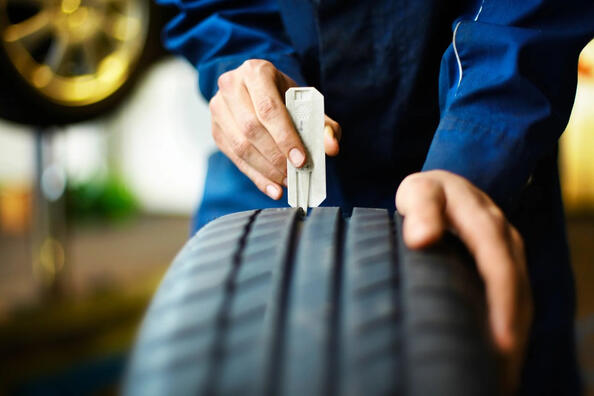

The condition of the tread directly affects the braking distance, handling and stability of the car. Do you want to be confident in your tires? Find out from our article how to correctly measure the tread depth and when it's time to think about replacing tires. In addition, your car will look more attractive and unique if you use tuning accessories, a large selection of which is available in our product catalog.
Worn tread reduces braking efficiency, increases the risk of aquaplaning and impairs vehicle handling, especially in adverse weather conditions. Insufficient tread depth can result in fines and even lead to accidents.
There are several simple ways to measure tread depth:
Legislation sets the minimum permissible tread depth for passenger cars at 1.6 mm . However, for winter tires, a depth of at least 4 mm is recommended to ensure sufficient grip on snow and ice.
Tires should be replaced not only when the minimum tread depth is reached, but also when there are other signs of wear, such as:
Regularly check the tread depth and condition of your tires to ensure safe and comfortable driving. Replacing your tires on time is an investment in your safety and the safety of others.
Shipping to EU
Wholesale and retail
Own warehouse
Опис продукту
Подарунки не надаються при оформленні покупки у кредит під 0,01% або при покупці частинами.