This article reviews the most problematic used electric cars. Learn the technical reasons behind battery degradation and get tips to avoid a bad buy on the used market.
 Author: Radomskyi Maksym Vasyliovych
Buying a used EV — is a great way to save on fuel costs, but it comes with risks that sellers don’t always disclose. Some models, due to design flaws or outdated technology, can become a real «money pit» for your budget. In addition, to upgrade your car and make it more functional, you can use tuning accessories, a huge selection of which is available in our product catalog.
Models with critical drawbacks
The used market has formed a list of cars whose purchase requires extra caution or should be avoided altogether:
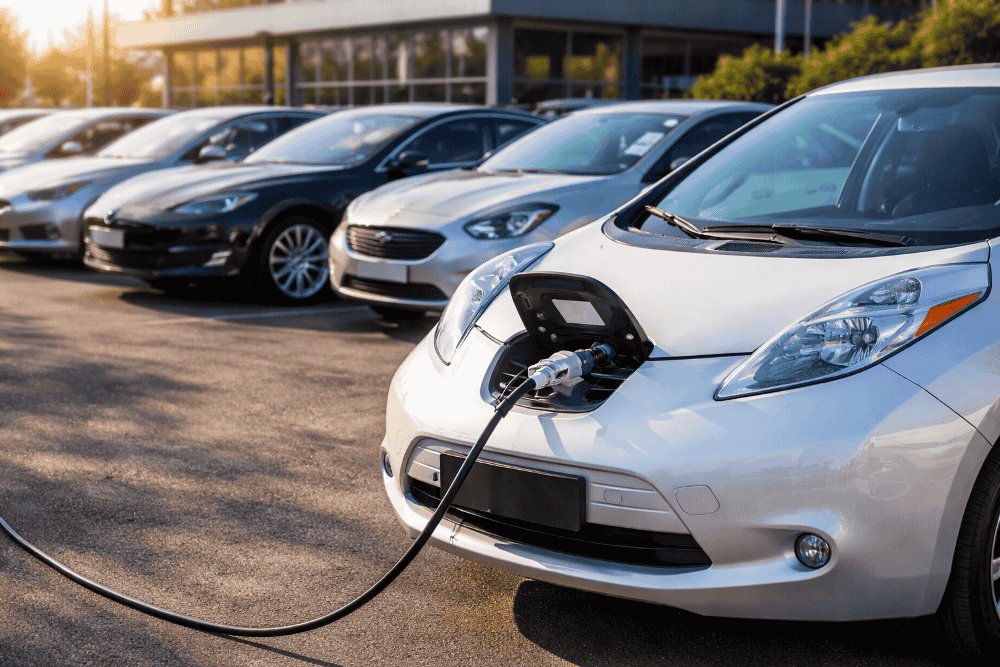
- Nissan Leaf (1-ше покоління, 2011–2017). The main issue — no liquid cooling for the battery. In some cases, especially in hot climates, degradation can be significant (20–40% over a few years).
- Tesla Model S (early builds up to 2016). Early series often suffer from failed door handles and issues with the central display (MCU). Electric motor failures are also possible, requiring expensive repair or replacement.
- Chevrolet Bolt EV (2017–2019). These cars are known for large-scale recalls due to the risk of battery fires. You should only buy such an example with documented proof that the battery was replaced with a new one under the factory program.
- Smart EQ (with low range). Limited range (realistically 90–120 km when new), which, as the battery degrades, makes the car poorly suited even for daily trips.
What should you check before buying?
Even a reliable model can be in poor condition. Be sure to check:
- SOH (State of Health). Remaining battery health should be at least 80%, ideally — 85% or higher.
- Fast-charging history. Frequent fast charging can accelerate degradation, especially in older models without effective battery cooling..
- Charging port. Make sure the standard (CHAdeMO or CCS) is relevant for your region.
When choosing an electric car, remember: a low price often indicates the expensive high-voltage battery is nearing replacement.
This material was prepared using AI tools for topic research, structuring and initial draft creation. Fact-checking, editing, expert review and final approval were performed by Maksym Vasyliovych Radomskyi.