


































































 Author: Radomskyi Maksym Vasyliovych
Electric vehicles (EVs) have long been sold as «clean air on wheels». And partly that’s true: in the city they have no exhaust, which means less local smog and the smell of gasoline. But as soon as we step beyond the city avenue and look at the full life cycle — from the mine to disposal — the picture becomes more complex. That’s where the uncomfortable questions begin: about lithium and cobalt mining, about battery recycling, about what kind of energy is charging your EV.
To make it easy to read and return to key points — I’ve put together structured sections and internal links (anchors) on this page.
- Three questions that break the «green» myth
- Lithium and cobalt: «clean» mobility with a dirty footprint
- Battery disposal: what to do with millions of packs
- Where the power comes from: EVs on coal — does it make sense?
- Table: where EVs win, and where they raise questions
- What an EV owner can do: a practical checklist
- A conclusion without fanaticism
Three questions that break the «green» myth
- What’s behind the battery? Lithium, cobalt, nickel, manganese — that’s not «the magic of progress», but specific deposits, water, chemistry, people, and politics.
- Where does the battery go after its life in the car? A second «career» (stationary storage) is possible, but not limitless. After that, it’s still disposal and recycling.
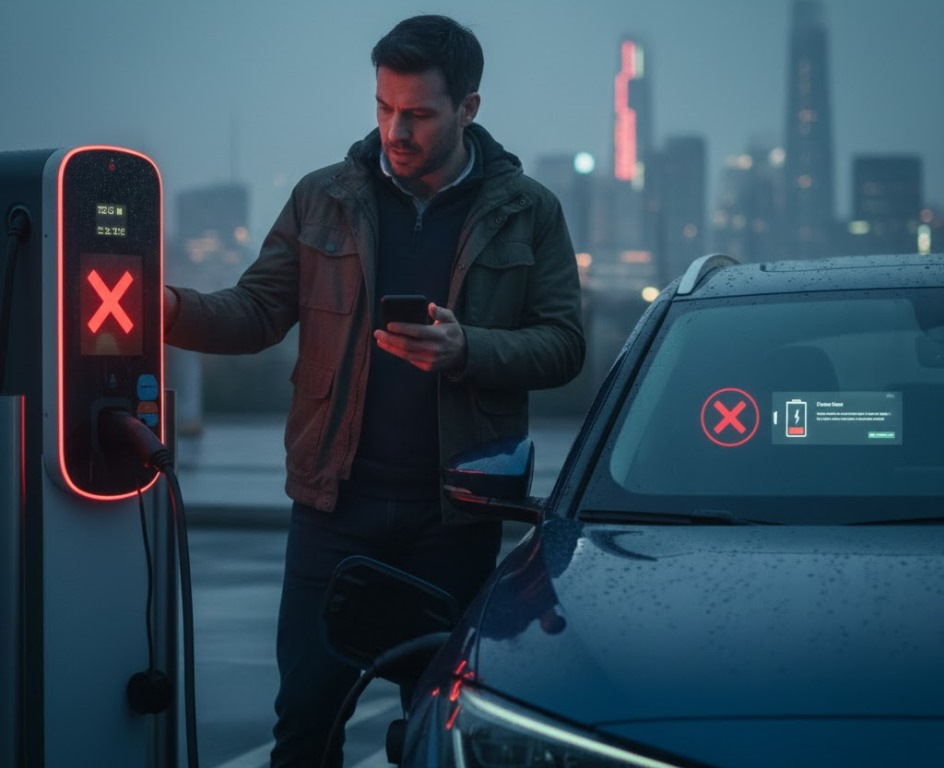
- Where does the electricity come from? An EV doesn’t create energy. It only shifts emissions from the tailpipe to the place where electricity is generated — or reduces them if the energy mix is cleaner.
Now let’s sort it out calmly: where EVs are truly «green» and where it’s simply convenient marketing.
Lithium and cobalt: how ethical is it to damage ecosystems for the sake of «clean» air?
An electric car looks clean in the city. But the battery is an industrial-scale product that starts with extraction. This is where the «green» picture runs into reality:
- Lithium is often linked to water stress in arid regions (water is needed by people, nature, and industry). Water scarcity isn’t an abstraction — it’s a conflict of interests.
- Cobalt is an ethics topic: supply chains are complex, and reputational risks (working conditions, «shadow» mining) are real.
- Energy use and chemistry during battery production can be significant, and the overall carbon footprint depends heavily on where and how the pack was made.
Nuance: the industry is moving forward. Technologies with less cobalt — or none at all — are emerging, supply-chain transparency is improving, and the share of recycled materials is growing. But the «holy grail» hasn’t been reached yet — so an honest conversation about EVs should start with the battery.
By the way, if you already drive an EV, it makes sense to make it more comfortable and practical. For Volkswagen ID-series owners, you can find useful solutions here: accessories and tuning for VW ID.
Battery disposal: what to do with millions of packs in 10 years?
This question sounds like an alarming headline — and for good reason. A mass EV fleet means a mass fleet of batteries that will one day «retire».
Reality isn’t as bleak as the horror stories, but it’s not as simple as the ads either:
- A second «career» for batteries: some packs, after automotive use, are repurposed for stationary energy storage (home, business, grid).
- Recycling: modern processes can recover valuable metals (cobalt, nickel, manganese) at high rates, and the situation with lithium is also improving noticeably.
- The main risk: not the technology itself, but collection infrastructure, logistics, oversight, and process economics. If this isn’t built out, batteries can «leak» into gray schemes or sit for years without a solution.
Key takeaway: battery end-of-life isn’t «the end of the world» — it’s an industry that must be planned in advance. The countries that create rules and build plants first will turn a problem into a resource.
Energy source: does an EV make sense if it’s charged from a coal power plant?
This is where the most common skeptic argument hides: «If electricity comes from coal, then EVs are dirtier.» That’s a half-truth.
- Yes, if electricity is generated mostly from coal, an EV’s environmental advantage shrinks.
- But even then EVs often win on efficiency: the electric motor and power electronics use energy more sparingly than an ICE converts fuel into motion (where a large share becomes heat).
- Most importantly: the energy mix changes over time. A car may run for 8–15 years, and grid electricity can get cleaner every year. With gasoline, that kind of «improvement at the outlet» won’t happen.
So the key question isn’t «Are EVs good or bad?» but where, with what, and how you charge — and what path the energy takes to your battery.
Table: where an EV is truly «green» and where it’s a risk zone
| Topic | What «green» marketing promises | What it looks like in practice | What to do about it |
|---|---|---|---|
| City emissions | Zero exhaust | Yes, locally cleaner (no tailpipe) | EVs make especially good sense for cities and dense traffic |
| Carbon footprint (life cycle) | «Zero emissions» overall | Depends on battery production and the energy mix | Assess the full cycle, not just the «tailpipe» |
| Lithium extraction | «Materials come from somewhere out there» | Can create water and environmental pressure | Support brands/markets with transparent supply chains |
| Cobalt and ethics | Not discussed | There are risks around mining conditions and oversight | Track the trend toward «less cobalt» and more recycling |
| Battery end-of-life | «The battery is recycled 100%» | Recycling is developing, but rules and infrastructure are needed | Governments — regulation; business — investment; owners — proper drop-off |
| Charging from coal | «Then EVs are pointless» | The advantage shrinks, but often doesn’t disappear completely | Choose «cleaner» charging scenarios where possible |
What an EV owner can do: a practical checklist without moralizing
You don’t control global lithium mining. But you do control your habits and how you use the car. Here are real steps that make sense:
- Charge smart: when possible — from «cleaner» sources (home solar, a «green» tariff, off-peak night hours with lower grid load).
- Don’t chase an oversized battery: a bigger battery = more resources for production. If 90% of trips are in the city, a moderate capacity can be more reasonable.
- Extend battery life:
- avoid regular 0% and 100% (when not necessary);
- don’t overheat the car by living in «always fast charging» mode;
- do service checks of the battery cooling system.
- Think practicality: protection, cabin organization, and comfort solutions for EVs aren’t «showing off» — they’re a way to extend lifespan and maintain resale value. For the VW ID-series, see the подборка: /tyuning-volkswagen-id-4.html.
A bit of context from DD Tuning: «ecology» and «emotion» shouldn’t be at war
Today’s car market is torn between two poles: «be green at any cost» and «I want thrill, sound, character.» And honestly? That’s normal. A car isn’t just transportation — it’s also emotion, style, and technology.
To balance the «eco» discussion and look from another angle, a comparison of two legendary German super sedans can also be interesting: BMW M5 F90 vs Mercedes-AMG E63 S: a comparison of German super sedans. It’s a different topic, but it shows well how much people value engineering and a car’s character — even when the world pushes us toward «rationality».
Conclusion: EVs are neither saints nor scammers
An EV is neither a «green pass to paradise» nor an «eco scam of the century.» It’s a technology that:
- really improves air quality in cities (because there’s no local exhaust);
- can significantly reduce the carbon footprint in countries with cleaner electricity generation;
- creates new challenges — extraction, supply-chain ethics, battery recycling, infrastructure.
Honestly, EVs are a «mirror» of the energy system and industry. The cleaner the electricity and the more responsible the battery industry, the «greener» the electric car becomes. And while the world is still on the way there, the best stance is without fanaticism: know the weak points of the technology, use its advantages, and make practical choices that truly impact lifespan, comfort, and efficiency.