15.02.2026
2130
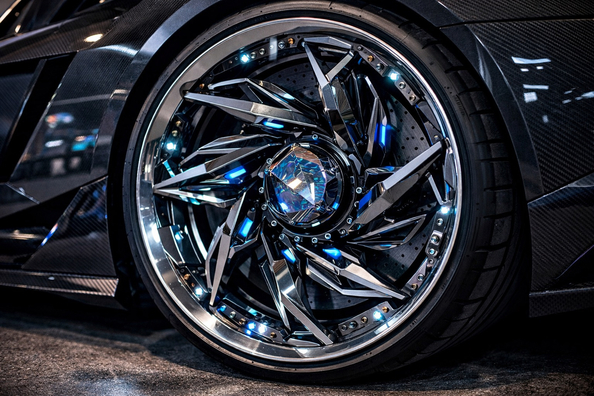
If you are looking for where to buy forged wheels with predictable quality, beautiful design, and the ability to precisely match parameters to your car (PCD/ET/width/brake clearance) — pay attention to Kabeast Forged. This is a forged wheel brand manufactured by NINGBO SUMMER AUTO PARTS CO., LTD. (China).
DD Tuning is the official partner. On this page, we have gathered the most practical information for selecting and ordering wheels: how to distinguish “true forging,” which numbers really matter, how not to make a mistake with fitment, and why forged wheels are not only about looks but also about handling.
Forging means an aluminum billet is formed under high pressure and then precisely machined. According to the manufacturer, forged aluminum wheels can be 1–2 times stronger than cast and 4–5 times stronger than “regular steel” (depending on design). As a weight reference: up to ~20% lighter than wheels of the same size.
What this means in real life:
Example in numbers: if a cast wheel weighs 14 kg, then “20% lighter” is ~11.2 kg. The difference is 2.8 kg per wheel or 11.2 kg per set of 4. Actual values depend on design/width/diameter.
Ningbo Summer Auto Parts Co., Ltd describes itself as a company engaged in design, development, production, and sales of auto components; it emphasizes wheels and custom solutions and focuses on the premium segment.
The manufacturer mentions solutions for premium and sports cars (selection depends on diameter, width, offset, brakes, and wheel design).
NINGBO SUMMER AUTO PARTS CO., LTD. provided an ISO 9001:2015 certificate (also listed as GB/T 19001-2016) with the certification scope: Sales of Automotive Spare Parts and Automotive Decorative Products. Details: Certificate No.: 25825Q0202R0C, issue date 2025-04-21, expiry date 2028-04-20.
Legally important: ISO 9001 is a quality management system standard. It is not a “certificate for each wheel” and does not replace parameter selection or compatibility checks for your car. But it’s a positive indicator that the company has formalized processes (documentation, control, accountability, repeatability).
The manufacturer describes a simplified chain of forged wheel production — from billet to final coating.
Emphasis on Al-6061 T6 (forged only) and focus on the high-end segment.
For clients who want their own design or precise parameters for non-standard brakes/fitment, a custom cycle is described — from references to serial launch.
| Step | What happens | Why it matters |
|---|---|---|
| 1. Idea | The client provides idea/references/photos | Design starts from your preferences |
| 2. 2D drawing | 2D drawings are prepared for size/parameters | Geometry is fixed before production |
| 3. Stress test report | After 2D approval — stress test report is prepared | Additional concept verification |
| 4. Production | Manufacturing for your project; reference time ~15 days for bespoke | Understand approximate lead time |
| 5. Sample | Sample sent to brand client | Verification before series |
| 6. Bulk order | If sample is OK — batch production starts | Stable result in series |
Also stated: OEM & ODM formats, custom options with small MOQ, and stock reference: 4000 PCS stock per month.
Three main formats are usually distinguished: Monoblock, 2 Pieces, 3 Pieces.
| Wheel type | Pros | Cons | Best for |
|---|---|---|---|
| 1-piece (Monoblock) | Easiest to service; minimal joints; often lighter | Less flexibility in lips/offset (vs multi-piece) | Daily driving + sport style, when reliability and simplicity matter |
| 2-piece | More fitment/aesthetic options; flexible geometry | More complex structure and service | Projects where precise fitment + wow effect are key |
| 3-piece | Maximum customization (width/lip/fitment); top visual appeal | Most expensive; highest fitment accuracy required | Show cars, premium builds, individual projects |
90% of wheel issues are not about “quality” but wrong parameters. That’s why, as an official partner, we always request a minimum data set.
| Parameter | Meaning | Why it’s critical |
|---|---|---|
| Diameter (R) | 18/19/20/22 etc. | Affects tires, comfort, clearance, and brakes |
| Width (J) | e.g., 9.5J | Affects tire stretch, handling, and fitment |
| PCD | Bolt count and circle (e.g., 5x112) | Without it, the wheel won’t fit physically |
| ET (offset) | e.g., ET35 | Critical to avoid rubbing or sticking out |
| CB (center bore) | Hub diameter | Affects centering and vibration-free ride |
| Brake clearance | Caliper/disc, spoke shape | Most common reason for “doesn’t fit” even with correct PCD |
| Mount type | Sphere/cone, bolt length | Wheel mounting safety |
Below is a practical comparison to help understand “what you pay for.”
| Parameter | Forged | Cast | Steel |
|---|---|---|---|
| Strength | 1–2× relative to cast (manufacturer reference) | Average | High, but heavier |
| Weight | ~up to -20% vs same-size wheels (reference) | Average | Heaviest |
| Handling/response | Better feedback due to lower mass | Normal | Usually “heavier” steering |
| Customization | Maximum (design/fitment/finishes) | Limited by models | Minimal |
| Best for | Premium/sport/heavy SUV where fitment and durability matter | Daily budget/mid segment | Winter/“work” conditions |
If roads are rough and you want to reduce deformation risk plus get lighter wheels — yes, it’s worth it. Strength and weight references clearly show what you pay for in the forged segment.
For most “daily” needs — 1-piece. If you need maximum customization in width/fitment or “VIP style” — then 2/3-piece.
As a reference, ~15 days for bespoke production (after approval). Actual time depends on design, finish, and logistics.
Yes, usually OEM, Private customization, and OEM & ODM formats are available (conditions depend on configuration and volume).
As an official partner, we handle orders “turnkey” — from parameter selection to wheel delivery to the client.
Note: figures and process descriptions are provided as references based on manufacturer statements and may vary depending on design, size, width, finish, and configuration.
Author: DD Tuning Team
Creation: material prepared with AI assistant participation; final editing and verification by DD Tuning team.
Updated:
Shipping to EU
Wholesale and retail
Own warehouse
Опис продукту
Подарунки не надаються при оформленні покупки у кредит під 0,01% або при покупці частинами.