
































































 Author: Radomskyi Maksym Vasyliovych
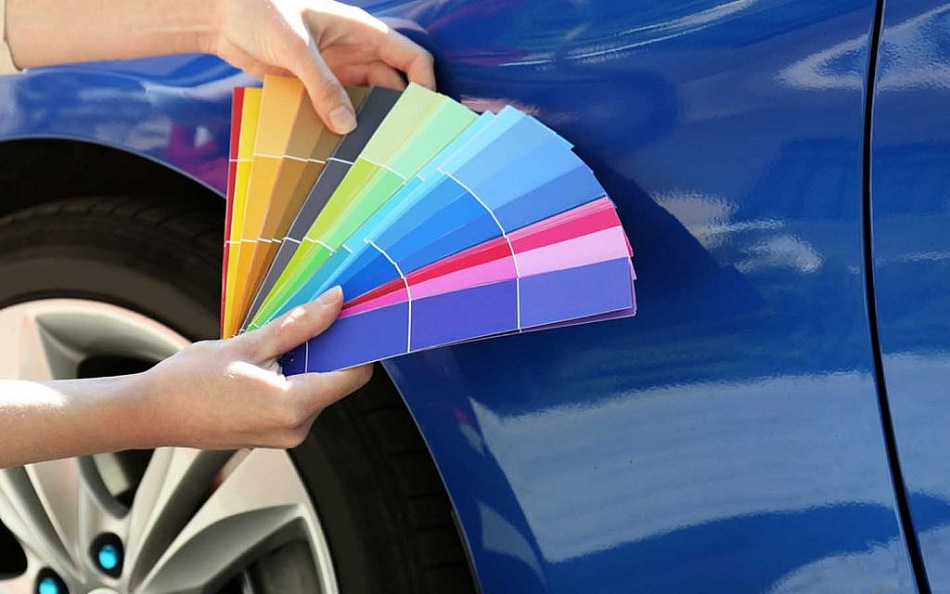
The quickest way to find your car’s paint code is on the factory data sticker: on most brands it is placed in the driver’s door opening; on Volkswagen and Audi — in the spare-wheel well and in the service book; on BMW — under the hood. If the sticker is missing, an official dealer can provide the code using the VIN. With this exact code, the painter mixes the paint — for a scratch repair as well as for a new lip or spoiler to be painted.
Contents
- Where to look for the paint-code sticker
- Where the paint code is on different brands
- Can you find out the color by VIN
- Is the color code in the service book and documents
- How to tell the paint code from other codes on the sticker
- How to choose paint for a lip, spoiler, or body kit to be painted
Where to look for the paint-code sticker
Manufacturers place the code on one of three labels: an identification sticker in the door opening, a vehicle data sticker in the trunk, or a plate in the engine bay. Start with the most common location and move on:
- Driver’s door opening. Open the door and check the body pillar and the edge of the door itself — there is a sticker with the VIN, tire pressures, and the paint code.
- Engine bay. Check the firewall (the partition between the engine and the cabin), the strut towers, and the front panel near the hood latch.
- Trunk. Lift the trunk mat: in the spare-wheel well or on the trunk lid there is often a vehicle data sticker.
- Documents. The service book and owner’s manual sometimes include a copy of the same sticker.
The location can differ even within the same brand — depending on the model and model year. So if you did not find the sticker in the usual place, check the others.
Where the paint code is on different brands
The table shows common locations for brands most often seen on our roads. Use it as a guideline: on a specific car body the sticker may be in a different place.
| Brand | Where the sticker with the code is | How the code is marked |
|---|---|---|
| Toyota, Lexus | Sticker in the driver’s door opening | After the letters C/TR; the first three characters are the paint code |
| Volkswagen, Audi | Vehicle data sticker in the spare-wheel well or under the trunk mat; a copy — in the service book | Among the equipment/option codes; the paint code usually starts with the letter L |
| BMW | Under the hood: on the strut tower or the firewall | Three-digit code, often with “/” and a number; color name in English and German |
| Mercedes-Benz | Driver’s door opening or engine bay (firewall, panel near the radiator) | Three-digit number |
| Ford | Sticker in the opening or on the edge of the driver’s door | EXT PNT (Exterior Paint) field |
| Hyundai | Driver’s door opening; on some models — the firewall or the panel in front of the radiator | Combination of letters and numbers |
| Kia | Sticker in the driver’s door opening | PAINT or COLOR field |
| Mazda | Driver’s door opening, otherwise — the firewall | COLOR field |
| Honda | Sticker in the driver’s door opening | Letters and numbers separated by a hyphen, for example NH-731P |
Can you find out the color by VIN
You cannot read the color directly from the VIN: the 17 characters encode the manufacturer, model identifiers, model year, and serial number — not the paint. But the VIN is the key to the factory database that stores the full specification of a particular car, including the paint code.
- An official dealer will find the code by VIN in the manufacturer’s parts catalog — this is the most reliable way if the sticker is missing or worn off.
- Online VIN decoders can show specification data, but not for all brands and years. Verify the result against the sticker or with a dealer.
- An automotive paint shop usually has code catalogs by brand and year and can help narrow it down if you at least know the color and model year.
Is the color code in the service book and documents
For Volkswagen and Audi, yes: on the first page of the service book there is a copy of the vehicle data sticker, and the paint code is among the option codes. For other brands, the service book does not always include the paint code. The registration certificate lists only the general color (“gray”, “blue”), not the factory code — you cannot match paint by it.
When buying a used car, take a photo of the code sticker right away. Stickers age, fade, and get lost during body repairs, and finding a duplicate is harder than keeping the original.
How to tell the paint code from other codes on the sticker
On the sticker you will also find the VIN, engine and transmission codes, interior trim codes, and tire pressures. The paint code is usually short — 2–4 characters — and labeled with Paint, Color, Colour, Lack, Farbe, or EXT PNT. If there is no label, the hints from the table above help: on Toyota the code is after C/TR; on Volkswagen and Audi — among codes starting with L.
Do not confuse the paint code with the interior code. On Toyota after the letters C/TR (Color/Trim) there are two codes separated by a slash: the first is the body paint, the second is the interior trim, and for painting you need only the first.
How to choose paint for a lip, spoiler, or body kit to be painted
A part marked “to be painted” or “primed” comes in a neutral primer, and the body color is applied by the painter. The paint code is a starting point, but it does not guarantee a perfect match:
- Shades within the same code. A single factory code can have shade variants, and factory paint fades over the years. A good painter does a test spray-out on a panel and compares it to the car in daylight.
- Plastic preparation. Spoilers and lips are usually made of ABS plastic; bumpers and body kit sets are made of composite polypropylene (PP). Before painting, plastic is degreased, scuffed, and coated with a plastic primer — otherwise the paint may peel.
- Test-fit before painting. First test-fit the part on the car and check the gaps, and only then paint it — so you will not have to repaint after adjustments.
- Clear coat and contrast. A body-color part is clear-coated just like the body. If you want contrast, you can paint the lip or spoiler in gloss black — then you do not need the body code.
You can choose a paintable part for your model in the spoilers, lip spoilers, and plastic body kits sections. About spoiler types and their role — in the article what a car spoiler is, and how to protect a painted lip in winter — in the piece about a bumper lip in winter.
We ship with Nova Poshta across Ukraine.