 Author: Radomskyi Maksym Vasyliovych
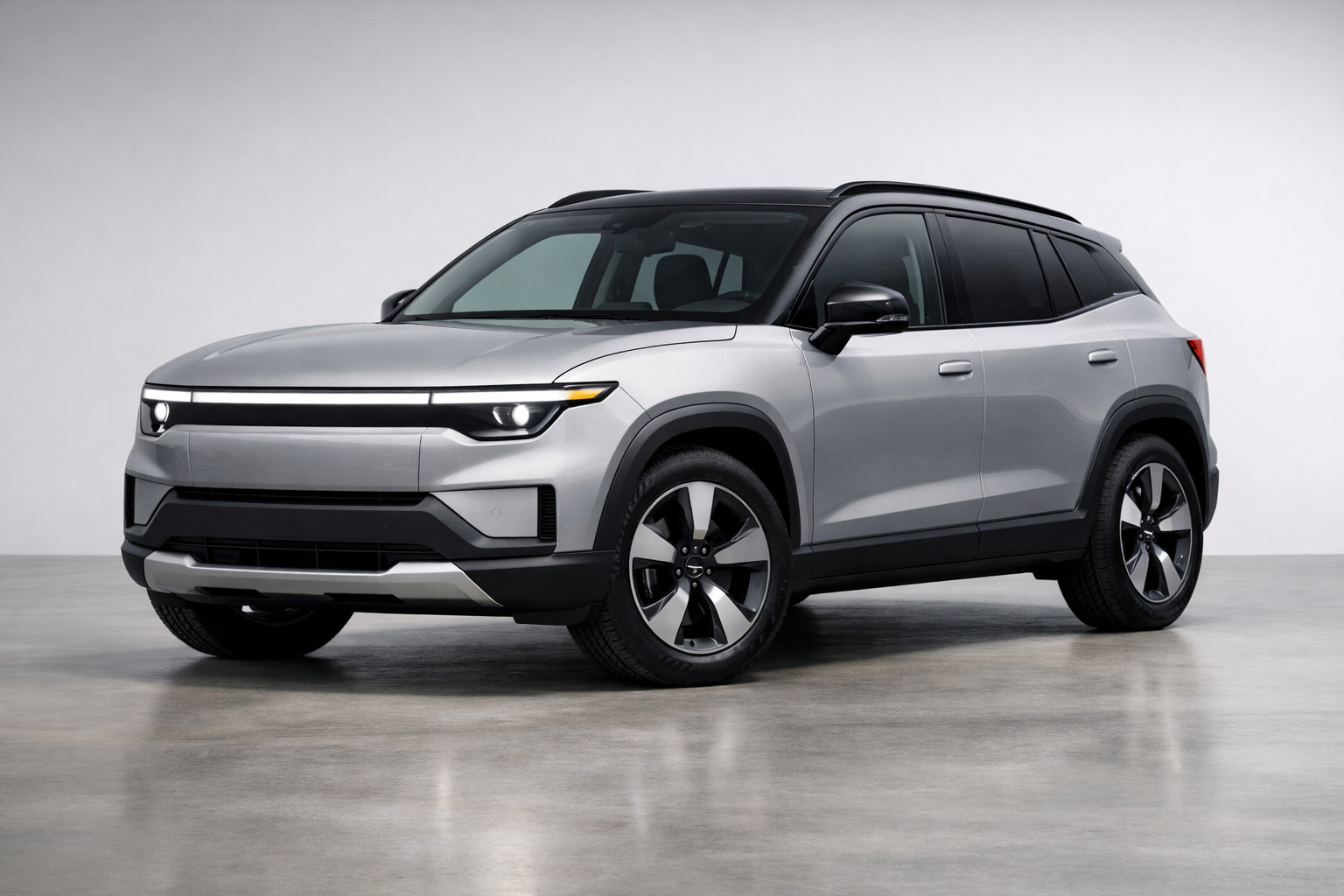
Rivian R2 enters the most crowded electric crossover segment not as just another Tesla Model Y alternative, but as a more utilitarian and practical option. It’s slightly shorter than the Model Y, but taller, with a longer wheelbase, a large trunk, 244 mm ground clearance, and a clear bias toward rough roads, dirt tracks, and travel with gear.
An important nuance: as of August 2026, Rivian is already presenting this model as the 2027 R2. The lineup is still taking shape, there’s little large-scale owner data, and some impressions still relate to the first vehicles and early software. So R2 is best judged not as a fully established model, but as a very strong new electric crossover in terms of concept.
The model and its place in the market
R2 is a 5-seat midsize electric crossover for those who want more than a simple city EV. The logic is straightforward: deliver family-car practicality, a solid driving range, fast charging, and geometry that doesn’t make you fear curbs, snow, or rough access roads.
Against the Tesla Model Y, Rivian is betting not on interface minimalism, but on more versatile real-world use. R2 feels more appropriate for a family, active recreation, hauling gear, and towing. It’s not the best choice for those who want fully polished software and a familiar smartphone ecosystem right away.
Generations and model history
For now, R2 effectively has just one, first generation. There are no generation changes, facelifts, or a long history of trims yet, so the conversation today is about the launch configuration and how Rivian is adjusting the lineup as it enters the market.
- 2026: the model goes on sale, but is already labeled as the 2027 R2.
- Late 2026: the Premium AWD version is announced.
- 2027: a more affordable Standard RWD is expected.
It’s also worth remembering that early materials mentioned other configurations as well, including a tri-motor setup. But in the current lineup, you should ориент yourself specifically around Standard RWD, Premium AWD, and Performance AWD.
Motors and drivetrains
R2 is an EV, so there’s no internal-combustion engine displacement here. The practical choice comes down to the number of electric motors, the drive type, and available traction: rear-wheel drive for calm daily driving, or all-wheel drive for performance, towing, and better grip.
| Version | Powertrain layout | Power | Torque | 0–96.6 km/h | Range |
|---|---|---|---|---|---|
| Standard | 1 electric motor, rear-wheel drive | 350 hp | 481 N·m | 5.9 s | 443 km |
| Premium | 2 electric motors, all-wheel drive | 450 hp | 728 N·m | 4.6 s | 531 km |
| Performance | 2 electric motors, all-wheel drive | 656 hp | 826 N·m | 3.6 s | 531 km |
For most buyers, the smartest balance looks like Premium AWD: it isn’t as expensive in logic as Performance, but it already gives you AWD, strong pulling power, and the same claimed range. Standard RWD makes sense as the base daily version, but it arrives later.
Body, dimensions, and chassis
In terms of size, R2 is 4722 mm long, 1700 mm tall, and has a 2936 mm wheelbase. It’s 69 mm shorter than the Model Y, but 74 mm taller and with a longer wheelbase, so the seating position is predictably more crossover-like, and the second row doesn’t feel like a compromise.
| Parameter | Value |
|---|---|
| Length | 4722 mm |
| Width | 2151 mm |
| Width with mirrors folded | 1984 mm |
| Height | 1700 mm |
| Wheelbase | 2936 mm |
| Ground clearance | 244 mm |
| Trunk behind the second row | 813 l |
| Trunk with the second row folded | 2248 l |
| Total storage volume | 2551 l |
| Towing | 1588–1996 kg depending on version |
As for the chassis, the main takeaway is this: it’s not a replacement for the larger R1S for serious off-roading, but for light trips off the asphalt the R2 is noticeably better prepared than typical city electric crossovers. The approach and departure angles, as well as the ground clearance, aren’t just for show here.
Interior, comfort, and safety
Inside, the focus is on space and versatility. It seats 5, with a two-row layout and a 40/20/40 rear bench, which is convenient for child seats, skis, strollers, and long bags. Legroom and headroom in both rows look very competitive, and the cargo area is one of the model’s key arguments.
Early impressions suggest the R2 is quiet and smooth on the move, with good visibility. But there’s a downside: no Apple CarPlay, some basic settings are moved to the screen, and the panoramic roof has no factory sunshade. These are small things not everyone cares about, but in daily use they either grow on you or annoy you постоянно.
On safety, 11 cameras, 5 radars, and over 20 built-in driver-assistance features are claimed. In other words, the technical foundation is strong, but to truly assess the assist systems you need longer, mass-market real-world use than we have right now.
Everyday use
In daily driving, the R2 looks strong exactly where EVs often compete most: charging, space, cargo-floor practicality, the ability to take a trailer, and loading gear without playing Tetris. An NACS port, fast DC charging from 10–80% in under 30 minutes, and about 241 km added in 15 minutes are already serious arguments for long trips.
But there’s an early-model nuance: there’s no official broad picture of real-world energy consumption yet, and some functions are still being refined via software. If you need a vehicle where everything has long been familiar and stable, the R2 may still feel a bit unpolished. If capacity, seating position, and a modern EV platform matter most, it looks very convincing.
Strengths and weaknesses
R2’s strength isn’t a single number, but the combination of space, ground clearance, performance, and charging infrastructure. Its weakness is the typical trade-offs of a new tech-driven model: software, small ergonomic details, and limited real-owner statistics.
| Pros | Cons |
|---|---|
| Large trunk and excellent interior flexibility | No Apple CarPlay or familiar smartphone mirroring |
| 244 mm ground clearance and better readiness for bad roads than most competitors | Some controls are moved to the screen, which isn’t convenient for everyone |
| Fast charging and a sensible long-trip setup | Software is still maturing |
| Very quick Performance AWD version | The base Standard RWD arrives later |
From an owner’s perspective, the R2 suits those who want an everyday electric crossover but aren’t willing to put up with a low seating position and modest body geometry. It’s less suitable for those who prioritize a flawlessly executed interface, conservative ergonomics, and full predictability right at the start of sales.
Tuning and accessories
For the R2, the most appropriate upgrades aren’t decorative tuning, but practical add-ons: floor mats, cargo-area protection, a towing kit, a spare tire, and the right choice of tires and wheels. These are the things that most strongly affect everyday comfort, cabin cleanliness, and how painlessly the car handles family duty, outdoor trips, and winter use.
There may not be a dedicated R2 card in the catalog yet, so it makes sense to look at existing Rivian solutions and choose accessories using the same practical approach.
What to check out for this model
- Floor mats — the first purchase for a car with active daily use, especially if there will be sand, snow, and child seats.
- Trunk mat — useful if the R2 is used for a stroller, gear, a dog, or wet items after trips.
- Rivian R1S page — a handy reference for existing brand solutions while the R2 isn’t yet fully built out in the catalog.
Conclusion
Rivian R2 looks like one of the most interesting new electric crossovers for those who need not only acceleration figures, but real everyday usefulness: a spacious cabin, a large trunk, a high seating position, solid body geometry, and fast charging. It appeals most to families, people with an active lifestyle, and those who often drive beyond smooth city asphalt.
The main caveats are also clear: the model is still young, the software can feel raw in places, and some familiar features and ergonomic choices may not suit everyone. This material is based on real-world selection practice, practical use cases, and how such vehicles are judged in everyday life—not on abstract marketing claims.
Pros and cons
A large trunk and a well-thought-out interior layout make the R2 convenient for family trips, child seats, and carrying gear. The second row in a 40/20/40 split also gives more flexibility in everyday use.
244 mm of ground clearance and crossover body geometry provide better readiness for bad roads, snow, and dirt roads than most city electric crossovers. For those who occasionally leave the pavement, this is a practical advantage.
Fast DC charging to 80% in less than 30 minutes and about 241 km of range added in 15 minutes make long trips easier. The NACS port also adds convenience when charging.
The Performance AWD version is very quick, and even the Premium AWD already offers all-wheel drive and strong traction. This is useful for performance, towing, and better grip on slippery roads.
The suspension and cabin are described as quiet and smooth, with good visibility. This makes the R2 more comfortable in daily driving than many more “spartan” electric crossovers.
There is no Apple CarPlay, so users accustomed to smartphone mirroring will not get the usual multimedia experience. For some buyers, this will be a noticeable daily drawback.
Some of the basic settings have been moved to the screen, which can make the controls feel less convenient and less intuitive. This is especially noticeable for those who do not like overreliance on a touch interface.
The software does not yet seem fully mature, and there is still little mass-market data from real owners. Because of this, it is harder to assess system stability and energy consumption over long-term use.
The base Standard RWD arrives later, so the initial lineup does not offer the most affordable option right away. Those looking for a simpler entry into the model will have to wait.