 Author: Radomskyi Maksym Vasyliovych
Renault E-Space Concept is an electric six-seat minivan concept that Renault unveiled on 12 October 2026 at the Paris Motor Show as a modern successor to the original 1984 Espace. Length — 4.70 m, width — 2.02 m, height — 1.67 m, wheels — 23 inches. Renault is not promising a production version: according to the company, the concept is not a precursor to any specific model and does not replace the current Espace.
Contents
- What Renault showed in Paris
- What E-Space took from the 1984 Espace
- What the interior of Renault E-Space is like
- Will there be a production E-Space, and what is known about the battery
- What this means for Renault Espace owners
What Renault showed in Paris
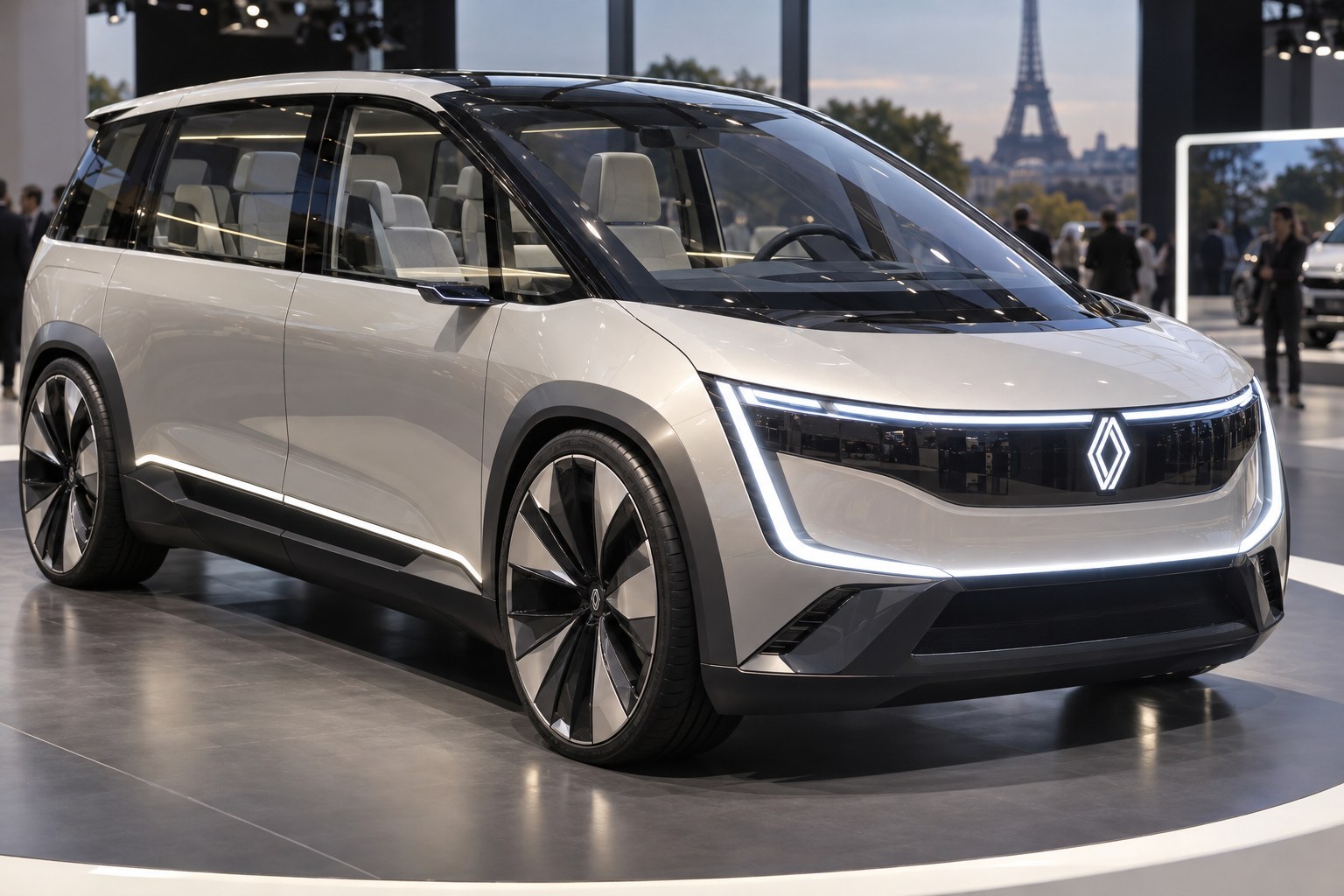
E-Space Concept is Renault’s main concept at the 2026 Paris Motor Show. It is a large minivan with a classic silhouette: almost no overhangs, wheels pushed to the corners of the body, a low window line, and a glassed-in cabin whose glazing drops below the beltline. The lower part of the body is black — the designers call it a “skateboard,” hinting at the technical hardware, including the battery.
| Parameter | Renault E-Space Concept |
|---|---|
| Type | electric minivan, concept |
| Length × width × height | 4 700 × 2 020 × 1 670 mm |
| Wheels | 23 inches |
| Seats | 6 individual seats in three rows |
| Doors | open in opposite directions, without a central pillar |
| Dashboard display | OpenR Panorama, 1 130 × 110 mm, non-touch |
| Battery, power, range | not announced |
| Production version | not planned (according to Renault) |
At the front and rear there is a new lighting signature: a large illuminated “U” frames the grille, and the illuminated logo appears to float in the air. Another light line runs along the lower edge of the cabin, echoing the beltline. The front splitter in the bumper is movable: at speed it lowers to reduce aerodynamic drag. Renault directly links the roof spoiler to the second- and third-generation Espace.
What E-Space took from the 1984 Espace
The first Renault Espace debuted in July 1984. It was conceived and built by Matra at the Romorantin plant: a fiberglass body sat on a galvanized steel frame. Renault calls that car the first minivan, and it is exactly what the new concept references.
The designers themselves named the direct quotes from 1984:
- the windshield profile in the style of the TGV high-speed train;
- grey side protection;
- thin upper parts of the seatbacks, like on the first Espace;
- the “voiture à vivre” idea — a car to live in, not just to drive.
The rest is a new design language. Among its inspirations Renault cites Bauhaus architecture, in particular Mies van der Rohe’s Farnsworth House (1951), aviation, and Formula 1 cars — the source of the side shapes.
What the interior of Renault E-Space is like
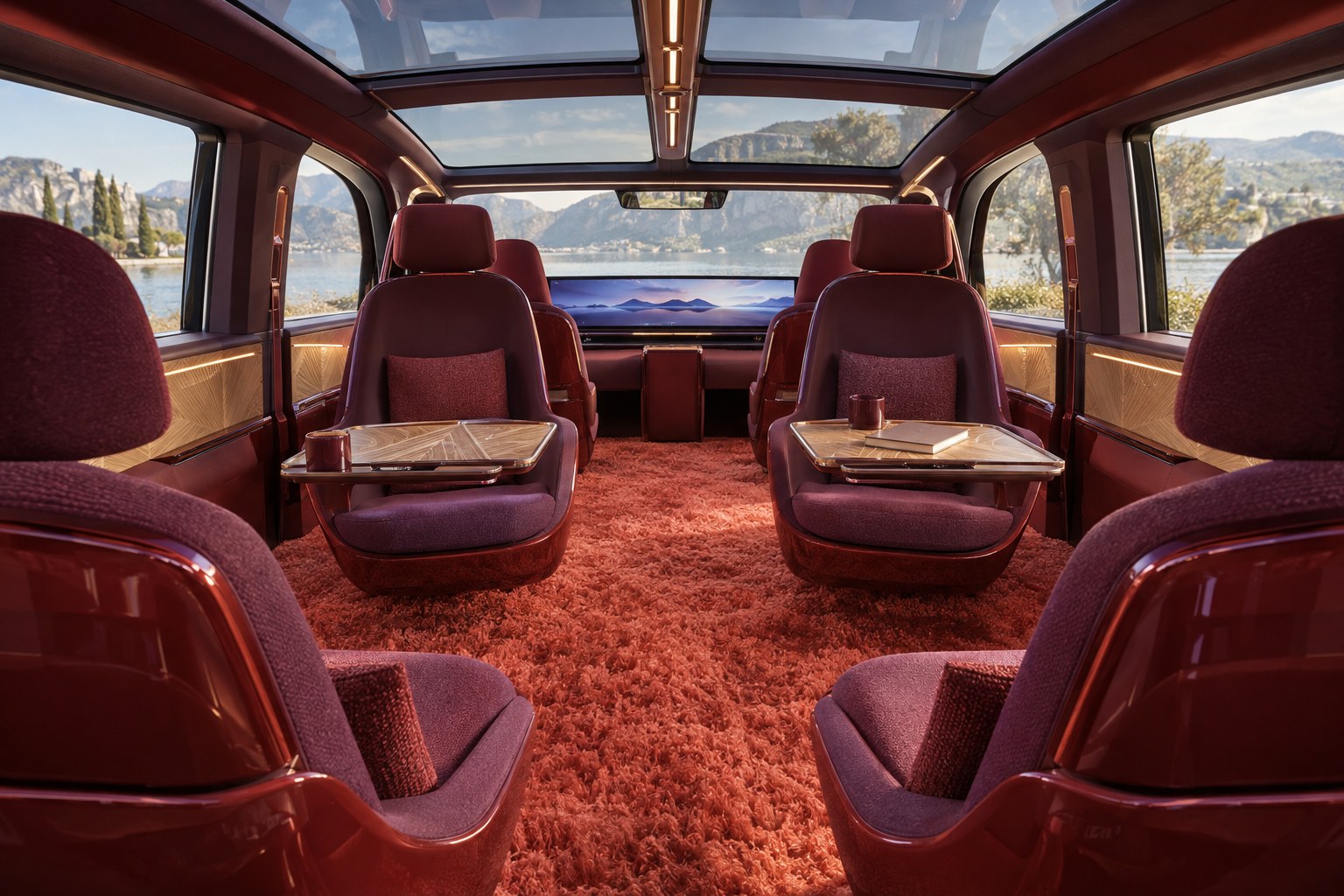
Inside there are six seats identical in size and design on a completely flat floor, arranged in three rows. The second-row seats rotate 180°: this creates a “train compartment” with the third row. In the standard layout, two 12.3-inch screens are mounted in the backs of the front seats, and the second row has fold-out tables. There is also a four-seat configuration: the second-row seats fold into a large table for the third row.
Along the central tunnel, a console on a control pod slides back and forth — with an air purifier, a small refrigerator, game controllers, and the game “Connect Four.” There are no armrests: you rest your elbow on the windowsill because the window line is low.
Instead of a conventional instrument panel there is a curved OpenR Panorama display from pillar to pillar, 1 130 × 110 mm. It only shows information; everything is controlled via two flexible touchscreens that rotate around the tubular base of the steering wheel. The steering works on a steer-by-wire setup, meaning there is no mechanical connection to the wheels, with a fixed hub. Renault writes that OpenR Panorama will first appear on the next generations of Rafale and Scenic.
The trim uses materials you rarely see in cars: dyed straw instead of wood on the tables, a long-pile wool carpet 3 cm thick, cabin paint made with bio-resin (18%), a steering wheel material with castor oil (26%) and organic cotton (25%). The tires average 19% natural rubber.
Will there be a production E-Space, and what is known about the battery
For now — no. Renault explicitly states that E-Space Concept is not a precursor to a production model and was not created to replace the current Espace. The company has not disclosed anything about the traction battery, power output, range, or platform, so any figures online about a “production electric Espace” are publication guesses, not Renault data.
Renault named one real contribution of the concept to production cars: the OpenR Panorama display for the next Rafale and Scenic. The rest is a show car with which the company is testing whether buyers are still interested in a classic minivan.
What this means for Renault Espace owners
The current sixth-generation Espace is no longer a minivan but a crossover based on Austral, so E-Space is not related to it. We covered this model in the reviews “Renault Espace sixth generation: minivan review” and “Renault Espace 2025: review of the updated family car”.
For earlier Espace models, our catalog primarily offers floor mats: EVA, rubber, and textile for the cabin and the trunk — in the section mats for Renault Espace 2014+, and for the older 2002–2014 car — in the section Renault Espace 2002–2014 tuning, including for seven-seat versions with three rows. For a family minivan, this is the most practical item: the third row and the trunk are the first to suffer from dirt. Everything for the fifth generation is collected on the page Renault Espace 2014+ tuning.
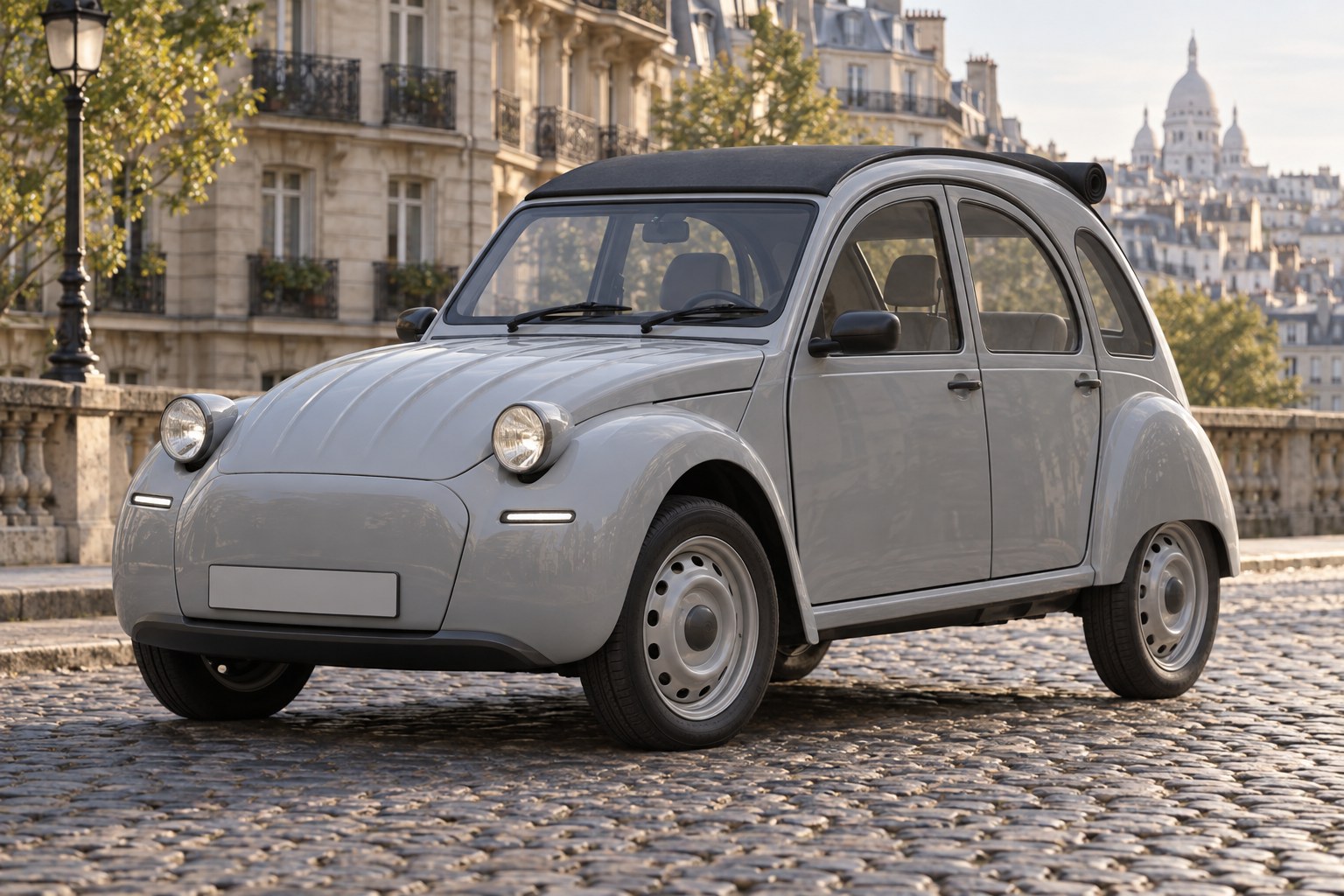
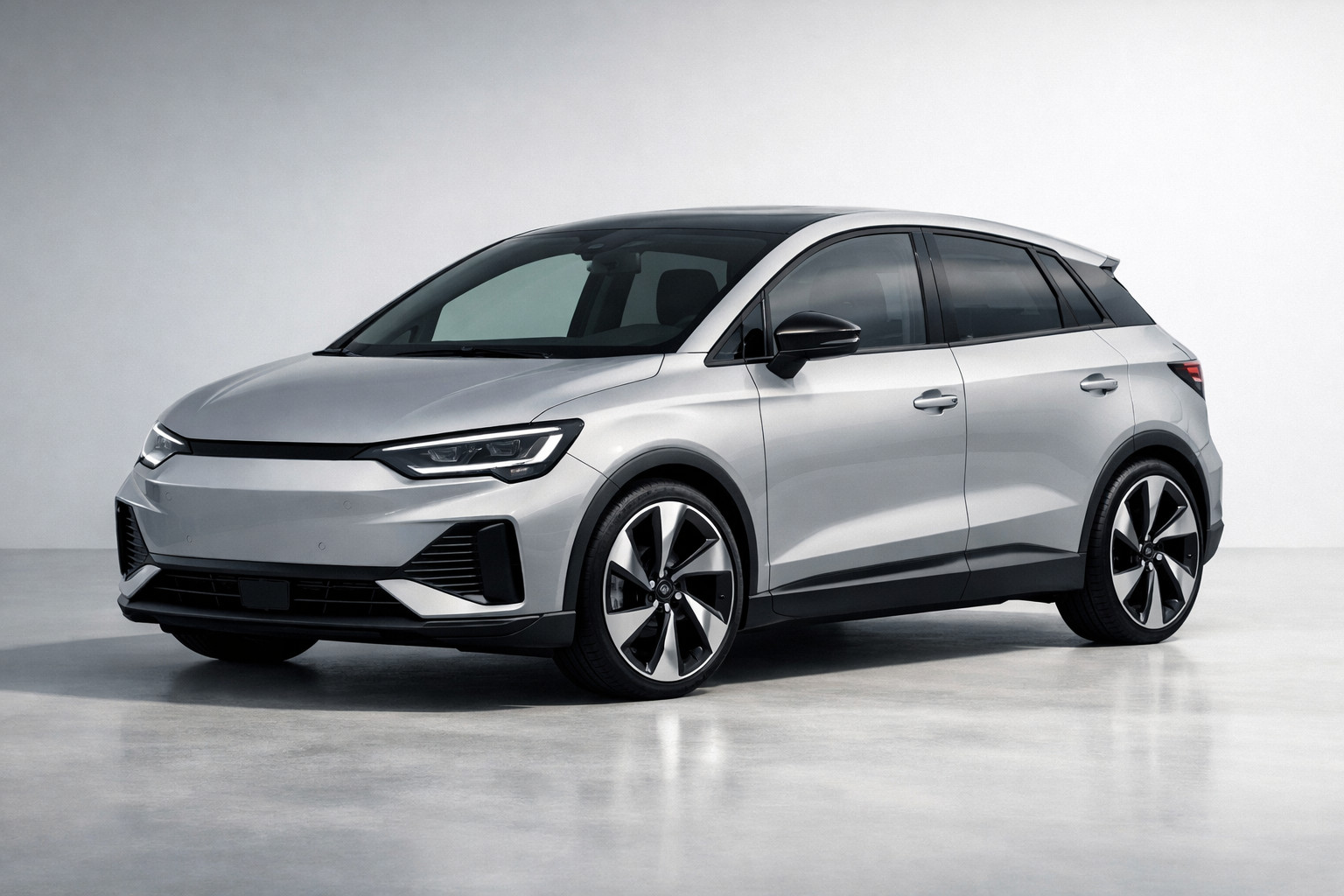
Images in the article are illustrations created from Renault’s official description, not factory photos.
We ship via Nova Poshta throughout Ukraine.