05.04.2026
2356
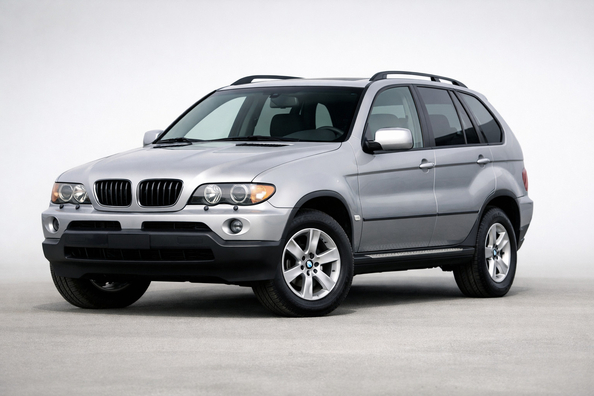

BMW X5 E53 is one of those cases where an old premium crossover still makes sense—but only on one condition: you’re buying not the badge, but a well-kept, “alive” example. The first X5 set BMW’s formula for this class: a high seating position, all-wheel drive, a practical body, and handling closer to a large passenger car than to a classic SUV.
On the used market, the E53 is still interesting for those who want a roomy, status car without moving to newer generations that are more expensive to buy. The most sensible choices for daily driving are the 3,0i or 3,0d. V8 versions attract with their character and torque, but in real-world ownership they hit the budget noticeably harder.
BMW X5 E53 was produced from 1999 to 2006 and was the first X5 and the first SAV in BMW’s terms. It’s not a body-on-frame SUV, but a crossover with a unibody, passenger-car architecture, and a focus on the road rather than serious off-road.
In its class, the E53 stood apart from the start. If the Mercedes M-Class leaned more toward comfort, the X5 bet on sharper steering, a tighter suspension setup, and a stronger sense of control. That’s why even today it’s often searched for not as a “big Jeep,” but as a family car for people who care about how the car turns, brakes, and holds a line.
| Parameter | Value for BMW X5 E53 |
|---|---|
| Production years | 1999–2006 |
| Body type | 5-door unibody crossover |
| Drivetrain | All-wheel drive |
| Wheelbase | 2820 mm |
| Length | 4667 mm |
| Width | 1872 mm |
| Height | 1715 mm for 3,0i; 1707 mm for 4,4i and 4,8is |
| Ground clearance | 211 mm for 3,0i; 203 mm for 4,4i; 165 mm for 4,8is |
| Trunk | 456 L, up to 1541 L with the second row folded |
| Towing | Up to 2722 kg |
The X5 E53 is essentially a single generation, but within its life cycle there were important updates. Early cars differ in trims, electronics, and engine range, while later facelift versions are usually more interesting in equipment and more expensive on the market.
For a buyer, that means one simple thing: you should look not only at the model year, but at the exact version, engine, transmission, and service history. Within the same body, the difference in how the car feels between a “tired early” and a “well-kept late” E53 can be huge.
In the gasoline range, the best-known is the 3,0i: 2979 cm³, inline-six, 231 hp and 290 N·m. It’s the most straightforward engine for those who want fewer repair risks. For the 3,0i, a 6-speed manual or a 5-speed STEPTRONIC automatic was offered.
Next came the V8s. The 4,4i had 4398 cm³, 286 hp and 440 N·m, while the top 4,8is had 4799 cm³, 355 hp and 500 N·m. Both versions deliver a completely different level of performance, but they’re also more expensive to maintain—especially when we’re talking about a car that’s already over 20 years old.
For many, the European 3,0d remains one of the best compromises: 2993 cm³, 218 hp and 500 N·m. It was available with a 6-speed manual or a 6-speed automatic. On paper the diesel looks more economical, and in real daily driving its average consumption often stays around 10.5 L per 100 km for the automatic version—which is a perfectly workable figure for this class and weight.
| Version | Engine | Power | Torque | Transmission |
|---|---|---|---|---|
| 3,0i | 2,979 L, inline 6-cylinder | 231 hp | 290 N·m | 6-speed manual or 5-speed automatic |
| 3,0d | 2,993 L, inline 6-cylinder diesel | 218 hp | 500 N·m | 6-speed manual or 6-speed automatic |
| 4,4i | 4,398 L, V8 | 286 hp | 440 N·m | 6-speed automatic |
| 4,8is | 4,799 L, V8 | 355 hp | 500 N·m | 6-speed automatic |
By size, the E53 still doesn’t look small today: 4667 mm in length, 1872 mm in width, and a 2820 mm wheelbase. That provides a solid space reserve for the cabin and stability on the highway. A 12.1 m turning circle isn’t a record, but it’s still acceptable for the city.
The chassis is one of the reasons the model is still respected. The X5 E53 drives tight, precise, and not floaty, but you pay for it with comfort on broken roads—especially if it’s on large wheels or has a sport package. Adjustable ride height on some versions could help on poor surfaces, but any air suspension components at this age require careful inspection.
There are also geometry nuances: the 3,0i has 211 mm of ground clearance, the 4,4i has 203 mm, and the 4,8is only 165 mm. So from the outside all E53s seem versatile, but in reality the top gasoline version is far less friendly to curbs, ruts, and rough driveways.
The E53 interior is a strong point even now. The seating position is high, visibility is good, the seats are comfortable on long trips, and the layout is free of unnecessary gimmicks. The car feels spacious both up front and in the second row, and the split tailgate is genuinely convenient in daily use.
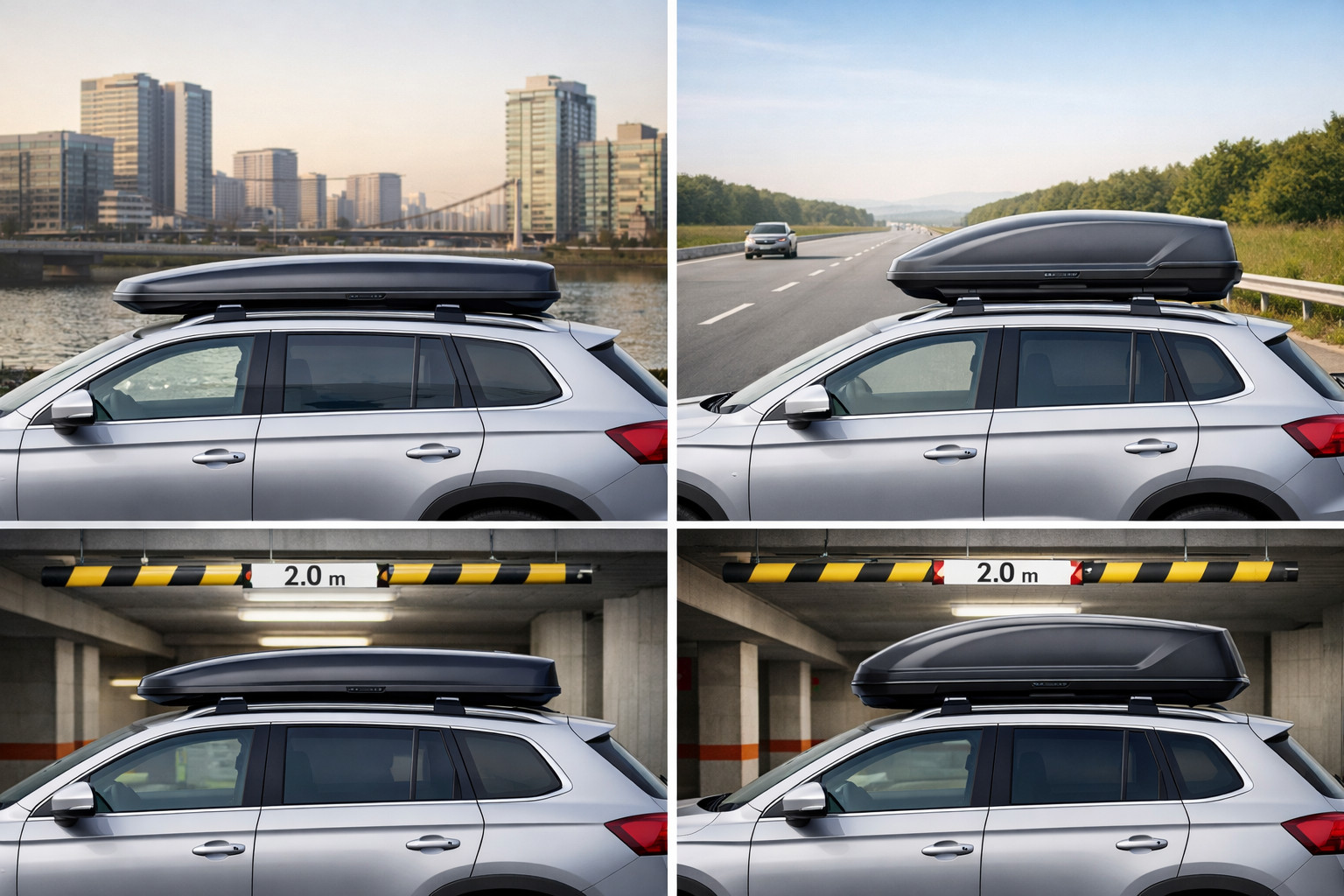
The trunk isn’t class-leading on paper, but 456 L in normal configuration and up to 1541 L with the seats folded is enough for family trips, strollers, suitcases, or gear. Plus, the X5’s cargo area is well designed, and factory roof rails and roof accessories add practicality.
For safety, it’s important to look at the specific market and year. For some 2000–2004 cars, especially those imported from the USA, the Takata campaign should be checked separately by VIN. For an older premium car, this isn’t a small detail—it’s a basic pre-purchase check.
In day-to-day use, the X5 E53 is good when you don’t try to run it as “cheap in every way.” It’s a heavy vehicle with large wheels, expensive suspension components, and complex electrics. If you buy one “with your last money,” it will quickly show weak points and eat the budget with small but constant repairs.
The E53 makes the most sense for those who do a lot of highway driving, often carry family, things, or a trailer, and want a tight, predictable chassis. It’s fine in the city too, but you need to factor in fuel consumption, transmission age, the condition of the AWD system, window regulators, sensors, and suspension components.
In short, the 3,0i is easier to accept as an all-rounder, the 3,0d is more выгодний for high mileage, and the V8 is worth it only for those who clearly understand the upcoming costs. What matters here isn’t the spec sheet, but the real condition of the specific car.
The E53’s strong side is the combination of handling, space, and the feel of a cohesive, well-engineered vehicle. The weak side is the high cost of a wrong choice. In a cared-for condition it’s still pleasant and practical; in a neglected one it’s very expensive to bring back into shape.
| Pros | Cons |
|---|---|
| Precise steering and a well-sorted chassis | Age and mileage critically affect reliability |
| Spacious cabin and comfortable seating position | Expensive suspension and AWD components |
| Practical trunk and good suitability for travel | Ride can feel firm on large wheels |
| 3,0i and 3,0d are more разумні for running costs | V8s are noticeably more expensive to repair |
| A good base for tasteful tuning | Typical small issues with electrics, sensors, and air suspension on some versions |
From an owner’s perspective, the main advantage is that the E53 doesn’t feel old in character. The main downside is that you can no longer judge it only by the body and interior. The car may look well cared for, yet require major investment in the mechanicals буквально right after purchase.
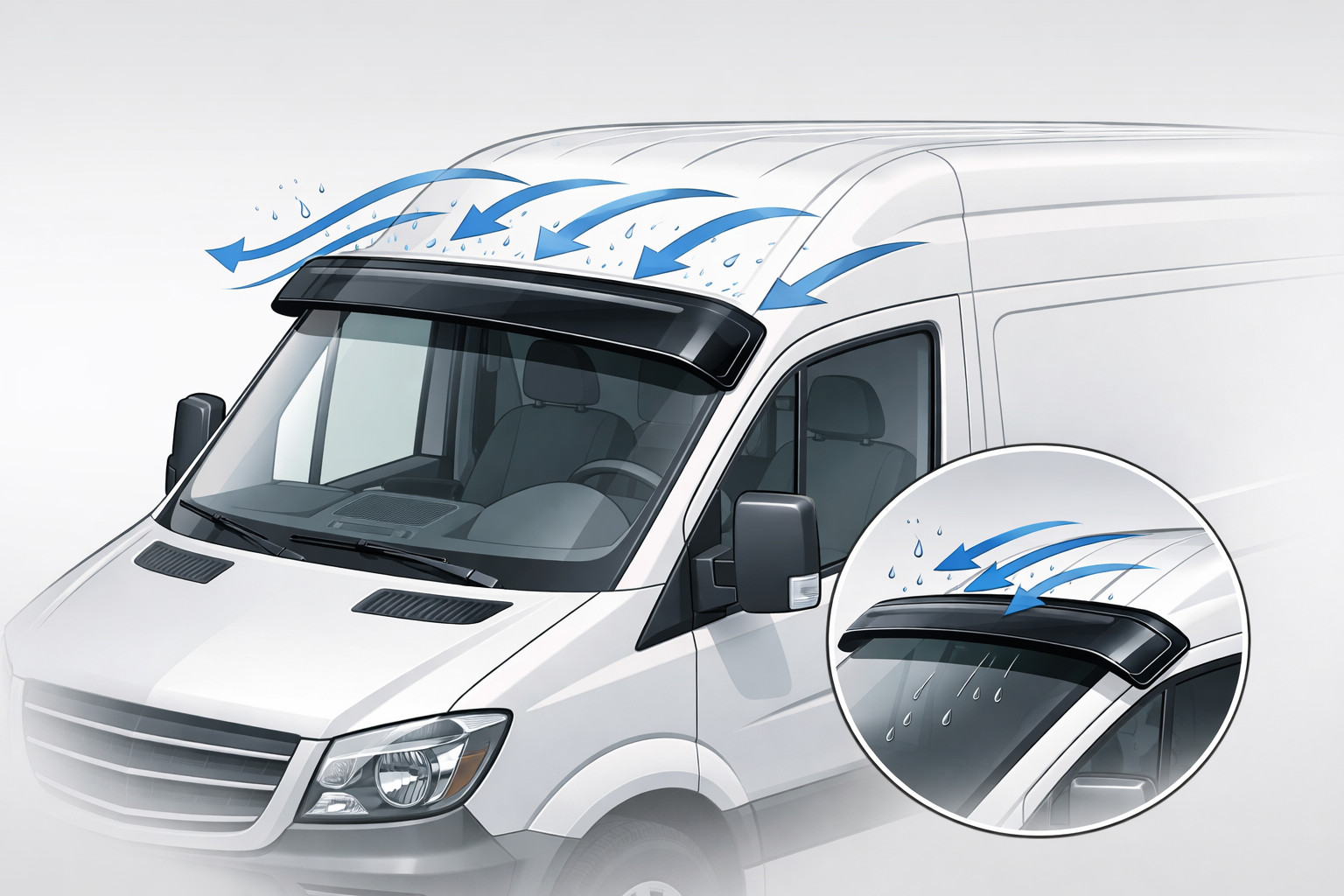
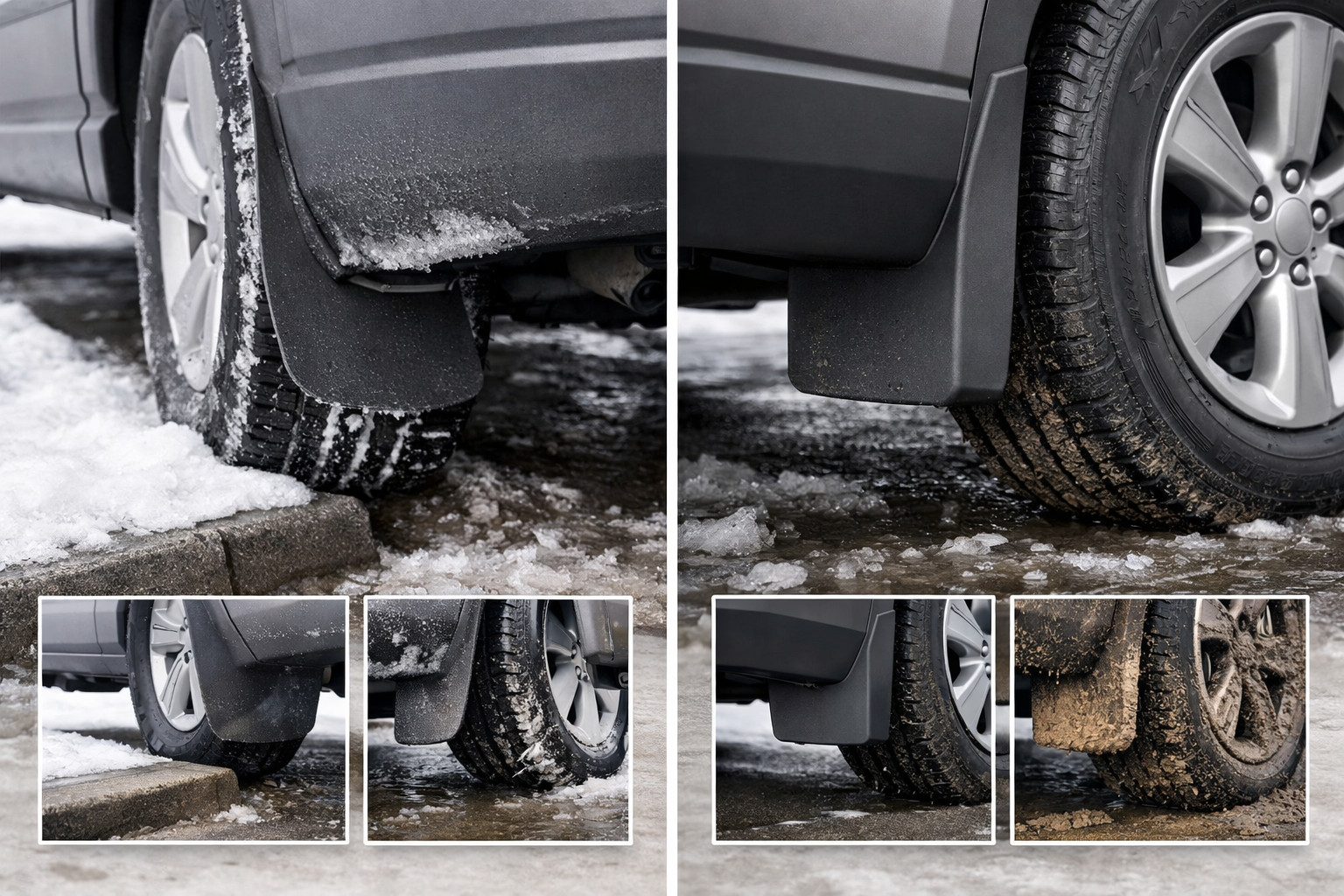
For the BMW X5 E53, tuning makes sense when it solves practical tasks, not just adds “effect.” If the car is used daily, the first things to look at aren’t decorative body kits, but items that make life easier: rubber floor mats, a trunk liner, and roof rack systems. These are exactly the kinds of upgrades that best match the E53’s character as a large family crossover.
Exterior tuning can also be appropriate, but it’s important not to overload the car. Subtle elements work well on the E53—neat side steps, guards, a spoiler, or trim pieces—if they don’t ruin the geometry and don’t complicate everyday use. Be especially cautious with solutions that further reduce ground clearance on the 4,8is.
If you need one entry point for the model, it makes sense to start with accessories for BMW X5 E53 and then filter out what you don’t need for your scenario: city driving, family trips, highway use, or travel with extra cargo.
BMW X5 E53 is a successful old premium crossover for those who want handling, space, and solid practicality without moving into a “pure SUV.” The most rational versions are the 3,0i and 3,0d, while the V8 is worth considering only with a full understanding of the costs. The key idea is simple: you shouldn’t buy the model in general—you should buy a specific well-kept car with a transparent history.
If the example is maintained, the E53 can remain a comfortable daily car for a long time. If the condition is average, even the model’s strengths won’t offset the costs. This material is based on real selection experience, practice, and real-world use cases, so the main advice is one: technical condition first, then trim, wheels, and visual effect.
| ✔ | Precise steering and a well-balanced chassis give a sense of control on the highway and in corners. For a crossover of this age, the X5 E53 feels more composed than many rivals of its time. |
| ✔ | The cabin is spacious, with a high seating position and good visibility. Split tailgate doors and a practical cargo area make the car convenient for everyday use. |
| ✔ | The trunk offers a decent amount of space for family trips: 456 l in standard form and up to 1541 l with the second row folded. This makes it easy to carry luggage, children’s items, or gear. |
| ✔ | The 3,0i and 3,0d are described in the article as the most sensible versions in terms of running costs. In particular, the 3,0d looks like a solid compromise for those who drive a lot and want torque without V8 expenses. |
| ✔ | The model is well suited for travel and towing: a towing capacity of up to 2722 kg is specified. This makes the E53 useful not only as an urban crossover, but also as a car for the highway and family outings. |
| ✘ | Age and mileage have a strong impact on the car’s condition, so even a well-kept-looking example may require major investment after purchase. For the E53, this is one of the main risks on the used market. |
| ✘ | The suspension and all-wheel-drive components are described as expensive to repair, and there is also mention of complicated electrics. Because of this, ownership can be noticeably more expensive than it seems at first. |
| ✘ | On large wheels, the ride becomes firmer, especially on broken roads. In other words, the E53’s comfort depends heavily on the trim and the condition of the suspension. |
| ✘ | V8 versions offer better performance, but they are significantly more expensive to maintain. For a car that is over 20 years old, this is no longer just a detail, but a real expense item. |
Shipping to EU
Wholesale and retail
Own warehouse
Опис продукту
Подарунки не надаються при оформленні покупки у кредит під 0,01% або при покупці частинами.