02.04.2026
493
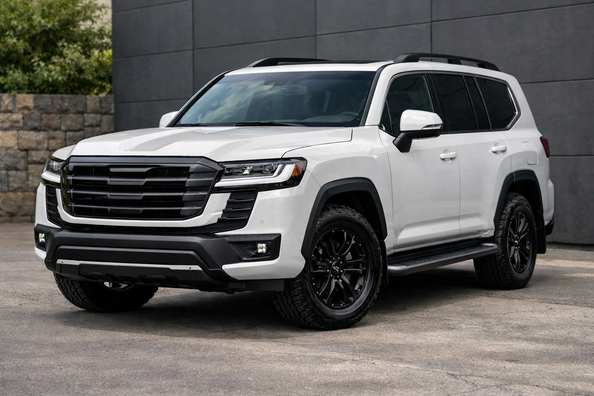

This upgrade plan is for a Toyota Land Cruiser 300 owner who doesn’t want to scatter the budget and is choosing between three obvious options: side steps, a grille, or small accents. If the vehicle is a daily family car that drives around town, on the highway, or carries gear on the roof, the first real upgrade is usually side steps. If, however, the LC300 truly goes off-road, then even before that, underbody protection and recovery points should be the priority.
The logic is simple: the LC300 is a big, tall, heavy SUV with about 235–245 mm of ground clearance, a height of nearly 2 meters, and a curb weight close to 2.5–2.6 t. So your first money is better spent not on what’s visible from afar, but on what genuinely makes the vehicle easier to use or takes the hit. The grille and small décor come last.
On an LC300, the first upgrade should solve one of three tasks: make entry and roof access easier, provide basic side body protection, or prepare the vehicle for bad roads and off-road use. If you haven’t defined the task, it’s very easy to buy a good-looking but almost pointless part.
For a city and family use case, the main benefit is easy entry into the cabin and access to roof cargo. For long-distance trips and trailer towing, it’s not only entry that matters, but also the durability of bolt-on equipment. For off-road, the task changes: protecting vulnerable areas comes first, not appearance. That’s why the same part can be either a smart buy or a waste of money.
If the choice is only between side steps, a grille, and small accents, start with side steps. But not decorative covers—choose a rigid solution that mounts to the frame. These steps make sense because the LC300 is tall, and you need cabin access and access to roof gear every day. An extra plus is basic protection for the lower side panels from stones and minor contact.
There’s an important caveat: if the vehicle really goes into rocks, ruts, water crossings, or tough forest trails, then the first items should not be steps, but underbody protection and proper recovery points. The grille is last in this order, because it mostly changes the look of the front end rather than functionality. One more thing: factory or light decorative running boards shouldn’t be confused with heavy-duty rock sliders—these are different things in strength and purpose.
| Upgrade | Why it’s needed | Who truly benefits |
|---|---|---|
| Underbody protection | Shields vulnerable components underneath on rocks, ruts, and uneven terrain | Those who regularly leave the pavement or drive demanding routes |
| Recovery points | Provides a safe place to pull the vehicle out | Those who drive in mud, sand, snow, go fishing, hunting, or on expeditions |
| Frame-mounted side steps | Makes getting in/out easier, improves roof access, and partly protects the sides | Families, tall vehicles for daily use, vehicles with roof cargo |
| Reinforced side protection | Works not only as a step, but also as protection for the rocker area in difficult sections | Those who often drive rocky or forest routes |
| Grille | Changes the look of the front end | Those who care about visual distinction rather than practical effect |
| Small accents | Add individuality but barely change day-to-day use | Those who have already covered the basic needs for convenience and protection |
As a second stage, it’s logical to cover what follows from your use case. If the first step was side steps, then consider reinforced side protection or underbody protection if the routes have become tougher. If underbody protection came first, then the second step can be comfortable steps with strong mounting, so you’re not struggling with entry every day.
For a vehicle that travels, carries gear on the roof, or frequently works with a trailer up to 3500 kg, the second stage should reinforce practicality, not the “picture.” For a city vehicle without challenging routes, the second stage can be neater exterior items—but only after you’ve already solved the convenience of getting in.
This category includes a different grille, decorative dark elements, small trim pieces, illuminated running boards, and other visual accents. You may simply like them, and that’s a valid reason to buy. The problem starts when someone buys this type of upgrade instead of a functional one and expects protection or real practical benefit from it.
Even steps can be two different types in meaning: some genuinely help you use the vehicle and handle load thanks to frame mounting, while others work more as a styling element. So you should look not at the name in the catalog, but at the construction, the mounting method, and your driving pattern.
The most common mistake is buying a grille first just because it’s immediately visible. On the LC300, that’s almost never the smartest start if the budget is limited. The second mistake is choosing light running boards assuming they will work as rocker protection off-road. They won’t: for that you need stronger, higher-level solutions.
The third mistake is removing factory running boards and not installing anything in their place, even though the vehicle drives on gravel or muddy roads. That way you lose both convenience and some protection from stones. The fourth is overpaying for small accents when the basics aren’t covered yet: cabin access, underbody protection, safe recovery. On a big, heavy SUV, that’s simply the wrong spending order.
| Scenario | What to install first | What can be postponed | What is not required |
|---|---|---|---|
| City, family, daily use | Frame-mounted side steps | Grille, small accents | Reinforced underbody protection if you don’t leave the pavement |
| Long trips, roof cargo, trailer | Steps with strong mounting, then underbody protection as needed | Grille | Decorative accents |
| Real off-road | Underbody protection and recovery points, then reinforced side protection or steps | Grille | Small décor |
More expensive options are justified when the LC300 is used not as a showpiece, but as a large working tool: kids getting in and out every day, frequent roof access, travel with cargo, a trailer, gravel roads, or regular off-road trips. In that case, cheap décor quickly loses its point, while a strong design with proper mounting pays back in convenience and a lower risk of body damage.
If you’re already spending money, it’s better to look right away at side steps and running boards for Land Cruiser 300 with a functional design, rather than random decorative items. A more expensive solution also makes sense when you consciously want to combine daily convenience and protection, instead of buying a pretty part first and then redoing everything a second time.
For the Toyota Land Cruiser 300, the right first step depends on your scenario, but the overall logic is clear. If the choice is only between side steps, a grille, and small accents, install the steps first—preferably strong, frame-mounted ones. If the vehicle goes off-road, underbody protection and recovery points are needed even before that. The grille and small décor make sense only after the basic benefit-driven tasks are covered.
| ✔ | Frame-mounted side steps really make getting into the tall LC300 and accessing roof cargo easier. This is especially useful for daily driving, family use, and transporting luggage. |
| ✔ | These side steps also provide basic protection for the lower side panels from stones and minor contact. So this is not only about convenience, but also about practical benefits in the city and on rough roads. |
| ✔ | If the vehicle often goes into demanding conditions, the logic of priorities is well laid out: first underbody protection and recovery points, and only then other upgrades. This helps avoid spending the budget on things that do not save the vehicle off-road. |
| ✔ | The grille and small accents can be safely left for later without losing anything critical for everyday use. This approach lets you cover useful items first and then think about the exterior appearance. |
| ✘ | In this scenario, the grille mostly changes the front-end look rather than functionality. If the budget is limited, this is a weak candidate for the first upgrade. |
| ✘ | Decorative side steps and light overlays do not replace structural sill protection. On difficult routes, they will not provide the level of strength needed for real off-road use. |
| ✘ | If you remove the factory side steps and do not install anything in their place, the vehicle loses both entry convenience and some protection from stones. For gravel or muddy roads, this is a poor solution. |
| ✘ | Small accents are easy to buy before more basic items, but they hardly change how the vehicle is used. For a large and heavy SUV, this is the wrong order of spending. |
Shipping to EU
Wholesale and retail
Own warehouse
Опис продукту
Подарунки не надаються при оформленні покупки у кредит під 0,01% або при покупці частинами.