
































































 Author: Radomskyi Maksym Vasyliovych
This upgrade plan is for a Toyota Land Cruiser Prado 250 owner who has just picked up the vehicle and wants to quickly get the interior in order without unnecessary spending. The scenario is simple: keep the cabin clean, maintain everyday usability, and avoid piling up accessories that look good only in a product listing.
For the Prado 250, the logic is: start with floor and cargo-area protection, then organize the small stuff, then safety—and only after that add comfort or decorative extras. It’s important to consider the trim level: in GX and GXL, all-weather mats are often already included, while in VX, Altitude, and Kakadu the priority of cabin protection is higher because the factory carpet options are less practical.
What this upgrade should accomplish
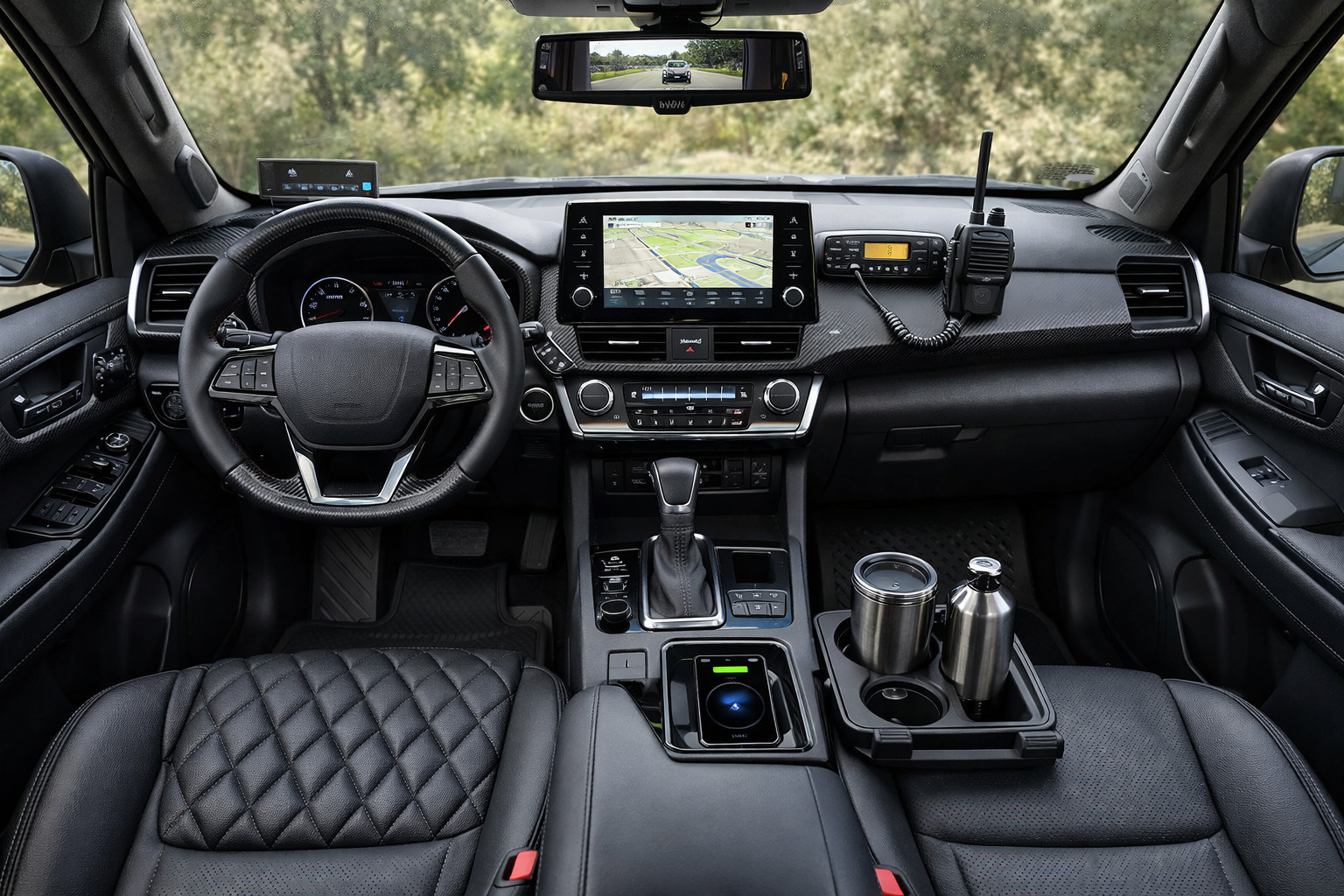
After buying a Prado 250, what usually annoys you about the interior isn’t a lack of screens or ports, but small day-to-day logistics. There isn’t much space for small items, some console volume is taken up by equipment like a wireless charger or storage box, and carpet quickly collects sand, water, and dirt.
So a proper upgrade should solve three tasks: protect what wears out fastest, eliminate chaos with glasses, cables, and small items, and prepare the vehicle for real use—city driving, highway runs, family trips, or light off-road. If the vehicle is a 7-seater, you also need to think separately about the cargo area: usable space there is much more limited, and big organizers can get in the way more than they help.
What to do first
Step one is all-weather cabin mats and a cargo liner. If your version already has model-specific rubber mats, don’t just check whether they’re present—check the shape, raised edges, and mounting. If you have textile mats, it makes sense to replace them right away: the Prado 250 is heavy and tall, and its typical use case means dirty shoes, trips out of town, kids’ stuff, and moisture in the trunk.
Step two is basic interior organization. In this model, what’s useful isn’t “premium inserts” but simple things: a tray for the center console, side pocket inserts, and a dedicated solution for glasses. Because there’s no proper factory spot for glasses, people often start tossing them into the door pocket or onto the console, and it quickly turns into a mess.
Step three is a dash cam. If the vehicle spends the night outside, often drives on the highway, or is used on poor roads, this isn’t a secondary purchase. It doesn’t “decorate” the interior, but it solves event recording and parking-incident documentation.
Upgrade, why it’s needed, who it benefits (table)
| Upgrade | Why it’s needed | Who it really benefits |
|---|---|---|
| All-weather cabin mats | Trap water, sand, and dirt; easier to wash than textile | Anyone who drives daily; especially trims with factory carpet mats |
| Cargo liner | Protects the surface from bags, tools, wet items, and small leaks | Families, anglers, campers, anyone who often carries a stroller or gear |
| Console tray or organizer | Sorts small items by levels so you don’t have to dig for keys, a cable, or a card in a deep compartment | Those who drive in the city every day and use the car as their main vehicle |
| Glasses holder or dedicated spot | Gets glasses off the door pocket and console, reduces the risk of scratches | Drivers who regularly use sunglasses or prescription glasses |
| Dash cam | Records road and parking situations | Those who do a lot of highway driving, park outdoors, or are often in traffic |
| Cargo organizer | Keeps small items from sliding around the compartment | Owners of the 5-seat version who regularly carry a set of items but don’t overload the cargo area |
| Cargo barrier | Limits cargo movement forward during maneuvers or braking | Those who carry a dog, heavy items, tools, or camping gear |
| Seat covers | Reduce wear and staining of the upholstery | Families with kids, dog owners, anyone who often drives in work clothes |
What makes sense to add in the second stage
After basic protection and organization, it makes sense to look at the cargo area. If you have a 5-seat Prado 250, a cargo organizer really works: it keeps car care chemicals, a compressor, first-aid kit, tow strap, and small tools in one place. In the 7-seat version you need to be more careful: with the third row up, a large internal box often just eats up the remaining space.
Next are seat covers—but only if you have a clear use case. If you carry kids, a dog, drive in dust, or go fishing, it’s a practical upgrade. If the car is mostly urban and the cabin doesn’t take heavy abuse, you can postpone seat covers.
DD Tuning expert comment: the most common mistake with the Prado 250 is buying lots of small inserts and trim pieces right away, while leaving mats and cargo protection for later. Another typical issue is not verifying the trim: a console organizer may not fit a version with a different storage box or cooling. And one more nuance: in a 7-seater, don’t buy bulky cargo solutions without understanding how often you actually use the third row.
What’s more about comfort or appearance
There are items for the Prado 250 that aren’t critical but add convenience. These include soft inserts for cubbies, neat organizers for small items, and extra door-sill protection from scratches caused by items from the cargo area. They don’t change the vehicle radically, but they help keep the interior tidy.
But decorative trim pieces, glossy inserts, interior chrome, or pseudo-premium trinkets are more about taste than usefulness. In real use, they don’t solve this model’s main problem: how to keep it clean and properly arrange everyday items.
What people often buy for no reason
First: separate cup holders. The Prado 250 already has enough cup holders, so an extra clip-on or add-on holder usually just steals space. Second: USB hubs and extra charging modules—if your version already has several USB-C ports and wireless smartphone connectivity, a separate hub is often simply unnecessary.
Third: large universal organizers with no fitment to the body style and interior configuration. They look great in photos, but they can block access to compartments, interfere with folding seats, or just be inconvenient day to day. Fourth: decorative trim that people buy before mats, cargo protection, or a dash cam. That’s the classic case of overpaying for looks instead of usefulness.
What to install first, what to postpone, what’s optional (table)
| Install first | Can be postponed | Not required |
|---|---|---|
| All-weather cabin mats | Seat covers | Decorative interior trim |
| Cargo liner | Cargo organizer | Additional cup holders |
| Console organization and a place for glasses | Soft inserts for cubbies | USB hub without a real need |
| Dash cam | Cargo barrier, if you don’t carry cargo or animals | Glossy or chrome interior elements |
A ready upgrade plan for this scenario
- Check the trim: what mats came from the factory, whether the console has special features, and whether it’s a 5- or 7-seat version.
- Install or upgrade all-weather cabin mats if the factory ones are textile or hard to maintain.
- Add a cargo liner for your scenario: city use, kids, out-of-town trips, gear.
- Organize the center console and small storage zones: tray, pockets, glasses spot.
- Install a dash cam if the vehicle is parked outside or does a lot of highway driving.
- Assess whether you need a cargo organizer or barrier: for 5-seat and cargo-heavy use it’s often justified; for 7-seat it’s not always.
- Only after that decide whether you need seat covers and other secondary items.
When it makes sense to choose more expensive solutions
More expensive items make sense where shape, compatibility, and daily load are critical. First of all, this applies to floor protection: if you’re buying rubber cabin mats, the right geometry, raised edges, and mounting matter—not just a similar outline. Same with the cargo area: a cargo liner is worth choosing for your specific configuration, especially if you have 7 seats.
The second case is when you want not a single item, but a coherent set of interior solutions. Then it’s logical to start from the main page for Prado 250 interior tuning and use it to cross-check what actually fits your scenario. The extra cost is justified not by a “more expensive look,” but by the fact that the accessory fits properly, doesn’t interfere with factory components, and doesn’t annoy you a week later.
Conclusion
From a customer’s experience: after buying a Prado 250, the owner initially wanted seat covers, decorative trim, and a large cargo box. In the end, he started with rubber mats, a cargo liner, a console tray, and a dash cam—and only then realized the rest wasn’t that necessary. The biggest impact came from the items that remove dirt and clutter every day, not those that create the impression of a “more expensive” interior.
For the Toyota Land Cruiser Prado 250, the smartest order is simple: first protect the cabin and cargo area, then organize small items, then add safety in the form of a dash cam, and only after that go for comfort or pricier add-ons. This approach helps you avoid wasting budget on marketing junk and builds an interior for real use, not for photos. This material is based on real selection experience, hands-on practice, and real-world use cases.
How it works
- Check the trim level and usage scenario First, find out which Prado 250 version you have — 5- or 7-seat — and what is already included from the factory: floor mats, center console features, factory storage spaces. What needs to be installed right away and what may turn out to be unnecessary depends on this.
- Install floor and trunk protection First of all, replace textile floor mats with all-weather ones if they are not installed or are inconvenient to maintain. Add a trunk mat to suit your needs — for the city, kids, trips out of town, or carrying gear.
- Organize small-item storage in the cabin After protecting the floor, move on to the center console and small storage areas. Practical solutions here are a console tray, side insert pockets, and a separate place for glasses.
- Install a dash cam If the car is parked outdoors overnight, often driven on the highway, or gets stuck in heavy traffic, it is worth installing a dash cam early. It does not affect the interior appearance, but it addresses the issue of recording events on the road and in parking lots.
- Assess cargo organization and seat protection For the 5-seat version, a trunk organizer or cargo barrier can be useful, while for the 7-seat version — only if it does not interfere with the third row. Seat covers make sense when the cabin really faces increased wear from children, dogs, dust, or work clothes.
- Put off decorative and secondary accessories Do not rush into decorative trims, glossy inserts, unnecessary cup holders, or USB hubs without a need. In the Prado 250, protection, order, and safety come first, and only then the comfort extras.
Pros and cons
All-weather floor mats and a cargo mat are the first to address Prado 250’s main issue — dirt, sand, and moisture that quickly wear down the trim. They are easy to wash, so taking care of the cabin becomes simpler in daily use.
A center console tray, side inserts, and a dedicated glasses holder help clear small items off open surfaces. This reduces clutter in the cabin and makes it easier to access keys, cables, and cards.
A dash cam is practically useful for those who often drive on highways, park on the street, or get stuck in heavy traffic. It does not affect the look of the cabin, but it records road and parking situations.
For the 5-seat version, a cargo organizer is truly useful if you carry a first-aid kit, compressor, tow strap, tools, or chemicals. It keeps items in one place and prevents them from rolling around the compartment.
Seat covers make sense for families with children, dog owners, or those who often drive in dusty conditions or work clothes. In such cases, they really reduce wear and dirt on the upholstery.
In the 7-seat version, large cargo solutions can significantly eat into the already small remaining space. If the third row is in use, a bulky organizer or box becomes more of an annoyance than a benefit.
Separate drink holders in the Prado 250 are often unnecessary, since the factory cup holders are already sufficient. An extra holder only takes up space and does not solve any real problem.
USB hubs and extra charging modules make no sense if the version already has several USB-C ports and wireless smartphone connection. In that case, it is just an unnecessary purchase with no noticeable benefit.
Decorative trims, glossy inserts, and interior chrome do not improve everyday cabin usability. They do not help with cleanliness, storage, or surface protection, which is why the first upgrades are recommended.