

































































 Author: Radomskyi Maksym Vasyliovych
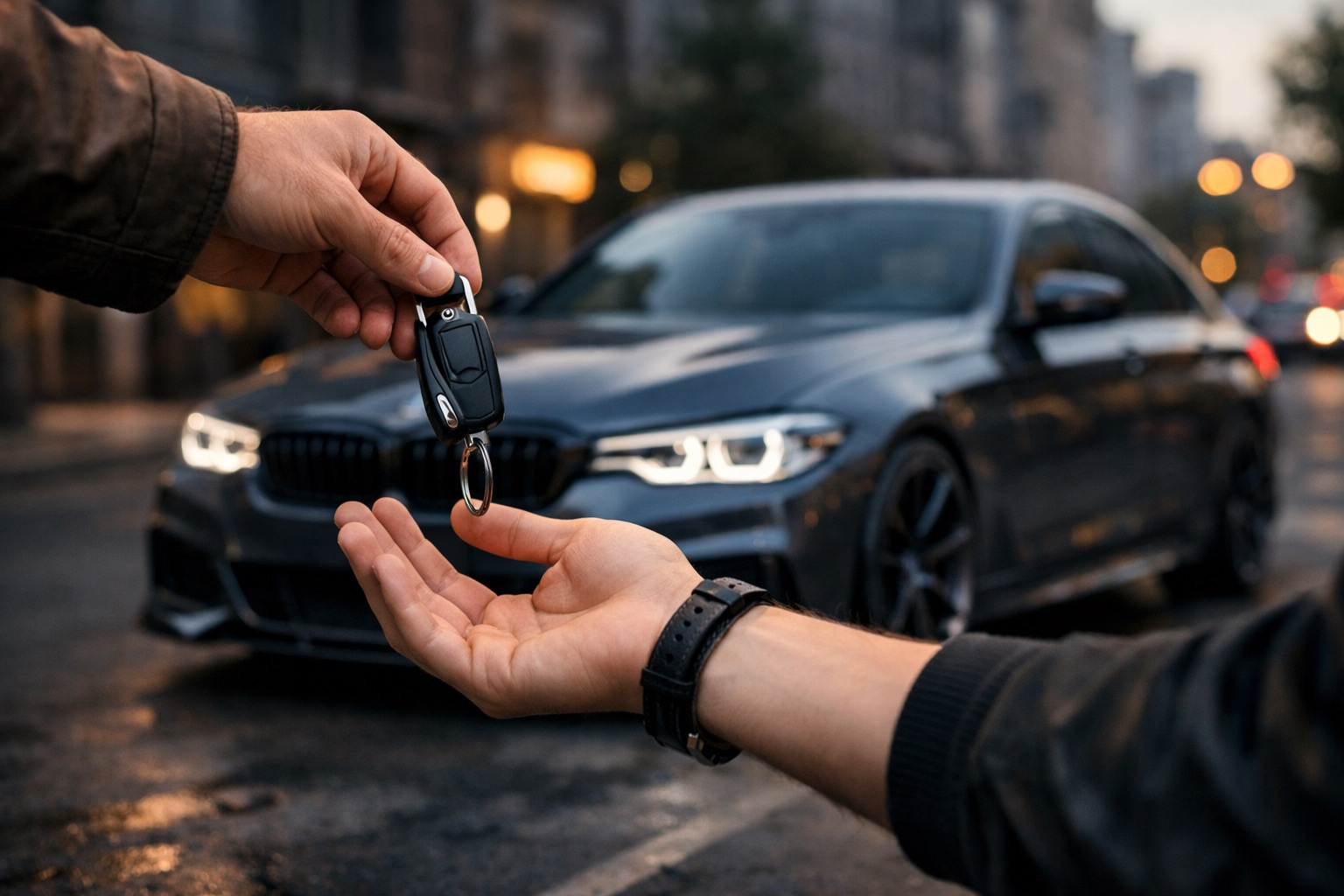
I’ll be honest: «buying a car for your kid» sounds like a plan, but looks like a social experiment. Because in a parent’s head it’s “caring”, and in a kid’s head it’s a “legal way to become the boss of the neighborhood”.
Provocation #1: if you’re buying a car for your kid, you’re not buying a piece of metal. You’re buying habits. And habits either save you—or get very expensive to fix.
First — a cold shower: how old is a «kid»?
If your child doesn’t have the legal right to drive — stop. Not because I’m being a bore. But because the worst kind of tuning is «responsibility by wishful thinking».
- Before a driver’s license: the car is family transport for safe trips, or training formats (karting, simulator, driving school with an instructor when the time comes).
- After getting a license: you can talk about a first car — but not a «dream car», rather a «car that forgives dumb mistakes».
Provocation #2: a first car must be able to forgive. Because your kid (even the smartest one) will think at least once: «I’ll make it».
A test of parental sanity: why does your kid need a car?
The answer “because everyone already has a car” isn’t a reason. It’s a diagnosis.
- Need (the commute to school/work, sports, clubs, logistics).
- Safety (better to ride in a proper car with stability systems than «in a taxi that showed up today»).
- Learning responsibility (fuel budget, maintenance, rules, fines — is this taboo in your family or reality?).
Provocation #3: if you’re not ready to talk about repair money — you’re not ready for a car for your kid. A car doesn’t ask when it’s “inconvenient.” It just breaks.
Golden criteria: what a car «for a kid» (i.e., a beginner) should have
1) Safety — not just “airbags”, but brains + systems
Look not for a «nice color», but for real things:
- ESC/ESP (stability control) — a must-have.
- ABS — a must-have.
- Airbags (the more the better, not “oh, there’s one”).
- Decent tires — yes, that’s more important than «blogger-style» wheels.
- Proper brakes and predictable steering.
2) Forgives mistakes
The first car should be one where a mistake doesn’t turn into a tragedy. This is about handling, predictability, visibility, and the car being in healthy condition.
3) Cost of ownership: «bought» ≠ «drove away»
This is where parents lose most often: they buy something “pretty”, then cry at the shop.
| Expense item | What people often “forget” | How to think correctly |
|---|---|---|
| Insurance | «it’ll work out somehow» | Build it into the budget right away, no illusions |
| Service & oils | «the previous owner did it» | You do it. And regularly |
| Tires | «they’ll last one more season» | Tires are your braking distance |
| Unexpected repairs | «but it’s a reliable brand» | Reliable are the ones that get maintained |
Provocation #4: “Expensive” doesn’t mean “safe.” And “cheap” doesn’t mean “smart.” Smart is when the car fits your budget.
Three purchase scenarios: honestly choose which one is yours
| Scenario | What we’re really buying | Pros | Cons/risks |
|---|---|---|---|
| 1) First car after getting a license | A responsibility trainer | Easier to learn, less fear, fewer “flexes” | If you choose an “old premium” — you can get stuck in repairs |
| 2) A family car for the kid | Safe transport “for everyone” | More control, better vehicle condition, safety systems | The kid may take it as “mine” and start pushing boundaries |
| 3) A dream car (e.g., BMW G30) | Emotion, status, and… bills | Comfort, dynamics, fun, technology | For a beginner — temptation to “push it”, higher running costs, pricier mistakes |
BMW G30 in this story: «possible», but there’s a nuance
Yes, BMW G30 is a car that’s easy to fall in love with. And just as easily it plants ideas like: “I’ll be careful, dad/mom.”
Provocation #5: buying your kid a BMW G30 as a first car is like handing over a credit card with no limit and saying “just don’t spend it.” Theoretically possible. Practically — you get it.
If you already have a G30 and want the car to look even more put-together and expressive — we’ve got body kits for BMW G30.
But it matters: style is beautiful. But style without discipline behind the wheel is “beautiful until the first curb”.
An algorithm for choosing a car for your kid: 9 steps with no self-deception
- Define the scenario: first car after getting a license or a family car for the kid.
- Set boundaries: who pays for fuel, repairs, fines, parking.
- Priority #1 — safety: ESC/ABS, airbags, decent tires, working brakes.
- Choose simple and predictable: handling and straightforward maintenance matter more than the “wow effect”.
- Check the car’s history: better to spend on diagnostics than on a “surprise.”
- Estimate the cost of ownership: not only the purchase price, but also the recurring expenses.
- Look at visibility: blind spots, sightlines, parking — these are a beginner’s daily battles.
- Practice the routes: school/work/training — without “heroics” and racing.
- Make an “agreement”: rules for using the car — in writing or very clearly within the family.
Phrases that sound cool but lead to trouble
“He/she is smart, they can handle it.”
Smart — yes. But experience isn’t IQ. Experience is practice.
“Let them learn in a proper car.”
A proper car is one that doesn’t make mistakes expensive.
“Fines are no big deal.”
Fines are the small stuff. It’s bad when the “small stuff” turns into repairs, a hospital, or court.
dyty
Conclusion: provocatively simple
Buying a car for your kid isn’t a “gift.” It’s a system: rules, responsibility, safety, budget. Want to do it like an adult — do it like an adult. And save the “flex” for photos next to the car, not for the road.
And if BMW G30 is among your plans (or it’s already sitting in the driveway) — you can bring its look to your desired style in a civilized way: tuning for G30.