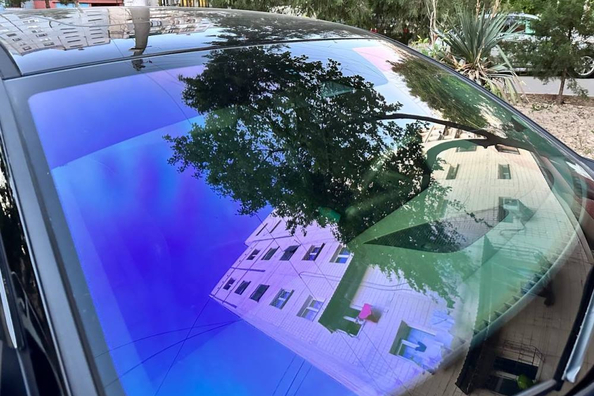

Athermal Film on Car Windows: Pros and Cons

Athermal film — is a modern tuning solution for car window tinting that not only slightly darkens the glass but also effectively reflects infrared and ultraviolet rays. Unlike regular tinting, it maintains high transparency, allowing it to be used even on the windshield. This material is popular among drivers in hot regions where reducing cabin heat is important. Let’s look at the main advantages and disadvantages.
Advantages of athermal coating
- Heat protection: The film blocks up to 90% of infrared radiation (depending on the type of film). This helps maintain a comfortable cabin temperature and reduces the load on the air conditioner, indirectly saving fuel.
- Interior preservation: Blocking 99% of UV rays prevents damage to leather, plastic, and fabric, keeping the interior looking new.
- Safety in accidents: In case of impact, the athermal coating holds glass fragments together, preventing them from scattering and injuring passengers.
- Compliance with standards: Most of these films are almost transparent, allowing them to pass light transmission tests on windshields and front side windows.
Are there any drawbacks?
Despite its advanced technology, some factors should be considered:
- Cost: High-quality film is significantly more expensive.
- Installation complexity: The material requires skilled application, especially on curved glass.
- Risk of counterfeits: Cheap imitations often lack the declared properties and only slightly darken the glass.
Athermal film — is an investment in your car’s comfort and durability. It’s ideal for those who want protection from heat without violating tinting laws.