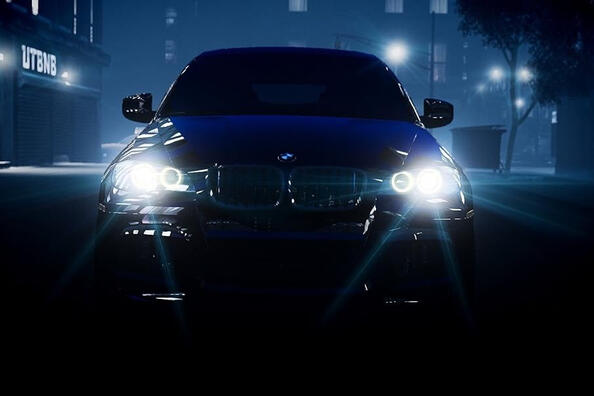
The choice of headlights is not just a matter of aesthetics. Correct road lighting is the key to driving safety and comfort. In this article, we will help you understand the intricacies of xenon and bi-xenon lighting so that you can make an informed choice. You can also significantly improve the attractiveness of your car by using tuning accessories, a large assortment of which is available in our online store.
Read on to find out:
- How xenon and bi-xenon headlights work.
- How do they differ from each other.
- What are their advantages and disadvantages.
What is the difference between xenon and bi-xenon?
Light:
- Xenon lamps : a gas discharge lamp, where instead of a filament, an arc discharge is used between two electrodes in a bulb filled with xenon.
- Bixenon: A xenon lamp with a movable curtain or screen that allows you to switch between low and high beam.
Functionality:
- Xenon : provides only low or high beam (depending on the optics of the car).
- Bixenon: combines the functions of low beam and high beam.
Construction:
- Xenon: A simpler design.
- Bixenon: a more complex design that includes moving elements.
Price:
- Xenon: usually cheaper.
- Bixenon: more expensive.
Pros and cons of xenon and bi-xenon headlights
Advantages:
Xenon:
- Bright light, close to daylight.
- Low energy consumption compared to bi-xenon.
- Long service life.
Bixenon:
- Versatility (low beam and high beam).
- Clear light border.
- Aesthetic appearance.
Disadvantages:
Xenon and bixenon:
- The need to install ignition blocks.
- Relatively long "temperament".
- The need to adjust the headlights.
Bixenon:
- Higher price.
- Complex design.
- High power consumption.
Conclusion
Xenon and bi-xenon are two modern types of automotive lighting that have their own advantages and disadvantages. The choice between them depends on your needs, budget and preferences.