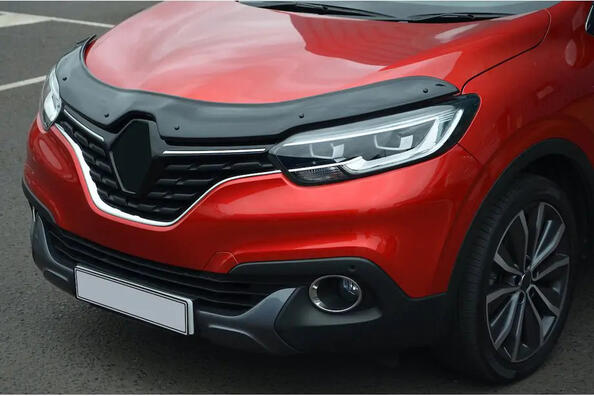
A hood deflector, also known as a fly swatter, is a car accessory that is gaining interest among car owners. In this article, we'll look at the pros and cons of using a hood deflector and why it might be beneficial for your car.
Pros and cons of using a deflector on the hood
The main positive properties of the fly swatter:
- The fly swatter effectively prevents insects and small particles from hitting the windshield and hood of the car.
- The deflector creates a barrier that reduces wind noise while driving, which is especially important at high speeds.
- A hood deflector can improve the car's aerodynamic performance, resulting in reduced air resistance and fuel economy.
- Most hood deflectors are easy to install and can be easily removed if needed.
Cons of using a deflector:
- For some car owners, deflectors may seem unaesthetic and affect the appearance of the car.
- In some cases, the effectiveness of the fly swatter may be limited, especially at low speeds.
- Improper installation or use of low-quality deflectors can cause damage to the paint or hood surface.
How to choose and install a deflector on the hood
Recommendations for choosing accessories:
- Before purchasing, make sure the deflector you choose is compatible with the make and model of your vehicle.
- Deflectors are available in a variety of materials, including acrylic and polycarbonate. Choose quality material for durability.
- There are several installation methods, including double-sided tape and fasteners. Choose the one that suits your preferences.
- Periodically remove the deflector to thoroughly clean the hood and accessories.
It is also worth noting that the deflectors are available in a variety of designs, from classic to modern, allowing you to choose the one that suits your preferences.