Frequently Asked Questions About Forged Wheels
How do forged wheels differ from cast wheels?
A cast wheel is poured into a mold from a molten alloy, while a forged wheel is formed under pressure from a solid aluminum billet. A forged wheel is lighter and stronger than a cast wheel of the same size, but it costs more.
What is bolt pattern and where can I find it?
Bolt pattern (PCD) is the number of bolts and the diameter of the circle they are arranged on, for example 5×112. Like the center bore DIA, it is listed in the vehicle specifications; the easiest way is to ask a tire shop to measure the stock wheel.
What does offset ET mean and why is it important?
ET is the distance in millimeters from the wheel mounting surface to the center of the rim. Offset determines whether the wheel will stick out past the fender or hit the brake caliper; the value is usually stamped on the inside of the wheel.
Why are the front and rear wheels in the set different widths?
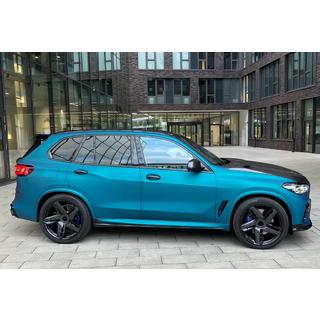
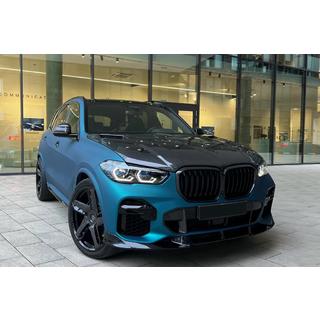
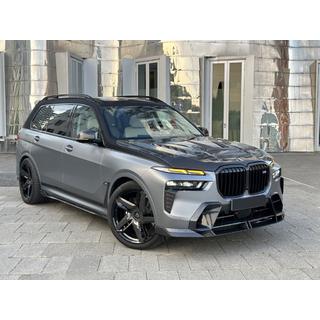
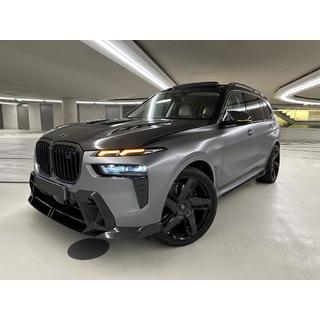
Many cars have factory staggered wheels. For example, in the R22 model set for BMW X5 G05, the front wheels are 22×9,5 ET22 and the rear wheels are 22×10,5 ET28, so these wheels are sold as a set of 4 pcs.
Can I order wheels in a different design or size?
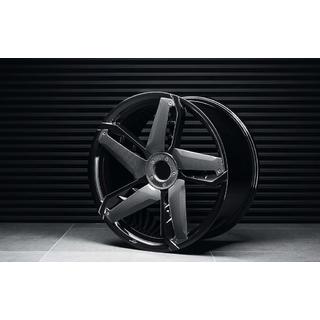
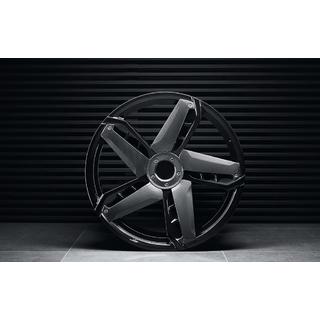
Yes, forged wheels are made to order: you can choose a design from the catalog or send a photo, and the manager will match the diameter, width, offset, and bolt pattern to your car.
Do the set include tires, caps, and pressure sensors?
No, the package includes only the wheels. Tires and tire pressure sensors are selected separately, and the center caps are chosen according to the wheel center bore diameter.



.jpg)

