

05.12.2025
244
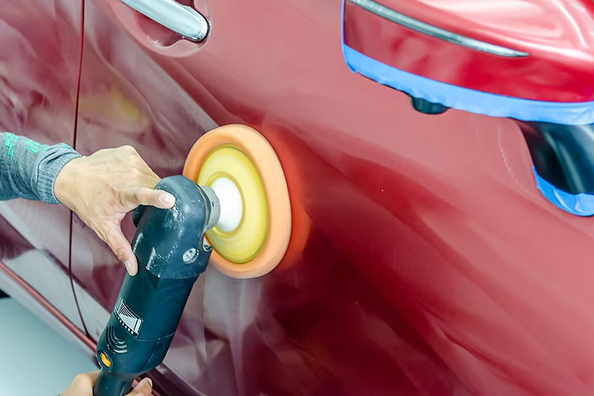
Polishing your car by yourself may seem like an easy way to restore a mirror-like shine and save money. However, 90% of beginners make critical mistakes that leave the car looking worse than before. Let’s go over the most common errors and show how to avoid them. In addition, to make your car look more stylish and impressive, we recommend using tuning accessories, which are widely available in our online store.
The main “killer” of paintwork. Even tiny grains of sand under the polishing pad leave deep scratches.
Consequences:
Using a “universal” kit from a supermarket and a coarse paste? Congratulations – in 10–15 seconds you’ll burn through the clear coat to the primer or base.
Common mistakes:
The paste dries in seconds, clogs the pad, and leaves stubborn holograms.
Rule: body temperature should be 15–22 °C, work only in shade or garage.
The machine weighs 2–3 kg – that’s enough. Pressing another 10–15 kg with your hands? You’ll cause overheating and “orange peel”.
Correct: the machine should smoothly “float” over the surface.
After the main pass, micro-holograms remain. Many immediately apply wax or ceramic coating – after 2–4 weeks everything reappears.
Mandatory:
Follow this simple checklist: three-phase wash → clay → degreasing → select materials according to clear coat thickness (thickness gauge required) → work in shade → finish + protection. The result will match professional detailing quality.
Shipping to EU
Wholesale and retail
Own warehouse
Опис продукту
Подарунки не надаються при оформленні покупки у кредит під 0,01% або при покупці частинами.