A clean engine compartment not only has an attractive appearance, but also makes it possible to detect possible problems with the car in a timely manner. However, washing the engine requires some knowledge and caution. In this publication, we offer step-by-step instructions for washing the underhood space of a car. In addition, you can improve comfort in the car and add practicality to it with the help of tuning , the accessories of which are available in our product catalog.
Preparation for washing
- Engine cooling: Allow the engine to cool completely before starting. A hot engine can cause burns and damage to plastic parts.
- Protect electrical equipment: Use plastic bags or film to protect electrical components such as sensors, ignition coils, and connectors.
- Battery protection: disconnect the battery terminals before washing.
- Selection of detergents: choose special means for cleaning the engine compartment that do not damage rubber and plastic parts.
Washing process
- Large dirt removal: Use a brush or vacuum to remove large debris and dust from the engine compartment.
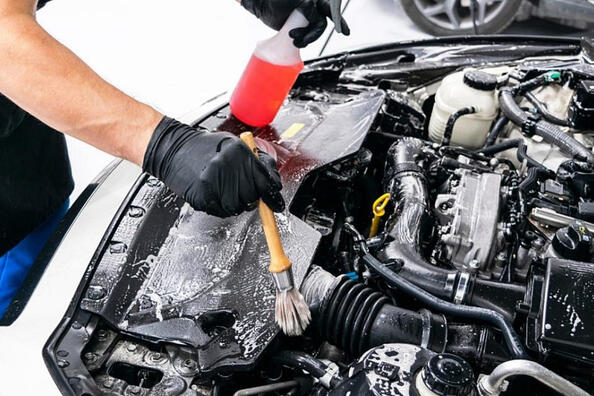
- Application of the product: spray the detergent on the contaminated areas, let it work for a few minutes.
- Cleaning parts: Use a soft brush to remove dirt from engine parts, radiator and other components.
- Washing off the detergent: carefully wash off the detergent with water, avoiding a strong stream.
- Drying: dry the engine compartment with a soft cloth or compressed air.
Precautions
- Avoid getting water on electronic components: Be careful when using water, especially near electrical connectors and sensors.
- Do not use high water pressure: a strong water jet can damage electrical components and other engine parts.
It is important to remember: regular cleaning of the engine compartment will allow timely detection of fluid leaks and other malfunctions.