Choosing a car jack is an important task for every car owner. A jack is required for wheel replacement, minor repairs or maintenance. Let's consider the main types of jacks and their advantages. You can also improve your car and add originality to it if you use tuning accessories, a huge assortment of which is available in our product catalog.
Types of jacks
- Mechanical jacks: These jacks are often supplied with the car. They are easy to operate, do not require additional power sources and are light. However, their main drawback is the need to apply physical force to lift the car.
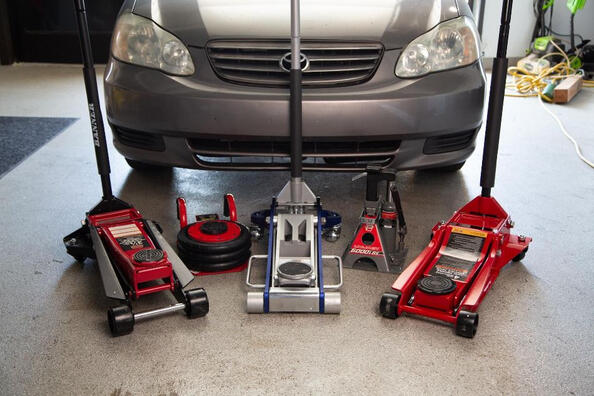
- Hydraulic jacks: This type of jack works by hydraulic pressure, which allows you to lift the car with minimal effort. There are two types of hydraulic jacks: bottle jacks and rolling jacks.
- Bottle jacks are compact and have a high load capacity. However, they are less stable and require a flat surface for safe use.
- Rolling jacks are highly durable and easy to use. Suitable for use in a garage or workshop, but have a large weight and size.
- Pneumatic jacks: These devices run on compressed air and can lift a car in seconds. They are ideal for off-road use, but require a compressor or compressed air cylinder.
What to pay attention to when choosing a jack?
- Carrying capacity . The jack must match the weight of your vehicle. For passenger cars, a carrying capacity of 1.5 to 3 tons is sufficient.
- Lifting height . It is important that the jack can raise the car to the required height. For cars, 30-50 cm is usually enough.
- Compactness and weight . If you plan to carry the jack in the trunk, pay attention to its size and weight.
- Stability . The jack must be stable on various surfaces to ensure safety during operation.
Which jack to choose?
- For daily use and changing wheels, a mechanical rhombic jack is best suited - light, compact and inexpensive.
- If you are looking for a reliable solution for the garage, pay attention to roll-up hydraulic jacks - they are convenient and safe.
In conclusion, the choice of jack depends on your needs and operating conditions.