Dechrome / Black Package: how to do it right and maintain it
Chrome parts on a car were once considered a sign of luxury, but today more and more car enthusiasts want to give their vehicle a restrained, aggressive look. Many manufacturers even offer special trims with the so-called Black Package, where all shiny exterior elements are replaced with black ones. If your car doesn’t have this option, you can achieve a similar effect yourself using dechrome. In this article, we’ll take a detailed look at what dechrome is, the main methods (film vs paint vs part replacement), and how to choose the best option for your needs and budget. We’ll also share care tips for the new black elements and discuss common mistakes so you can do everything right the first time.
What is dechrome and what are its advantages
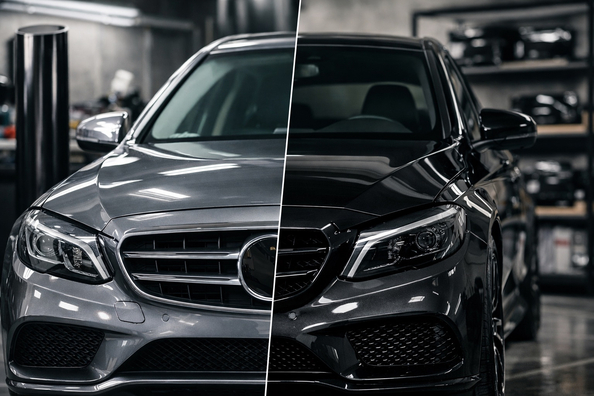
Dechrome (also known as the Black Package) is the process of deliberately darkening or completely removing factory chrome exterior parts of a car. Simply put, all shiny chrome moldings, emblems, grilles, and other accents are replaced or coated in black (glossy or matte). As a result, the car gains a more restrained, modern, and sporty look instead of shiny chrome.
Which elements are usually dechromed? Typically, car owners darken the following parts:
- Front grille: The large front grille often has a chrome frame that can be blacked out for a more “serious” look.
- Moldings and trims: Side door moldings, window surrounds, bumper and sill trims – all these decorative strips can be wrapped in film or painted black.
- Emblems and badges: Manufacturer logos, model names, letters, and numbers are often painted or replaced with black versions. A black logo looks very striking on the body.
- Mirrors and door handles: Chrome mirror housings and handles can also be blacked out to match the overall style.
- Exhaust tips:Exhaust tips, if chrome, are often painted black with heat-resistant paint or replaced with black ones.
All these elements, once darkened, change the character of the car. Dechrome looks especially impressive on dark-colored cars (black, graphite) and, paradoxically, on white ones – creating a stylish contrast. Let’s look at the main advantages of dechrome for car owners:
- Modern style: A car with black accents looks more aggressive, sporty, and even “premium.” Black decor adds solidity; no wonder the phrase “black is the new chrome” is so relevant today. Your car will immediately stand out on the road with its strict appearance.
- Individuality: Dechrome is a great way to emphasize your personal style. While almost every car has chrome, fully black accents make your vehicle unique. It’s like creating your own custom design that reflects your personality.
- Protection of parts: This may not be obvious, but vinyl film or paint applied over chrome provides extra protection against small scratches, chips, and even corrosion. For example, wrapping chrome moldings with film protects them from sun fading and road chemicals. You get 2-in-1: style and protection.
- Reversibility: Another plus – at least two of the three dechrome methods are reversible. If you use vinyl film or liquid rubber (Plasti Dip), you can later remove the black coating and restore the original chrome without damage. This is convenient if you plan to sell the car in stock condition or simply want to bring the chrome back.
- Trend and prestige: The “blackout” style is in fashion. Black accents are everywhere – from show cars at tuning exhibitions to music videos and Instagram feeds of car enthusiasts. A car without chrome looks fresher and matches modern trends. It’s no surprise that many new models come from the factory with a darkened trim package.
Of course, dechrome is primarily an aesthetic choice. Some people like the noble shine of chrome, but if you’re reading this article, you probably belong to those who prefer a stylish dark look for their car. Next, let’s talk about how exactly to perform dechrome and which method suits you best.
Wrap, paint, or replace? Comparing dechrome methods
There are three main approaches to dechroming a car:
- Vinyl wrapping – using special black vinyl film to cover chrome parts.
- Painting – applying paint to chrome elements (including liquid rubber coatings like Plasti Dip).
- Replacing parts – installing ready-made black parts instead of factory chrome ones.
Each method has its own features, pros, and cons. Let’s look at them in detail to understand which one suits you best:
1. Wrapping chrome parts with vinyl film
Vinyl film is the most popular dechrome method. Special films (often called “dechrome film”) come in various widths, colors, and textures. The most common choices are glossy or matte black, depending on the desired effect. The process is simple: the chrome surface is cleaned and degreased, then covered with a piece of film shaped to fit the part. The film is heated with a heat gun to make it flexible and smoothed out without bubbles or wrinkles. Excess is trimmed – and the part becomes black.
Advantages of film: this method is **affordable** and quite **quick to perform**. Wrapping doesn’t require disassembling half the car – many parts (like handles or window trims) can be wrapped directly on the vehicle. The film also **doesn’t damage the original chrome**: you can remove it later and restore the original look. Modern vinyl films are durable and last for several years, protecting the chrome underneath. There’s also a wide range of films: different shades of black, gloss, satin, carbon texture – you can choose your style.
Disadvantages of film: the main downside is **service life and durability**. Although long-lasting, film is less durable than paint: after 2–3 years, wear, fading, or edge peeling may appear, especially if the car is often under the sun or washed frequently. Edges are weak points: if not properly fixed, the film may start peeling. Another issue – **complex shapes**. For example, wrapping thin emblem letters or curved mirrors is harder and requires experience. Beginners can easily make mistakes: leave bubbles, cut the paint with a blade, or overheat the film. For a quality result, professionals are often hired. However, with patience and skill, DIY wrapping is possible.
2. Painting chrome parts (traditional or liquid rubber)
Painting is a more radical dechrome method that provides the **most durable result**. It involves classic automotive painting: the part must be prepared (removed or carefully masked), the chrome surface sanded or primed (for adhesion), then coated with black paint and preferably clear lacquer. After drying, the part is reinstalled. Painting gives an **even, factory-like finish** without seams or edges, indistinguishable from OEM black trim.
Advantages of paint: painted parts are very **resistant to external factors**. Quality automotive paint with lacquer withstands UV, pressure washing, and small stone impacts for years. Paint also allows different effects: deep gloss, matte “stealth,” or even “black chrome” (a special coating that looks like darkened mirror). **No seams or edges**, unlike film – everything looks monolithic, “as if from the factory.” Painting is especially suitable for complex shapes where film can’t be applied (grilles with small sections, intricate emblems).
Disadvantages of paint: the first drawback is **irreversibility**. Unlike film, paint can’t be easily removed. To restore chrome, you’d need to repaint or buy new chrome parts. So be sure of your choice. The second drawback is **cost and complexity**. Proper painting isn’t easy: parts should ideally be removed, professional materials and spray equipment used. Painter services aren’t cheap, especially for multiple parts. DIY spray-can painting is possible but risky – runs, dust, or peeling may occur. Also, **liquid rubber (Plasti Dip)** is a budget alternative: it forms a matte black rubber coating that can be peeled off later. However, it’s less durable – easy to scratch and may peel at edges. Its look is also specific – matte and slightly rough. Still, for emblems or grilles, Plasti Dip can be a cheap temporary solution.
3. Replacing chrome parts with black ones
Physical replacement of parts is the method chosen by perfectionists who don’t want to paint or wrap. The idea is to buy identical parts already made in black and install them instead of chrome ones. The simplest example – **emblems and badges**: black logo kits are available for almost any brand. Similarly, you can buy a black grille (many manufacturers offer “Black Edition” OEM parts), black bumper trims, window moldings, etc. Some even replace headlight surrounds or mirrors entirely if black versions are available.
Advantages of replacement: the main plus is **excellent quality and durability**. You get a factory part in black, made from proper materials. No films or paints that can wear off – factory black parts are usually painted and lacquered or made from black plastic resistant to weather. The look is **most “original”** – the car appears as if it came from the factory in a Black Package trim. Another plus – if you ever want to restore chrome, just reinstall the original parts (easier and cleaner than removing film or paint).
Disadvantages of replacement: unfortunately, this method is **the most expensive**. OEM parts are costly, and for premium cars, a black grille or moldings can be pricey. Sometimes you need to order parts from abroad or from a dealer. The alternative – **aftermarket parts** (replicas) – are cheaper but may have lower quality: poor fit, cheap plastic, or weak coating. Another drawback – **installation complexity**. Removing old moldings and installing new ones isn’t always easy: clips can break or the body can get scratched. Sometimes interior trim must be removed (e.g., to replace window surrounds). It’s best done by a service, which adds cost. But if the budget allows and you want a perfect result – replacement is the best solution.
For clarity, here’s a summary table of pros and cons of each dechrome method:
| Method | Advantages | Disadvantages |
|---|
| Vinyl wrapping | - Affordable and quick result
- Safe for original chrome (removable)
- Protects parts from minor damage
- Wide choice of colors/textures (gloss, matte, etc.)
| - Limited lifespan (2–5 years, may show wear)
- Possible edge peeling over time
- Requires precision and experience for complex shapes
- Less durable than paint (sensitive to harsh chemicals)
|
Painting
(incl. liquid rubber) | - Durable, long-lasting coating (resists fading and peeling)
- Factory-like appearance (no seams)
- Suitable for complex shapes and small parts
- Various effects possible (gloss, matte, “black chrome”)
| - Almost irreversible (to restore chrome, repaint needed)
- More expensive, especially professional painting
- Requires skill or painter service
- Liquid rubber is less durable, may need touch-ups
|
| Part replacement | - Highest quality result (factory black parts)
- OEM look – car appears as Black Edition
- Original chrome parts remain intact
- No risk of damaging chrome with paint or glue
| - Very high cost (parts + labor)
- Black parts may be hard to find for some models
- Installation complexity (risk of breaking clips or scratching)
- Possible long wait for ordered parts
|
How to choose the right dechrome method for your needs and budget
Three methods – each with pros and cons. So what to choose? In fact, the choice of dechrome method depends on several factors: your budget, desired quality/durability, reversibility, and whether you’ll do it yourself or hire professionals. Let’s look at typical cases and recommendations:
- Limited budget, want a DIY solution. In this case, vinyl film or liquid rubber (Plasti Dip) is best. Film costs a bit more but looks cleaner; liquid rubber is the cheapest and easy to apply. Be ready to practice on small parts first – it may not be perfect the first time. But financial risk is minimal, and you can always redo it. A great way to experiment with your car’s style.
- Want quality but affordable and removable. Then go for professional vinyl wrapping. It’s mid-range in price: cheaper than painting or replacing parts. A good installer can make it look indistinguishable from a factory Black Package. The film will last several years, and when you get bored – just remove it or rewrap. Perfect for those who like to refresh their car’s look every few years.
- Maximum durability and premium appearance. If you want the best and are ready to invest, consider painting or replacement. Professional painting gives a factory-like effect and lasts the car’s lifetime. Ideal if you’re sure black is forever and resale with dechrome doesn’t bother you. Replacement suits those who want a 100% OEM result and don’t mind the cost.
- Car under warranty or lease, need reversible options. Avoid painting. Choose film or Plasti Dip, which can be easily removed before returning the car or visiting the dealer. This keeps your warranty intact and avoids issues with the leasing company.
- Partial dechrome. You can mix methods: for example, paint or Plasti Dip small parts like emblems (where film doesn’t fit) and wrap long moldings. If you find some black parts – install them, and wrap the rest. There’s no rule that all elements must use one method. The main thing is a consistent look.
In summary: for beginners and small budgets – liquid rubber or vinyl (DIY); for quality yet practical owners – professional wrapping; for perfectionists – painting or OEM black parts. Evaluate your priorities: price, reversibility, or flawless quality for years. Once you answer that, the choice becomes clear.
Care for parts after dechrome
You’ve successfully “blacked out” the chrome, and your car looks great. Now it’s important to know how to care for the new black elements to keep them perfect for a long time. Care differs slightly depending on the method (film, paint, or replacement), but some rules are common: gentle washing, protection from scratches and harsh chemicals. Let’s go over the main tips for each type of coating.
Caring for vinyl-wrapped parts
Vinyl coating requires gentle handling, as it’s a thin decorative-protective layer. Here are some tips:
- First days after wrapping: don’t wash the car for 3–5 days so the adhesive sets properly. Also avoid heavy rain right after wrapping if possible.
- Car washing: hand wash or touchless wash is best. Avoid brush car washes – they can lift the film edges. Keep the pressure washer nozzle at least 30 cm away and don’t aim directly at edges. Too high pressure or close distance can damage the film.
- Chemicals and care products: use neutral car shampoos. Strong solvents, abrasive pastes, or aggressive cleaners (alkaline, white spirit, etc.) can damage or dull the film. For glossy film, use special vinyl detail sprays that add shine and protection. For matte – only non-wax products that preserve the matte finish.
- Sun protection: prolonged UV exposure fades film. If your car often sits in the sun, apply a protective layer – wax or ceramic coating compatible with vinyl. This helps maintain color and gloss longer.
- Inspection and minor repairs: regularly check film edges. If a corner starts lifting – reheat and press it back. Small scratches shouldn’t be polished; use vinyl detailer instead. Deep damage is best fixed by rewrapping that section.
Common question: can you polish a car with wrapped parts? **Abrasive polishing – no**, it will ruin the film. Glossy film can be refreshed with mild vinyl-safe products, but nothing more.
Caring for painted black parts
If chrome parts were painted (traditional paint or liquid rubber), care is similar to regular body paint, with a few nuances:
- Let the paint cure: after painting (especially with lacquer), wait 1–2 weeks before the first wash or applying wax so the paint fully hardens. Don’t apply protective coatings during this time. (For Plasti Dip, it dries in hours and needs no curing.)
- Washing and cleaning: painted parts can be washed like the rest of the body. Avoid automatic brush washes – glossy black paint scratches easily. Hand wash with a soft sponge is best. Use regular car shampoo; no need for harsh chemicals.
- Polishing and protection: glossy black parts can be waxed or detailed periodically for shine and UV protection. Matte surfaces shouldn’t be polished or waxed – use special matte cleaners instead.
- Be careful with liquid rubber: if your parts are coated with Plasti Dip, remember it’s less durable. Avoid scrubbing hard – it can tear. Wash gently with water and a soft sponge. Fuel and oily substances can damage it – wipe off immediately if spilled.
- Repairing coating: painted parts may get stone chips over time. If shiny chrome shows through, touch up with a small brush. Minor scratches can be polished (if glossy). For Plasti Dip – if a section peels, it’s easier to remove and reapply than patching.
Common question: will the paint peel over time? **Properly applied paint** on well-prepared chrome will last for years. The key is correct prep: sanding or primer. If done right, no worries. Liquid rubber, of course, is weaker – but easy to renew anytime.
Caring for replaced black parts
When you’ve installed original black components, such as purchased moldings or emblems, care for them like any other car parts. These are usually painted and lacquered or made from dyed plastic. Main tips:
- Wash safely: as before, avoid hard brushes to prevent scratches. Most black parts (especially glossy) are sensitive. Hand wash or touchless is best.
- Avoid aggressive chemicals: factory black coatings are durable, but don’t test them with strong solvents. Use standard car shampoos and water. Solvent-based cleaners can damage lacquer or plastic.
- Plastic care: some replaced parts may be matte or textured black plastic (like unpainted bumpers). These can fade over time. Apply plastic conditioner or silicone polish periodically to restore color and UV protection.
- Polishing and protection: if replaced parts are glossy (e.g., lacquered black pillars), they can be polished like body paint to remove fine scratches. Ceramic coatings also work well to ease cleaning and prevent fading.
Overall, caring for black elements is similar to regular body care. The biggest enemies of black are scratches and fading, so wash gently and protect from sun when possible. Then even years after dechrome, your car will look like it just came from a tuning studio.
Below is a short care tips table by coating type:
| Coating type | Care tips |
|---|
| Vinyl film | - Hand or touchless wash; avoid brushes and keep 30 cm distance with pressure washer
- No aggressive chemicals; use neutral shampoos
- Check and reattach edges if lifting
- For gloss – use wax or vinyl detailer; for matte – only special matte cleaners
|
| Painting | - Let dry 1–2 weeks before first wash or waxing
- Wash with soft sponge; avoid scratches on glossy lacquer
- Apply wax or sealant every few months
- Touch up chips to hide chrome; polish minor scratches
- Plasti Dip: wash gently; reapply if damaged
|
| Part replacement | - Wash normally but avoid hard brushes (glossy black plastic scratches easily)
- Treat black plastic parts with conditioner every 4–6 months
- Apply ceramic coating to lacquered black inserts for easier care
- Polish lacquered parts to remove fine scratches if needed
|
Common mistakes when performing dechrome
To make your dechrome successful the first time, it’s worth knowing the mistakes beginners (and even some pros) often make. Here’s a list of common errors and how to avoid them:
- Poor surface preparation: applying film or paint on dirty, greasy chrome is a guaranteed failure. Wash, degrease (with isopropyl alcohol or special cleaner), and dry thoroughly. Otherwise, film will peel or paint will defect.
- Working in wrong conditions: don’t wrap in cold or direct sun – film may crack or soften too much. Painting should also be done at moderate temperature and humidity, in a dust-free area. Wrapping outdoors in wind often leads to debris under film.
- Rushing and no alignment: when wrapping, pre-fit the piece with some margin and plan your moves. Rushing can cause misalignment or pattern mismatch. Take time to test-fit before removing the backing.
- Incorrect cutting: a common mistake is cutting film directly on the car with too much pressure, scratching paint or chrome. Use the tuck method: cut with extra margin and fold edges inside. If cutting on the car, use cutting tape or very light pressure. Always use a sharp blade.
- Skipping primer and heat (for film): complex curves and recesses are prone to lifting. Pros use primer on edges and heat the film after application to “set” it. Without this, film may shrink and peel in sun. Don’t skip these steps.
- Incorrect paint application: painting directly on smooth chrome without sanding or primer is a classic mistake. The paint will peel off in flakes. Chrome is too smooth – always sand it lightly, apply adhesion primer, then paint. Another mistake – painting on the car without masking properly, leading to overspray. If the part can’t be removed, mask carefully or use removable coatings like Plasti Dip.
- Too much force during part replacement: when replacing chrome moldings with black ones, forcing them off can break clips or damage paint. Use plastic tools and heat to soften adhesive. Install new parts gently to avoid breaking mounts. Better take more time than break something.
- Ignoring aftercare: some think dechrome is “done” once applied. Then wonder why film faded or paint scratched after months. As mentioned earlier, each method needs proper care. Follow those rules – your styling effort will last long.
Conclusion
Dechrome is one of the easiest ways to dramatically change your car’s appearance, adding character and individuality. By “blacking out” chrome, you make your car special, highlighting its design and your taste. The key is to approach it wisely: choose the right method, perform carefully or trust professionals, and ensure proper care afterward. Your car will reward you with admiring looks and your own satisfaction every time you see its refreshed look. May black bring you joy, and may dechrome become a successful transformation of your beloved car!
And if you love chrome trims for cars, you can buy them from us!