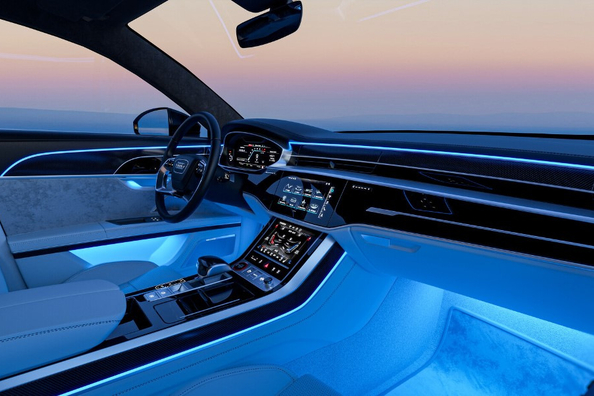
Ambient lighting in a car’s interior transforms an ordinary drive into a real light show. LED strips, RGB modules, and hidden diodes create coziness, emphasize design, and even influence the driver’s mood. In 2025, such systems are installed in most premium cars. Let’s find out whether it’s worth adding lighting and how to choose the perfect option. You can also significantly improve your car’s interior and increase its practicality by using tuning accessories, widely available in our online store.
Advantages of ambient lighting
Soft interior light is not just about aesthetics. Here are the key benefits:
- Comfort and safety: At night, it reduces eye strain and helps you quickly find things without a flashlight.
- Personalization: Over 16 million colors in RGB systems – from calm blue to energetic red.
- Increased car value: When reselling, lighting can boost the car’s appeal on the used market, especially for models like Mercedes or Audi.
- Easy integration: Some modern systems connect to the CAN bus within 1–2 hours.
Drawbacks nobody talks about
Despite its popularity, lighting has its downsides:
- Driver distraction: Bright colors can affect concentration – in the EU, dazzling or distracting lights are prohibited.
- Energy consumption: LEDs use little power (up to 10 W) but can drain the battery overnight in older cars.
- Complex repair: A single burned-out diode may require disassembling the panel.
- Cheaper interior look: Low-quality Chinese strips fade within a year.
Tips for choosing the perfect lighting
To avoid mistakes, follow these recommendations:
- Select zones: Doors + floor = comfort; dashboard = risk of a fine.
- Power and type: IP67 moisture protection, dimming from 5% to 100%.
- Control: Through the manufacturer’s app for the kit.
- Budget: A quality set on AliExpress is affordable, while an original BMW kit costs several times more.
Be sure to test the effect in a dark showroom before installation.