 Author: Radomskyi Maksym Vasyliovych
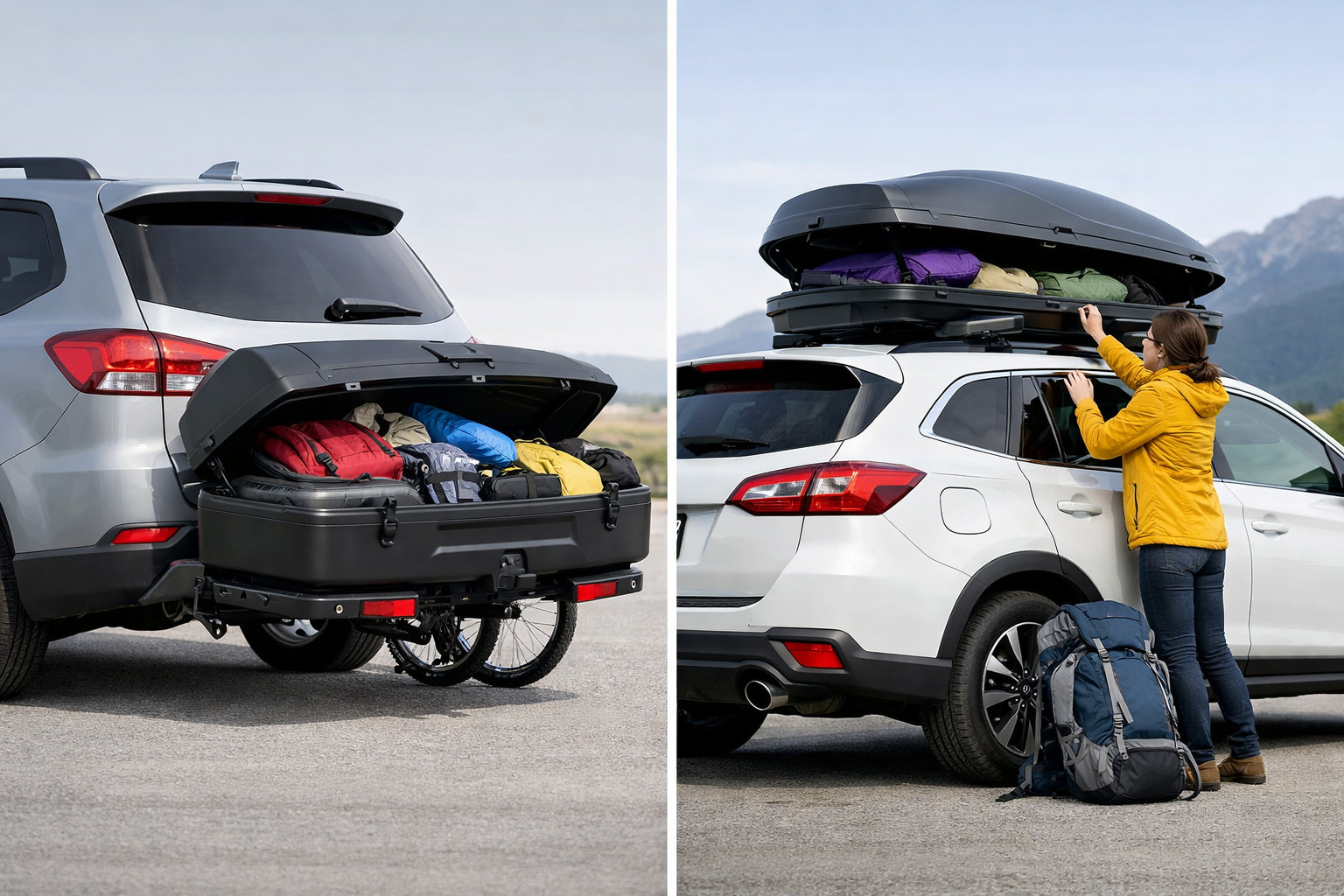
In short, for most trips with suitcases, a stroller, kids’ items, or camping gear, a towbar-mounted cargo box is more convenient: it’s easier to load, usually quieter on the highway, and has less impact on fuel consumption. The main advantage here isn’t liters, but everyday practicality: you don’t have to lift things above your head.
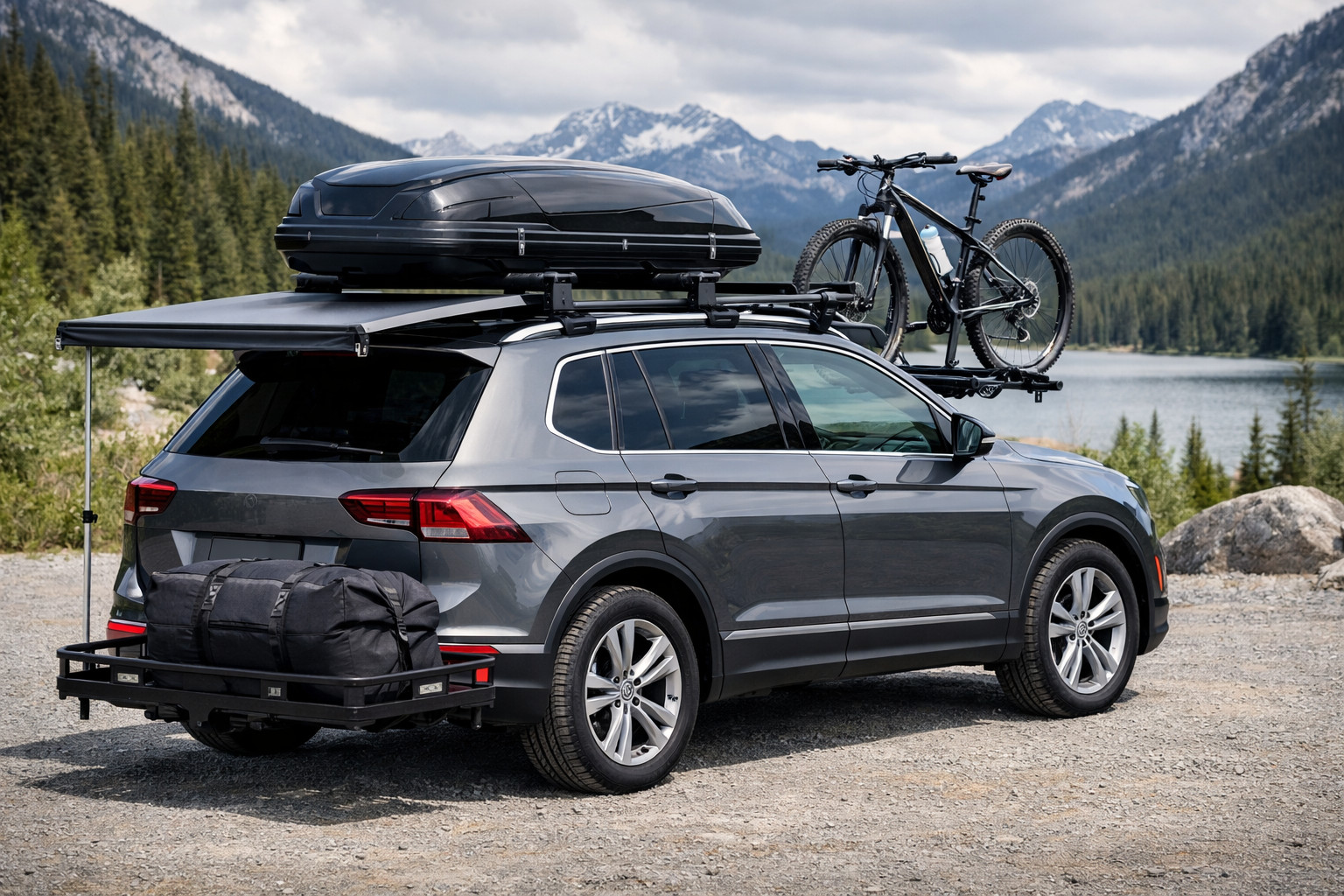
A roof box makes sense when you need more volume, long items, a free towbar, or when the rear of the car has limitations related to lights, the license plate, or geometry. So the choice isn’t about an abstract “better” option, but about which format will annoy you less on your specific trips.
What the choice is really about
A towbar box wins when quick loading, a lower loading height, less noise, and better fuel efficiency matter. A roof box wins when you need long items, more volume, and independence from the towbar.
In practice, the difference comes down to three questions: how often you load heavy items, whether vehicle height is critical, and what limits your setup—roof load capacity or towbar capability.
Which criteria you should compare
- Installation. For the roof you need crossbars or a platform, and for a rear box you need a compatible towbar and adequate permitted vertical load.
- Noise and consumption. A roof box affects aerodynamics more; a rear format is usually calmer because it sits lower.
- Practicality. What matters isn’t just how many liters are in the catalog, but how often you actually need to access your gear on the road.
- Durability. A roof setup takes more load from wind and sun; a rear setup gets more dirt, moisture, and winter road salt. Longevity depends heavily on the mounts, seals, and avoiding overloading.
- Dimensions. The roof adds height, the towbar adds length. These are different risk types: parking garages and barriers versus narrow yards and steep driveways.
- Price. A roof box is often more expensive upfront due to the roof base; a rear box may require not only the box itself but also a quality towbar or a platform.
Quick comparison of options (table)
| Option | Strengths | Weaknesses | Best for |
|---|---|---|---|
| Towbar-mounted box | Easy loading, less impact on consumption, quieter highway driving, roof stays free | Adds vehicle length, may interfere with sensors, lights, and the license plate, requires monitoring clearance from the exhaust | Families, those who often carry heavy suitcases, a stroller, camping gear, or want minimal fuss around the car |
| Roof box | Usually larger volume, better for long items, doesn’t extend the car, doesn’t take up the towbar | You need to lift items high, higher noise, more attention to height and roof load limits | Those who carry skis, long bags, travel in a car without a towbar, or don’t want to cover the rear of the vehicle |
DD Tuning expert comment: the most common mistake is looking only at volume and not thinking through how you’ll actually load the box every week. The second typical issue is ignoring the car’s real limits: on the roof you quickly hit the allowable weight, and at the rear questions often come up about the plate, sensors, and tailgate. If you’re unsure, don’t start with liters—start with a list of items and how often you travel.
Detailed breakdown of each option
Towbar-mounted box
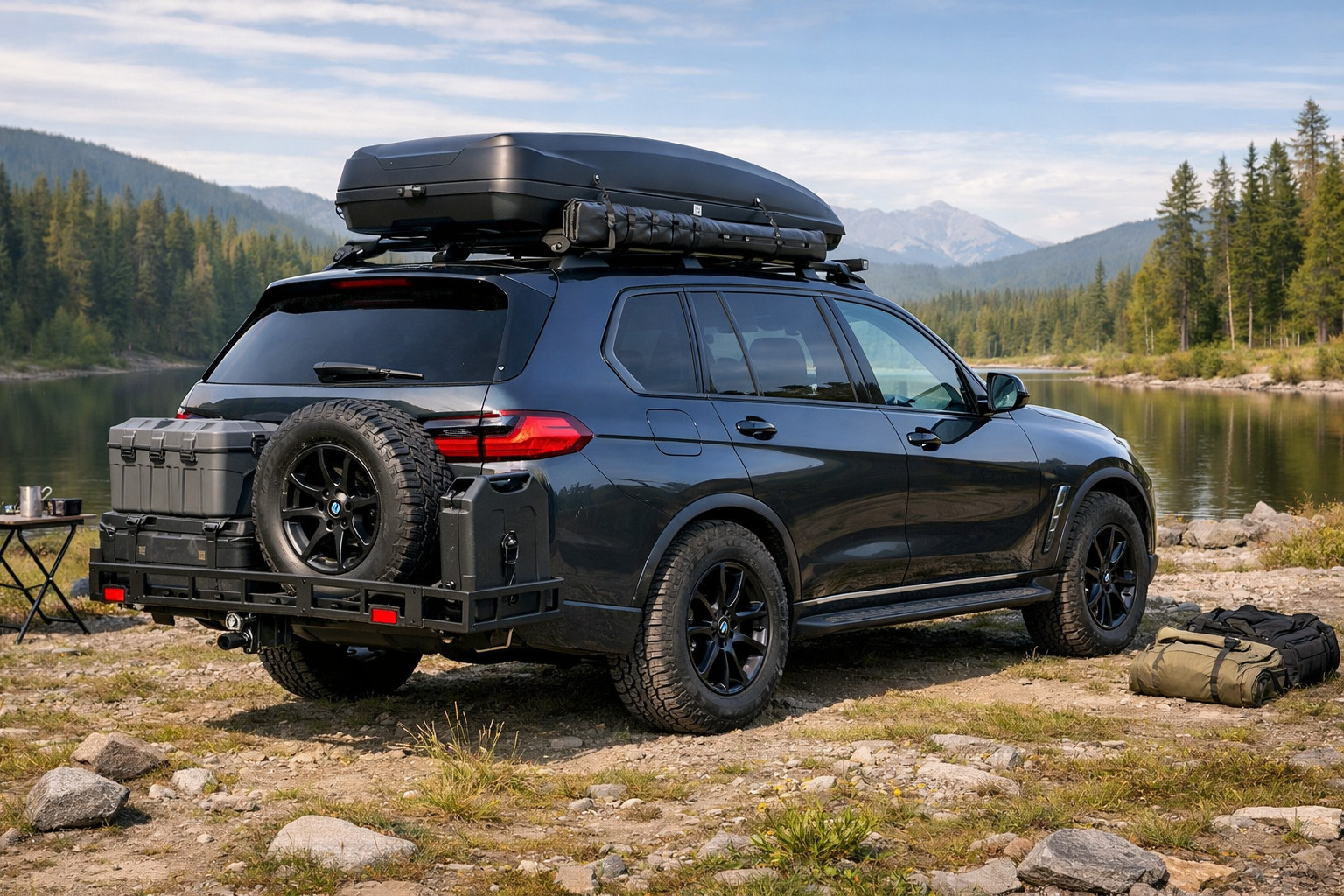
Its main advantage is loading height. If you have suitcases, crates, camping equipment, or kids’ items, the difference is immediate: no need to haul weight upward, less chance of scratching the bodywork, and less fatigue on the road. In real-world tests, the rear format also often performs better in terms of fuel consumption; the difference versus a roof setup can be noticeable already on long highway runs.
But there are checks to make. You need to look not only at whether you have a towbar, but also its type, permitted load, access to the trunk, visibility of the lights and license plate. Some systems allow tilting or swinging away, but that affects price. Also remember the box sits closer to the road: curbs, steep ramps, and tight parking are less forgiving.
Roof box
Its strong point is the format. Typical boxes offer a wide capacity range, and large models often have around 445 L and suit long items that simply won’t fit in a rear box. If you carry skis or want to keep the towbar for another accessory, a roof solution is more logical.
The downsides are practical, not theoretical. First, the starting price is higher because you need crossbars. Second, you have to calculate not the box’s rating, but the roof’s real payload: after the weight of the crossbars and the box itself, the usable allowance shrinks noticeably. Third, height, noise, tailgate opening, and overall comfort in the city and in underground parking become factors.
Which option is better for different scenarios
For a family trip with frequent stops, a towbar box is usually better: it’s easier to reach, easier to move items between the cabin and cargo, and there’s less hassle in the rain or at night.
For winter trips with long items, the roof more often wins. But if the car is tall, the driver is shorter, and loading happens often, the roof format starts to annoy sooner than it seems at purchase time.
For an EV or any car where range matters, a rear box usually looks like the smarter choice. And if the car has no towbar, or the rear is already taken by a bike or other equipment, then the roof becomes the more logical route.
Use case and what to choose (table)
| Scenario | What to choose | Why |
|---|---|---|
| Family vacation with suitcases and a stroller | Towbar-mounted box | Lower loading height, quick access, less fatigue at every stop |
| Skis, snowboard, long bags | Roof box | Works better with long and relatively light items |
| Long highway trips where fuel consumption matters | Towbar-mounted box | Usually a smaller aerodynamic penalty and a quieter ride |
| City driving with underground parking | Towbar-mounted box | Doesn’t add height, but you must get used to the increased vehicle length |
| Car without a towbar or with an already occupied towbar | Roof box | Doesn’t depend on rear mounting and keeps the towbar free |
| Tall crossover, frequent loading of heavy items | Towbar-mounted box | Lifting cargo onto the roof of such a car is inconvenient in day-to-day use |
Common mistakes when choosing
- Buying by the principle “the more liters, the better,” without thinking about item shapes and how often you need access.
- Not calculating the real roof weight: the box, crossbars, and mounts eat into the permitted load.
- Forgetting the vehicle height with a roof box and only remembering right before a parking garage or gate.
- With a towbar solution, not checking whether the box blocks the lights, license plate, camera, or sensors.
- Ignoring trunk access: not every rear system opens equally conveniently together with the tailgate.
- Not accounting for vehicle and road geometry: at the rear the risk is length and low clearance; up top it’s height and crosswinds.
When a pricier solution makes sense
It’s worth paying extra not for a brand name on the lid, but for what actually reduces inconvenience: better locks, quick installation, proper dual-side opening, a quiet shape, quality seals, and a rear tilt or swing mechanism. If you’re leaning toward a rear format, it’s worth first understanding separately what a towbar box gives you in everyday use.
For a roof solution, a more expensive option is justified when the car is tall, trips are frequent, and noise and access to luggage matter no less than liters. In that case it’s useful to see how people choose a roof box, and only then match specific car roof boxes to your vehicle. If you drive only a few times a year, it’s cheaper and smarter to take a simpler but compatible system than a more expensive and inconvenient one.
From a customer’s experience: for family outings, the person initially looked at a large roof box, but after calculating the weight and trying it out realized that constantly lifting suitcases on a tall crossover was inconvenient. In the end they chose a rear towbar box: loading became faster, and on the highway they didn’t have to put up with extra whistling overhead. The only thing they got used to in the first week was the longer car when parking.
Conclusion
If you need maximum convenience in everyday trips, frequent loading, and fewer fuel-consumption losses, a towbar box more often wins. If long items, larger volume, and a free towbar matter, then it’s more logical to look toward the roof. The final decision shouldn’t be based on a liters-in-the-catalog approach, but on vehicle compatibility, the type of items you carry, and your travel scenario. This material is based on real fitting experience, practice, and real use cases, so the main advice is simple: first calculate your vehicle’s limits and your own habits, and only then choose the box format.
How it works
- Determine what you carry Make a list of the items you plan to transport most often: suitcases, a stroller, children’s items, camping gear, or long items like skis. If the items are heavy and you need to access them often, a towbar box is usually more convenient; for long items, a roof option makes more sense.
- Check your vehicle’s limitations Assess whether you have a towbar, its permissible load, and for the roof — whether you have crossbars and enough load capacity. Also consider the vehicle’s height, access to the trunk, and the presence of sensors, lights, and the license plate, which the rear box may cover.
- Compare everyday practicality Think about how exactly you will load the box on real trips. The towbar format is lower and faster to access, is less noisy on the highway, and usually has less impact on fuel consumption, while the roof box requires lifting items higher and affects aerodynamics more strongly.
- Assess dimensions and parking conditions Remember that a roof box adds height, while a towbar box adds length to the vehicle. This is important if you often enter underground parking lots, pass through barriers, park in narrow yards, or drive down steep ramps.
- Choose the format for your travel scenario For family trips, frequent stops, and heavy items, a towbar box is often the better choice. For skis, snowboards, long bags, vehicles without a towbar, or when the towbar is already occupied by other equipment, a roof box is more practical.
- Do not choose based only on capacity and price Before buying, check not only the volume, but also the ease of installation, the quality of mounts, locks, and seals, as well as compatibility with your vehicle. This will help avoid a situation where a large box looks good on paper but turns out to be inconvenient in everyday use.
Pros and cons
Easier to load items, since the box sits lower and you don’t have to lift suitcases overhead. This is especially convenient for heavy bags, a stroller, or camping gear.
On the highway it is usually quieter and has less impact on fuel consumption than a roof box. For long trips, this noticeably reduces everyday discomfort.
Does not add height to the car, so it does not create problems with parking garages, barriers, or gates. In the city, this is more practical than a roof-mounted solution.
Suitable for family trips and frequent stops, because it is easier to access the items. Less fuss when you need to quickly grab something on the road.
Keeps the roof free, so it can be used for other accessories or without relying on crossbars. This is useful if the tow hitch is already in use or needed for other equipment.
Adds length to the car, which makes parking and maneuvering in tight courtyards or on steep driveways more difficult. You need to get used to this even before buying.
Can block the lights, license plate, camera, or sensors, so compatibility should be checked before purchase. Otherwise, practical problems with visibility and electronics may arise.
Sits lower to the road, so it handles curbs, low ramps, and other obstacles worse. In everyday use, this limits maneuvering freedom.
Installation requires a compatible tow hitch and sufficient vertical load, and some systems also need separate tilt or swivel mechanisms. This increases the demands on the car and may raise the price.