28.07.2026
335
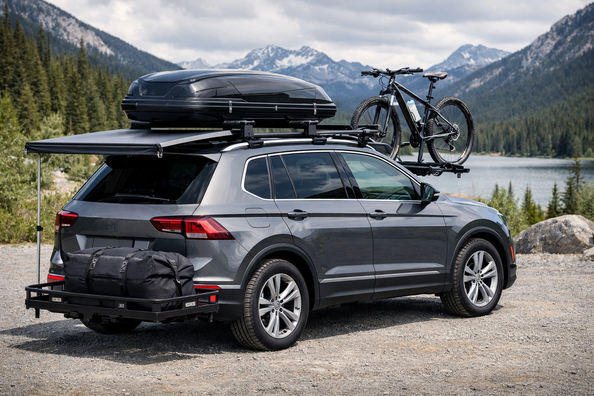
This upgrade plan is for a Volkswagen Tiguan 2016-2023 owner who wants to carry things properly on trips—without cramming suitcases into the cabin and improvising packing before every departure. The scenario is simple: family routes, vacations, skis, kids’ stuff, dirty gear, or just regular trips where the stock trunk is no longer enough.
The logic here is: first, a roof base; then a closed volume for cargo; then trunk protection and organization; and only after that—comfort or niche add-ons. It’s important to calculate the total roof load right away, including crossbars, attachments, and cargo, and not exceed the limit for your vehicle version; with roof cargo, you also shouldn’t exceed 130 km/h.
The main goal isn’t just to put something on the roof—it’s to get extra usable volume without chaos in the cabin and without overloading the car. For a regular Tiguan this becomes relevant sooner than for a Tiguan Allspace: the standard version has a smaller trunk, so a roof box moves faster from “nice to have” to “actually needed.”
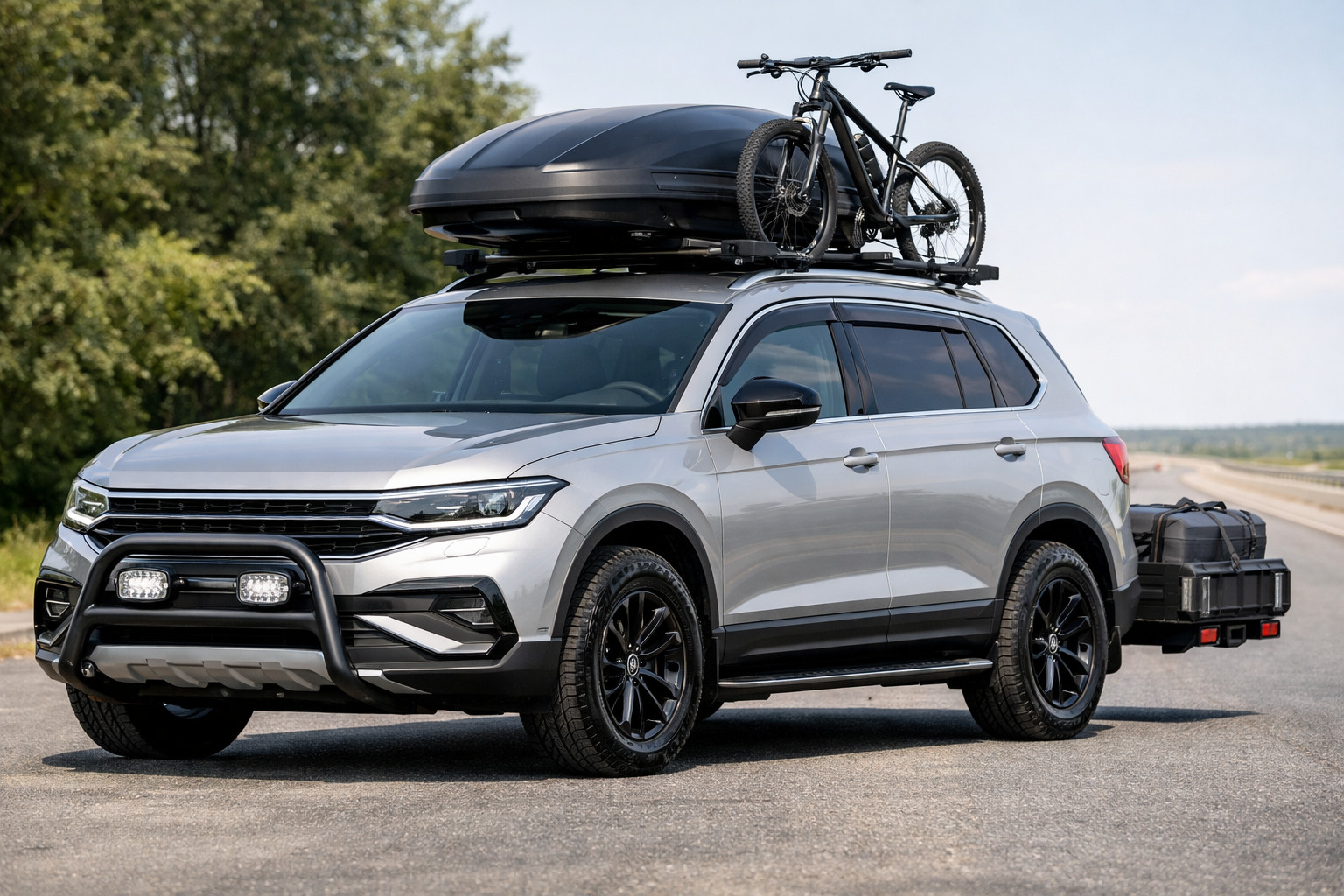
If your scenario is suitcases, a stroller, kids’ bags, winter gear, or wet items after active recreation, a closed roof volume should be the priority. If the main cargo is bicycles, that’s a different scenario: a hitch-mounted carrier is often more practical than roof bike mounts.
One more important point: the result depends on the exact vehicle configuration. You need to consider the type of roof rails, whether you have a panoramic roof, clearances for the sunroof and the tailgate, and also the fact that the usable crossbar length differs front to rear—so not all attachment combinations are equally convenient.
Step one is crossbars for your type of roof rails. Without them, there’s simply nothing to mount a roof box, ski holder, or any other roof solution to. If you have standard rails and want a simple start without overpaying, a basic set like aluminum crossbars is a solid starting point.
Step two is a roof box, if your trips are truly limited by volume. A 340 L format works for moderate getaways and two passengers; 460 L is already for a family scenario and longer routes. For travel, a box is more practical than an open basket: your вещи are protected from rain, dust, and road grime, and packing becomes more predictable.
Factor in the weight of the system itself right away. Crossbars also have weight, so the real payload margin is smaller than it seems. And after installation, it’s important not only to tighten everything on the spot, but to re-check the mounts after a short drive and once again before a long trip.
| Upgrade | Why it’s needed | Who really benefits |
|---|---|---|
| Crossbars on roof rails | Create the base for any roof cargo | Anyone planning a box, skis, a basket, or other attachments |
| Roof box 340 L | Adds extra enclosed volume without overloading the cabin | Couples and small families for shorter trips |
| Roof box 460 L | Covers the “lots of luggage on long routes” scenario | Families, regular Tiguan owners, those who often go on vacation |
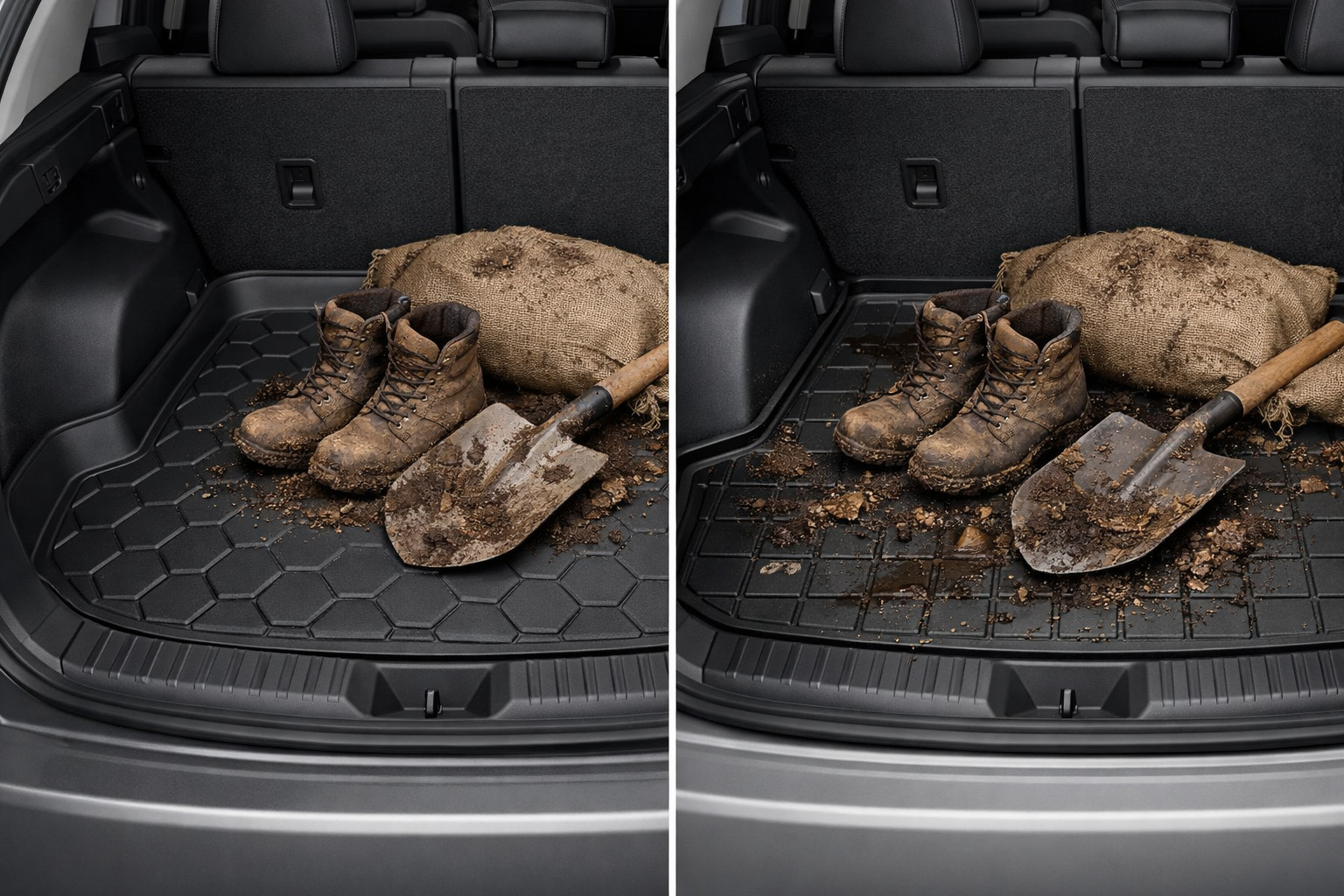
| Rubber tray or mat for the trunk | Protects trim from dirt, moisture, sand, and gear | Those who carry a stroller, обувь, camping items, equipment |
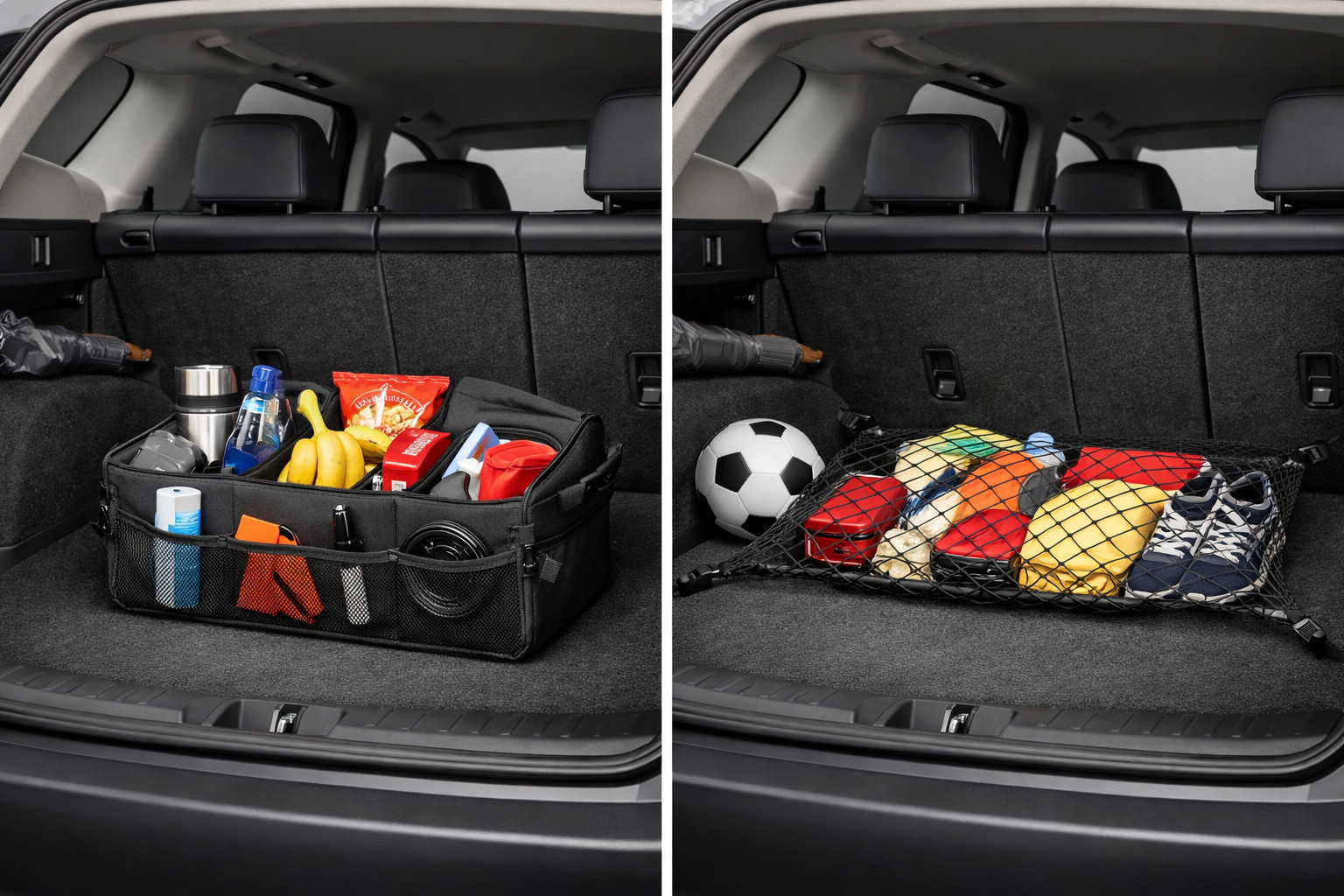
| Cargo net | Secures small items so they don’t slide around the trunk | Those who drive daily with groceries, jerry cans, bags, small cargo |
| Hitch bike rack | Makes transporting bikes easier, especially heavy ones | Those who regularly carry bicycles, including e-bikes |
DD Tuning expert comment: the most common mistake is buying what looks substantial first, instead of what matches the scenario. With Tiguan, people often overpay for a big roof setup when they would have been fine with good crossbars and a smaller box—or, наоборот, they buy a basket and then face noise and dirty items after the first highway trip. Before ordering, always calculate the weight of the entire roof system and check that it doesn’t interfere with the sunroof and the tailgate.
After the roof base and solving the volume issue, it’s worth moving to things that save your nerves in daily use. That’s a trunk tray, a net, rubber floor mats. They don’t make the car roomier, but they reduce mess and interior wear—and that matters if trips are regular.
For the Tiguan Allspace, the second stage can sometimes be moved forward: if the stock trunk volume is enough, you don’t necessarily need to buy a box right away. Then it makes sense to get crossbars first as a base for the future, and in everyday use focus on trunk protection and organizing items inside.
In this group I’d include sunshades, rear bumper sill protectors, and some interior and exterior accessories. They can be useful in a family car—especially if kids ride often or you regularly load heavy bags—but they relate only indirectly to the task of “taking more things on a trip.”
If your budget is limited, you should buy these after you’ve already solved luggage transport and interior protection. Chrome, decorative trims, side steps, and other visual add-ons shouldn’t eat into the budget for crossbars, a box, or practical trunk protection.
First: buying not for the scenario. For example, people buy an open basket for family trips, when in reality they need a box. In photos, a basket looks universal, but on the highway it’s noisier, and your items require separate protection and careful packing.
Second: overpaying for looks or “just in case.” A large box on a car that goes on long trips twice a year isn’t always justified. Likewise, not everyone needs the most expensive aerodynamic crossbars: their value shows up when the car spends a lot of time on highways and the noise genuinely bothers you.
Third: not calculating weight. Roof systems have a small limit, and everything counts: crossbars, attachments, the box itself, and the load. Because of this, the “one more bag will fit on top” mistake can end up beyond the allowable limit.
| What to install first | What you can postpone | What isn’t required | When it works best |
|---|---|---|---|
| Crossbars | Cargo net | Decorative trims | Any scenario with plans to carry something on the roof |
| Roof box 340 or 460 L | Sunshades | Open roof basket | When the stock trunk is no longer enough on trips |
| Rubber trunk tray | Premium quieter crossbars | An excessively large box | When you carry dirty, wet, or loose items |
| Hitch bike rack | Roof bike mounts | Any roof scenario if you only carry bicycles | When bikes are the main cargo and it’s done regularly |
More expensive solutions make sense not when you want “the best off the shelf,” but when you have a regular use case. If you’re just getting into it and want to build a working base without extra costs, it’s smart to start with Flybar V1 crossbars. If your Tiguan often drives on highways and noise and aerodynamics matter, then it makes sense to look more broadly at roof racks and roof bars with an emphasis on a quieter profile and more convenient mounts.
Overpaying for an expensive open-roof format isn’t always justified. If you need a touring cargo scenario, first weigh realistically whether you need roof baskets at all: they aren’t appropriate everywhere, and for suitcases, clothing, and family items, a closed box is usually more practical. A pricier upgrade is justified where it truly reduces noise, simplifies daily use, or fits a specific cargo need better.
From a customer’s experience: an owner of a regular Tiguan initially wanted to get by with only the cabin and trunk, but after a few trips with kids’ вещи realized the real problem was volume. In the end, he started with crossbars, then added a mid-size box, and only after that—a trunk tray. What he appreciated most wasn’t just having more space, but that items stopped migrating into the cabin and getting in the way on the road.
For a Volkswagen Tiguan 2016-2023 in a travel scenario with roof cargo, the most reasonable order is: first crossbars for your roof configuration, then a box for your real luggage volume, then a tray, net, and other useful small items. If you have a regular Tiguan, you typically get to a box sooner; if it’s an Allspace and trips are infrequent, you can postpone that stage a bit.
The key is not to buy for the picture—and not to forget the roof load limit. This material is based on real selection experience, practical know-how, and real usage scenarios: first we install what truly increases the car’s usefulness, and everything else we leave for later.
| ✔ | Roof rails crossbars provide the base for any roof solution: without them, you can’t fit a box, ski holder, or basket. It’s the first and practically necessary step if you’re planning trips with extra luggage. |
| ✔ | A roof box solves the lack of space without clutter in the cabin, while the items stay protected from rain, dust, and road dirt. For family trips, it’s more convenient than an open basket, especially when carrying suitcases, children’s things, or wet gear. |
| ✔ | A 340 l box is suitable for moderate trips, while 460 l is for family routes and longer journeys with a lot of luggage. This lets you choose the volume for a real scenario rather than buying a format that is obviously excessive. |
| ✔ | A rubber tray and cargo net are useful for everyday use because they protect the trunk and secure small items. They don’t increase capacity, but they noticeably reduce mess and cabin wear. |
| ✔ | A bike rack on the tow hitch is better suited for those who regularly carry bikes, especially heavy or electric bikes. For this scenario, it’s more practical than roof mounts. |
| ✘ | The total roof load must be calculated very carefully, because it includes the crossbars, attachments, the box itself, and the cargo. Because of this, the reserve can run out quickly, even if the system looks compact from the outside. |
| ✘ | With cargo on the roof, you shouldn’t drive faster than 130 km/h, so for long highway trips this limits freedom of movement. If you often drive at high speed, the roof system becomes less convenient. |
| ✘ | An open roof basket is not the best option for family trips, because it is noisier and doesn’t protect items from weather and dirt. For suitcases and clothes, you have to think separately about packing and protection. |
| ✘ | More expensive aerodynamic crossbars or a large box are not always justified if there are few trips. In such a case, there is a risk of overpaying for a solution that is used rarely or not to its full extent. |
Shipping to EU
Wholesale and retail
Own warehouse
Опис продукту
Подарунки не надаються при оформленні покупки у кредит під 0,01% або при покупці частинами.