 Author: Radomskyi Maksym Vasyliovych
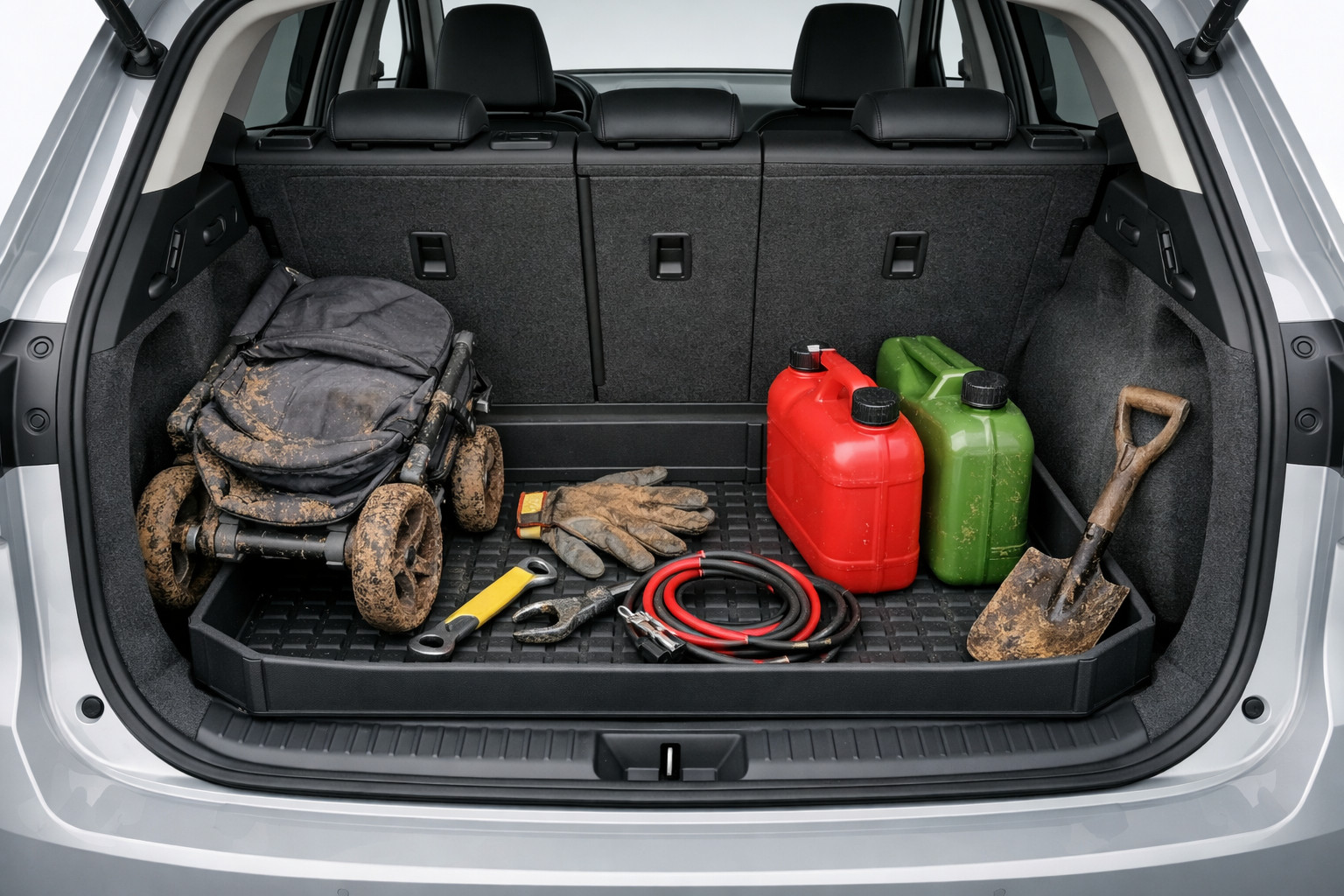
The trunk gets dirty after a stroller, tools, or jerry cans not because you’re using it “wrong,” but because the factory textile lining quickly absorbs moisture, salt, sand, and technical fluids. The second issue is that cargo shifts during braking and cornering, so the dirt doesn’t stay in one spot—it gets smeared across the entire trunk floor.
The solution depends on what you carry. For dry dust and wheel marks, it’s enough to protect the floor with a vehicle-specific tray with a raised lip. For jerry cans and oils, you also need a separate plastic box. And for crossovers and wagons with folded seats, it’s worth covering not only the floor but the seatbacks as well.
Why this problem happens
There’s no rigid barrier in the trunk to keep water and dirt within one zone. If you load a stroller with wet wheels after a walk, toss in tools after work, or set down a jerry can without an extra container, all of it contacts the factory lining directly.
It gets worse in rain, in winter, and during active driving. On a slippery or smooth surface, bags, boxes, and jerry cans slide around the trunk, and water, dirt, or oil spreads beyond the contact point. In crossovers and wagons with folding seats, dirt often transfers to the seatbacks too.
Main causes
- The factory trunk carpet absorbs moisture, salt, and odors instead of keeping them on the surface.
- There’s no raised lip, so water and dirt migrate into seams, corners, and under the factory lining.
- A smooth rigid tray or bare floor lets items slide during braking.
- A universal cover or thin mat doesn’t fit precisely and leaves areas exposed.
- Jerry cans, oils, car chemicals, and dirty tools are transported without a separate box or proper securing.
How to understand what the cause is in your case
- Look at the type of marks. Black arcs, streaks, and dry sand are most often left by stroller wheels. Greasy spots, stickiness, and odor point to a fluid leak.
- Lift your current mat or cover. If there’s already dust, wet spots, or salt underneath, the issue isn’t just dirt—it’s also poor fitment or the lack of a raised lip.
- Check whether the load moves when you push it by hand. If a bag or jerry can slides easily, it will definitely shift during real braking.
- Consider seasonality. If the trunk gets dirty mostly in fall and winter, the main enemy is water, snow, and salt. If it happens year-round and locally, the cause is more often specific items: a stroller, tools, a jerry can.
- If you often fold the rear seats, check the seatbacks. Dirt and scuffs there mean you need protection for the entire loading area, not just the floor.
DD Tuning expert comment: the most common mistake is buying the first universal mat you see and expecting it to solve everything. Without a precise fit and a raised lip, dirt will still get underneath. The second mistake is relying only on a tray when jerry cans and small tools slide around in the trunk: without a box or securing, they’ll keep shifting.
Symptoms, causes, and what to do (table)
| Symptom | Likely cause | What to do |
|---|---|---|
| Black marks and dry sand after a stroller | Dirt from the wheels is transferred directly onto the trunk floor | Install a vehicle-specific tray with a raised lip and wash or wipe the wheels before loading |
| Greasy stains, stickiness, persistent odor | Leaks from oil, fuel, or car chemicals | Carry such fluids only in a separate plastic box, and cover the floor with a moisture-resistant tray |
| White streaks, wet carpet, salt in the corners | Winter moisture and salt seep into the factory lining | You need a tray with a raised lip and full coverage with no gaps |
| Dirt even under the existing mat | A thin or inaccurate universal mat shifts out of place | Replace it with a vehicle-specific option that matches the trunk shape |
| Boxes, bags, and jerry cans slide around the trunk | Smooth surface and no securing | Choose a textured anti-slip surface and add anchors or an organizer |
| Dirty or scuffed rear seatbacks | Cargo is placed on folded seats without protection | Look for a solution that covers both the floor and the seatbacks |
What actually helps
- A vehicle-specific trunk liner with a raised lip. It keeps water, sand, and dirt within one piece instead of letting them into the factory carpet.
- A textured anti-slip surface. It won’t make the trunk completely immovable, but it noticeably reduces sliding of a stroller, bags, and boxes.
- A separate plastic box for jerry cans and technical fluids. Even a good tray doesn’t eliminate odor risk if something leaks.
- Securing small and shifting items. An organizer or clamp-down elements are useful for tools, groceries, plants, and anything that tips over.
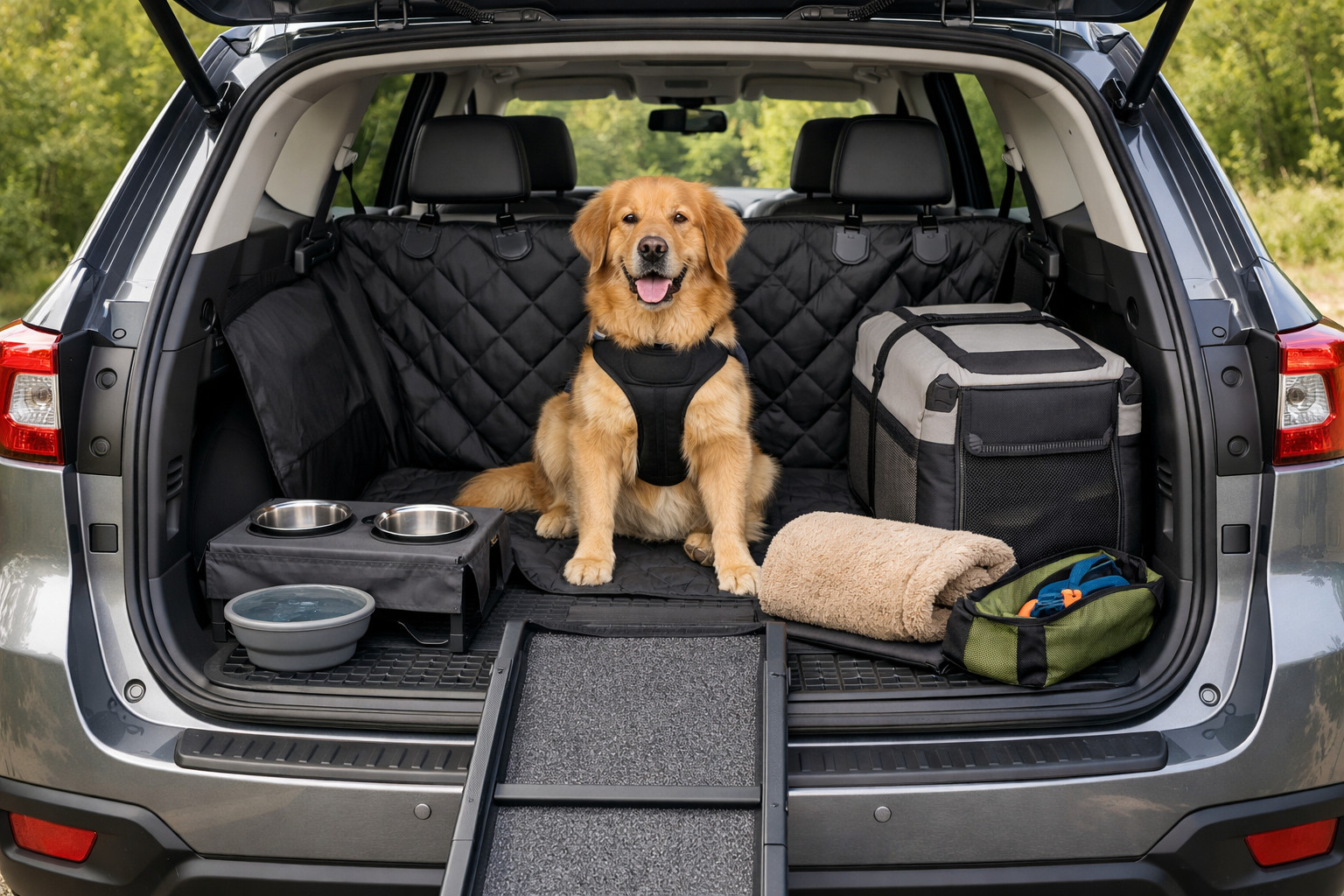
- Seatback protection. This is relevant for crossovers and wagons where the trunk often works as an extension of the cabin.
What almost doesn’t work or only helps briefly
- An old blanket, towel, or cardboard. They get wet quickly, trap odors, and become a dirt source themselves.
- Fabric covers without a raised lip. They don’t hold water and salt—they just hide the problem until the first wash.
- A flat universal mat. If it doesn’t match the trunk shape, dirt will go into the gaps and under the edges.
- A smooth plastic tray without texture. It protects from dirt, but items slide and bang around in the trunk.
- Only an organizer without floor protection. It holds small items but won’t save you from a wet stroller, snow, or spilled liquid.
When accessories or replacing elements makes sense
If your trunk regularly sees wet wheels, construction tools, household chemicals, or jerry cans, the basic solution is obvious: a rubber trunk mat with a raised lip and a precise floor shape. When the main issue isn’t only dirt but also small items rolling around the trunk, it’s worth adding a organizer bag. And if you often carry rigid, dirty, or sharp-cornered cargo, it makes sense to look at plastic trunk protection as a separate type of covering.
It’s worth replacing an existing item when it’s slippery, noisy, or lets dirt underneath. But if you only carry clean shopping bags and never spill anything, an expensive full-coverage trunk kit may be unnecessary.
Solutions: when they work and when it’s not worth spending money (table)
| Solution | When it works | When it’s not worth spending money |
|---|---|---|
| Vehicle-specific tray with a raised lip | When there’s water, dirt, salt, stroller wheels, frequent trips in rain and winter | When the trunk is used rarely and only for dry, clean items |
| Tray with an anti-slip texture | When bags, boxes, and tools constantly shift while driving | When the problem is only leaking jerry cans, not sliding |
| Separate plastic box for liquids | When you carry oil, fuel, car chemicals, dirty hand tools | When the trunk holds only dry items and there’s no leak risk |
| Organizer or anchors | When you need to separate small items and keep them from rolling around the trunk | When the floor is already wet and dirty: an organizer alone won’t fix that |
| Seatback protection | When you often fold the seats and load a stroller, tools, or long items | When the seatbacks are almost never used as part of the cargo area |
From a customer’s experience: at first they used a thin universal mat in the trunk, but after a baby stroller and jerry cans, dirt got under the edges and the mat kept sliding. After switching to a vehicle-specific tray with a raised lip and adding a separate box for liquids, cleaning became faster and the odor in the trunk disappeared. The biggest difference came from combining floor protection with securing anything that can leak.
Conclusion
If your trunk gets dirty after a stroller, tools, or jerry cans, the problem almost always has two parts: the floor doesn’t contain dirt and liquid, and the cargo isn’t secured. That’s why the best basic solution is a vehicle-specific trunk liner with a raised lip and an anti-slip surface. For liquids, you need a separate box; for small items, an organizer or anchors.
It’s not worth spending money on temporary covers and flat universal mats if the trunk is used daily. This material is based on real selection experience, hands-on practice, and real use cases where what matters isn’t a “nice cover,” but proper protection from dirt, water, and odors.
Pros and cons
A model tray with a raised edge really contains water, sand, and dirt within a single piece, preventing them from getting into the factory mat and seams.
A textured non-slip surface reduces the sliding of a stroller, bags, boxes, and small tools during braking and cornering.
A separate plastic box for jerry cans and technical fluids helps isolate leaks, odors, and possible stains from the main trunk lining.
An organizer or retainers are useful for small items, as they keep tools, groceries, and other items from rolling around in the trunk.
Seat back protection makes sense for crossovers and wagons, where the trunk is often used together with the rear seats folded down.
Universal flat mats often do not follow the shape of the trunk, which lets dirt and water pass through the gaps and under the edges.
Fabric covers, an old blanket, or cardboard get wet quickly, trap odors, and themselves become a source of dirt.
A smooth plastic tray without a texture protects the floor, but items on it still continue to slide and rattle while driving.
An organizer without floor protection does not solve the problem of a wet stroller, snow, or spilled liquid.