12.06.2026
121
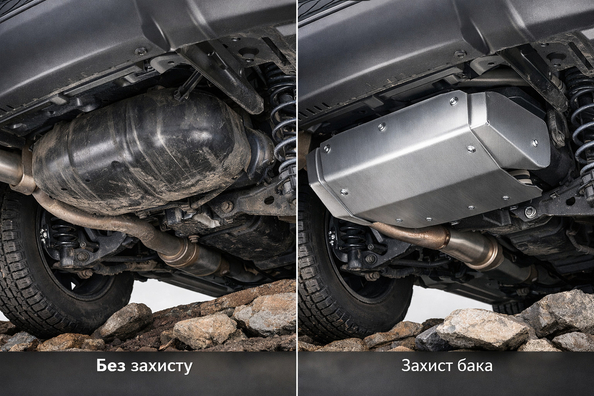
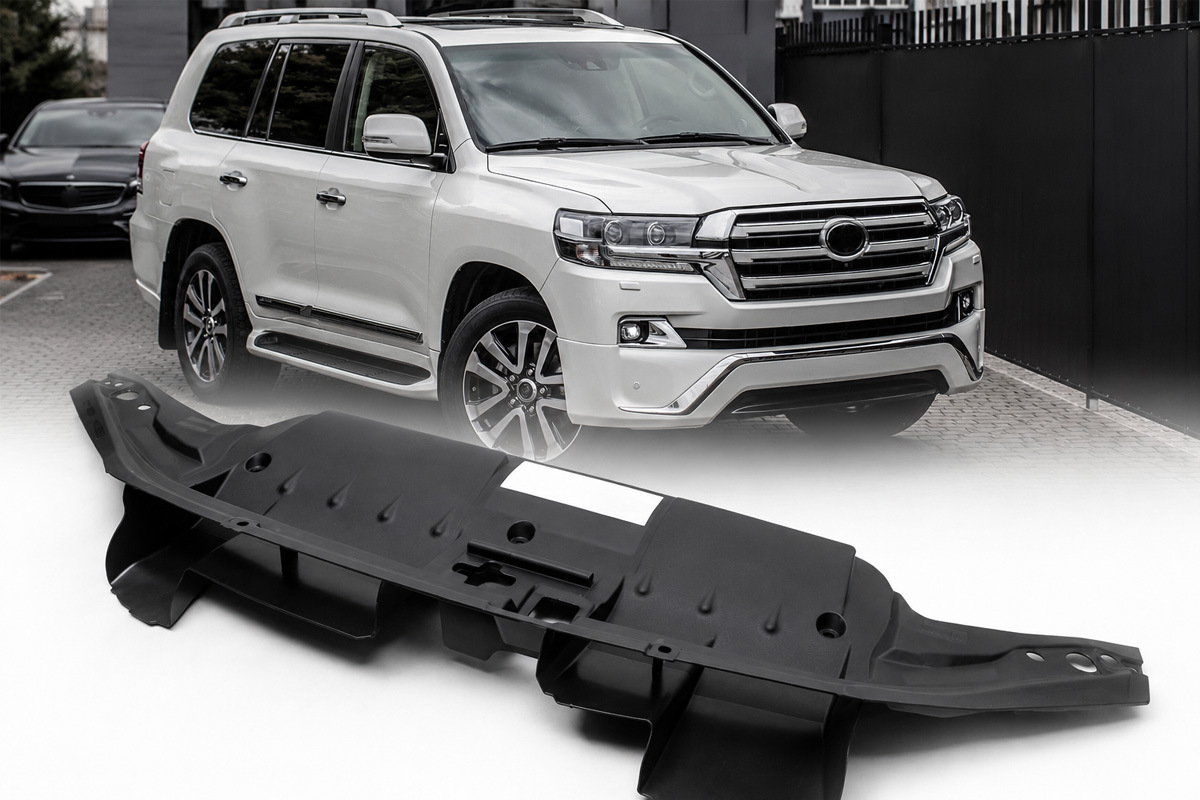
Not every crossover or SUV needs a fuel tank skid plate. If the vehicle lives in the city, on highways, and only occasionally drives onto smooth dirt roads, it’s often an unnecessary expense. It starts to make sense when the tank sits low and the car regularly crawls through ruts, over rocks, construction sites, forest roads, or goes on long trips where puncturing the tank on an obstacle is a real possibility.
The key is to understand what this shield is for: it should help the underbody slide over an obstacle and reduce the risk of a low-speed hit to the tank. It’s not protection for a serious crash. So the choice is simple: keep the factory setup, install an aluminum skid plate, or go with steel—but you should decide not by the label on the box, but by your routes, fitment, and installation quality.
The question isn’t whether steel is “stronger” than aluminum. The question is how often the tank is actually at risk of meeting an obstacle. On some vehicles it’s covered only by a light factory piece, sometimes plastic. For gravel and minor scrapes that can be enough, but for deep ruts or rocks—no longer.
So the logic is: for calm daily driving it’s often smarter to add nothing; for a daily vehicle with regular dirt-road trips—look toward aluminum; for heavy, slow off-road driving where the underbody regularly rests on obstacles—look toward steel. The most expensive or heaviest option isn’t always the best for your specific use case.
Installation and compatibility. First you check not sheet thickness, but exact compatibility with the body, engine, hybrid version, tank straps, and factory mounting points. A good kit usually installs without drilling, but you should confirm this for your specific vehicle.
Noise and vibrations. A skid plate shouldn’t be noisy on its own. Rattling appears when there’s incorrect clearance to the exhaust, misalignment during installation, or loosened bolts. That’s why installation quality matters no less than the material.
Service life and practicality. Steel handles hard impacts better, but it’s heavier and more sensitive to coating damage and corrosion. Aluminum is lighter and copes better with winter road salt, but after very harsh contacts it may need straightening. Also look at drainage and ventilation holes, access for service, and whether the plate reduces ground clearance below the factory geometry.
Price. The difference between kits can be significant: a quality fuel tank guard is not a small accessory—it’s a purchase in the hundreds of dollars or euros. So evaluate not only the price, but whether you’ll actually use its potential.
| Option | Strengths | Weaknesses | Who it suits |
|---|---|---|---|
| Keep the factory setup | Zero added weight, zero cost, no risk of installation mistakes | On some vehicles the factory protection is too light for rocks and deep ruts | City, highway, occasional easy dirt roads without underbody hits |
| Aluminum fuel tank protection | Lower weight, lower corrosion risk, a good balance for a daily vehicle | After very harsh contacts it can deform and require straightening | A daily crossover or SUV that regularly drives on bad roads, ruts, fishing trips, forest roads |
| Steel fuel tank protection | Better stiffness and reserve for heavy impacts on rocky routes | More weight, more attention to coating, often overkill for normal use | Those who truly drive heavy, slow off-road and often belly the vehicle out |
DD Tuning expert comment: The most common mistake is buying a skid plate just by model name and not checking tank straps, mounting type, or engine/hybrid version limitations. The second typical story is installing the plate without controlling exhaust clearance, then getting vibration and blaming the product itself. If the vehicle is a daily driver, first assess the route and tank geometry, and only then the metal thickness.
This is a perfectly fine decision if the risk of impacts is minimal. For city driving, highways, dry country roads, and curb parking within reason, an extra plate often changes nothing except the cost. If the tank doesn’t hang lower than other components and you don’t drive over rocks, you may not need an upgrade.
Most often, this is the healthiest compromise. On real kits, the weight difference can be nearly twofold versus steel: roughly around 12 kg instead of 24 kg on the same platform. For a daily vehicle, that matters: less extra weight at the rear, fewer rust concerns, and sufficient protection for ruts, medium-sized rocks, and work trips.
Aluminum’s weak spot isn’t everyday use, but very harsh contacts. If the vehicle regularly sits on a sharp rock with the tank area, the plate may need straightening. That doesn’t make it a bad option—it simply has a different operating scenario.
Steel is chosen when the vehicle truly works on difficult terrain, not “just in case.” It’s heavier, but it handles rough impacts and repeated contacts with obstacles better. For expedition vehicles, hunting routes, rocky climbs, and slow, harsh off-road driving, it’s a logical choice.
The downsides are practical too: extra weight, higher inertia, attention to anti-corrosion coating, and sometimes more difficult installation due to the part’s weight. If the vehicle drives on asphalt 95% of the time, a steel plate is often bought as a reserve that never gets used.
For a city crossover that sees at most a muddy cottage road after rain, fuel tank protection usually isn’t a priority. But if the vehicle has a low-mounted tank and you regularly touch the underbody on ruts or ridges, aluminum already makes sense even without extreme trips.
For a body-on-frame SUV that often goes hunting, fishing, through clear-cuts, or to construction sites, the choice depends on the nature of contact. If it’s mostly scraping with occasional hits, aluminum is enough. If the vehicle truly crawls over rocks and the tank regularly ends up in the risk zone, steel provides more reserve.
A separate case is non-standard trims. If there’s a hybrid, a different engine, different tank straps, or differences between model years, you should start not with the material but with fitment verification. Otherwise you can buy a good kit that simply isn’t the right one.
| Scenario | Best choice | Why |
|---|---|---|
| City, highway, curbside parking | Keep the factory setup | Low risk of tank impact; added weight and cost don’t pay off |
| Cottage trips, forest roads, fishing, deep ruts a few times per season | Aluminum protection | Provides real reserve without extra weight, suitable for daily use |
| Regular trips to construction sites or heavily rutted field roads | Aluminum or steel | It’s not the vehicle’s status that matters, but the frequency and force of contacts with dirt and rocks |
| Rocky slow off-road, expeditions, frequent belly-outs | Steel protection | Better reserve for hard impacts and repeated loading |
| Hybrid, rare engine version, different tank straps | Check compatibility first, then buy | A selection mistake costs more than the material itself and often disrupts installation |
A more expensive kit is justified not when you want to “get the strongest,” but when you need precise fitment, installation on factory points, the correct profile without losing geometry, and normal operation without noise. If you’re building not just one plate but a logical full underbody protection setup, it’s worth looking not only at fuel tank protection, but also at transmission protection and understanding what to install first underneath. In those cases, the more expensive solution pays off not with a loud name, but because it actually works in your scenario.
From a customer’s experience: an SUV owner initially wanted a steel plate because he was afraid of snagging the tank in ruts on trips to the water. After clarifying the route, it turned out that 90% of the mileage was highway, and real underbody contacts happened only a few times per season, so they chose an aluminum kit on factory mounting points. As a result, he got the reserve he needed for his trips without extra kilograms and without any unwanted sounds after proper installation.
Fuel tank protection is truly needed by those who regularly risk hitting the tank on obstacles at low speed: rocks, ruts, stumps, ridges, construction sites. For calm city driving and highways, it’s often not the first upgrade. If you need a sensible balance for a daily vehicle, aluminum is most often the right direction; if the vehicle lives in harsh, rocky off-road conditions—steel. In any case, compatibility, mounting points, tank straps, the absence of noise, and the correct profile matter more than the material label. This article is based on real selection experience, hands-on practice, and real use scenarios—not the abstract principle of “the heavier, the better.”
| ✔ | For city driving, highways, and occasional light dirt roads, it is often enough to keep the factory protection. This lets you avoid spending money and adding unnecessary weight where the risk of hitting the tank is low. |
| ✔ | An aluminum guard looks like a practical compromise for a daily driver. It is lighter than steel, less prone to corrosion, and suitable for ruts, medium-sized rocks, and regular trips on bad roads. |
| ✔ | A steel shield provides a better safety margin in serious off-road conditions. It handles repeated impacts and contact with obstacles better when the vehicle really bottoms out on rocks or ridges. |
| ✔ | The article correctly emphasizes compatibility and installation quality. Checking the mounts, engine version, hybrid setup, clearance from the exhaust, and service access is more important than the choice of material itself. |
| ✔ | There is a clear link to usage scenarios. This helps avoid buying protection just in case and instead choose it based on real routes — from city driving to expedition trips. |
| ✘ | For a regular crossover or SUV, tank protection is often not a top-priority upgrade. If the vehicle is driven almost entirely on asphalt, even an inexpensive kit may turn out to be an unnecessary expense. |
| ✘ | A steel option has practical drawbacks: more weight, greater attention to anti-corrosion coating, and often excess for everyday use. In other words, stronger does not always mean better in real-world use. |
| ✘ | Aluminum protection is not universal for harsh off-road use. After heavy impacts or contact with sharp stones, it can deform and require straightening. |
| ✘ | Poor selection or installation can cancel out the benefit. If compatibility, clearances, and mounting points are not checked, it is easy to end up with noise, vibrations, or even installation problems. |
Shipping to EU
Wholesale and retail
Own warehouse
Опис продукту
Подарунки не надаються при оформленні покупки у кредит під 0,01% або при покупці частинами.