 Author: Radomskyi Maksym Vasyliovych
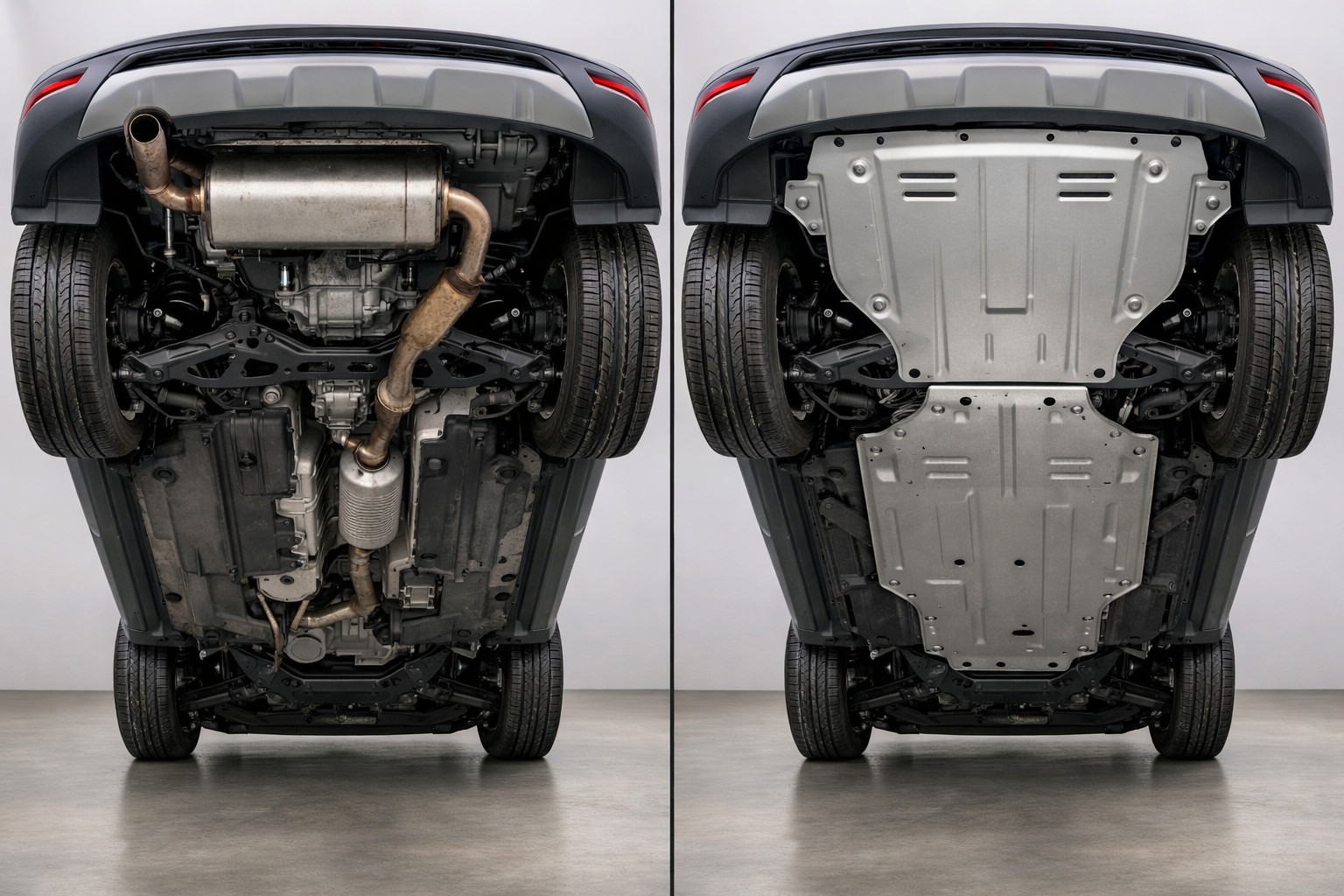
For an urban crossover that hardly ever leaves the asphalt, additional underbody protection is usually not mandatory. In most cases, the factory lower panels already cover the basic tasks: aerodynamics, protection from dirt, water, and small stones. A reinforced shield makes sense when the car regularly catches potholes, chunks of ice, high curbs, ruts, or road debris.
So the key question is not whether “you need protection at all,” but what level of protection matches your specific risks. If you buy a solution that’s too basic, it won’t solve the problem. If you take an overly heavy and expensive kit for purely city driving, you’ll end up overpaying, adding extra service hassle, and gaining zero practical benefit.
What the choice is really about
The idea is simple: either you keep the factory setup and maintain it in good condition, or you add local protection in a vulnerable area, or you move to a reinforced kit if your route truly punishes the underside. For city use, the first or second option is most often enough.
The problem is that owners often judge protection only by metal thickness. In reality, other things matter: whether it mounts to factory points without drilling, whether it blocks service access, whether it traps dirt between the panel and components, and whether it will start rattling after a season.
If your crossover already has intact factory panels, and your routes are city streets, highways, parking lots, and the occasional rough courtyard, a full heavy kit often doesn’t pay off. But if in winter you regularly push through slush, drive on broken asphalt, or catch the edges of the pavement with the front overhang, then an extra shield becomes practical insurance.
What criteria to compare by
- Installation. The best solutions mount to factory points without drilling. This reduces the risk of mistakes, simplifies removal, and avoids extra questions during service.
- Noise. A well-fitted shield can even eliminate some vibrations, but weak or missing fasteners quickly lead to scraping and rattling, especially on the highway.
- Durability. Not only the panel matters, but also the fasteners, clearances, drainage, and resistance to dirt and salt. Without periodic inspection, even a decent kit ages worse.
- Practicality. The easier the access to drain points, the filter, and inspection areas, the lower the chance that every service visit turns into an extra charge for removal.
- Price. The gap between a basic and a reinforced solution is noticeable. In real official examples, front shields run roughly from $225 to $560, and side heavy-duty protection can cost even more.
Quick comparison of options (table)
| Option | Strengths | Weaknesses | Who it’s for |
|---|---|---|---|
| Keep the factory panels | No extra cost, factory aerodynamics preserved, minimal intervention | Less margin against hard impacts, everything depends on the condition of factory fasteners | Those who drive in the city and on highways and rarely hit the underside |
| Local additional shield in the front area | Covers the most vulnerable section, often installs without drilling, moderate budget | Doesn’t protect the entire underbody, you need to check compatibility and service access | Those dealing with rough courtyards, winter ruts, curbs, and potholes |
| Reinforced kit of shields and side protection | Maximum margin for contacts with obstacles, better for harsh routes | Higher price, more demanding installation and maintenance, often excessive for city use | Those who regularly drive on broken roads, go outdoors, to construction sites, or to the mountains in winter |
DD Tuning expert comment: the most common mistake for a city crossover is buying the thickest shield without understanding where the car actually risks hitting. In the end, the owner gets extra cost, more complicated servicing, and the same noise if worn clips and bolts aren’t replaced. First, assess the route, the factory panels, and the contact points: the front, the center, or the sides.
Detailed breakdown of each option
Keep the factory underside and bring it back into shape
This is an underrated option. If the factory panels are intact, not sagging, and haven’t lost their fasteners, they already do part of the job: they shield the underside from dirt, water, and small abrasive particles, and they also help manage airflow under the car. For city driving, this is often enough.
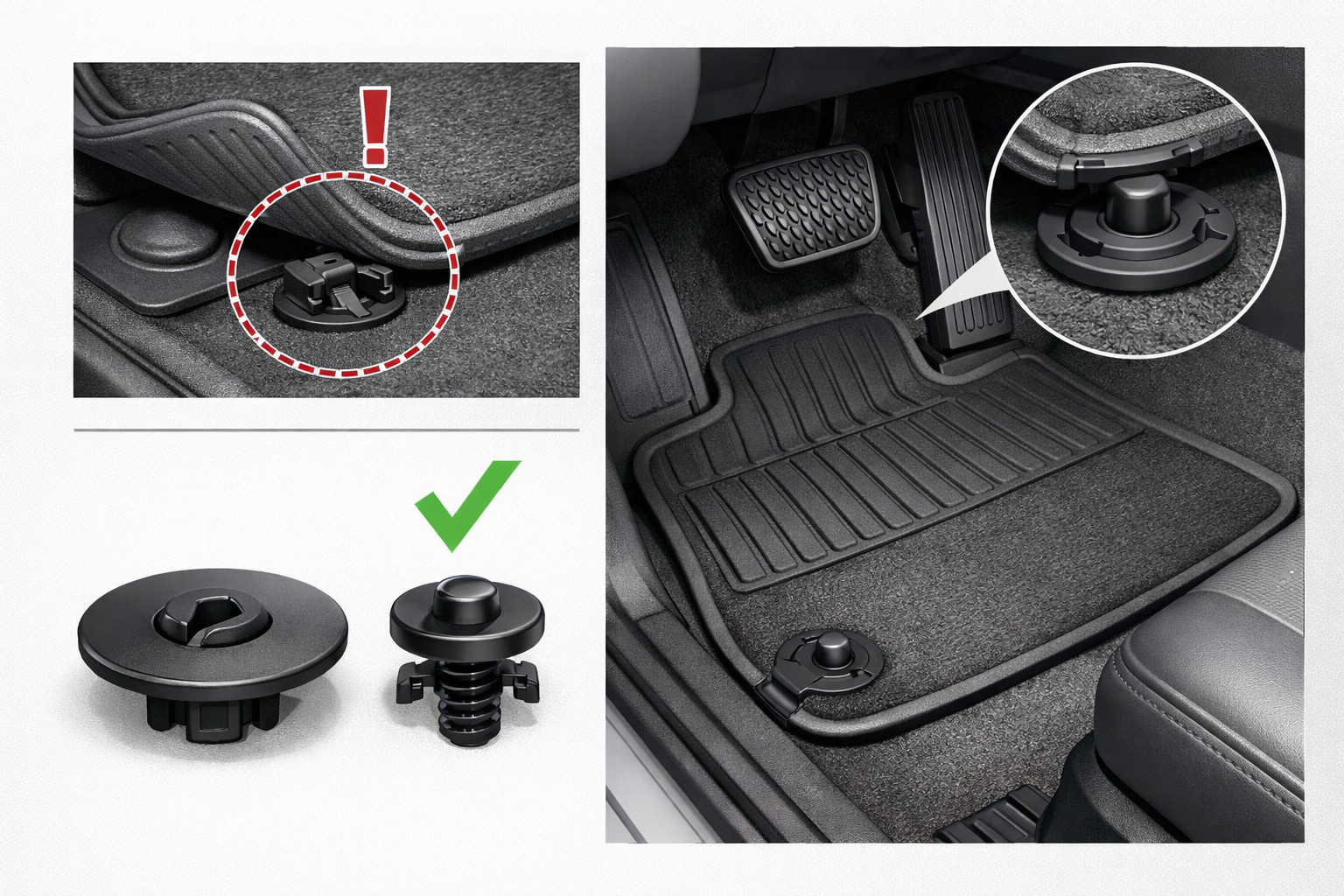
The weak point here isn’t the idea itself, but the condition of the fasteners. Loose or missing clips are most often what causes noise and the impression that “you urgently need metal protection.” Sometimes the problem is solved not by a new kit, but by properly restoring the factory undertray.
Local additional shield in a vulnerable area
The most sensible compromise for city use. If your route includes winter snowdrifts, broken asphalt, trips onto dirt roads to the cottage, or high pavement joints, it’s enough to protect the front area where the risk of contact is highest. This is where mounting to factory points, proper fastener holes, and service access matter most.
Material alone doesn’t solve everything. The market has both steel and aluminum solutions, and thickness can differ noticeably even among factory accessories. For an urban crossover, it’s more important that the shield is properly engineered, doesn’t block cooling, and doesn’t require DIY installation.
Reinforced kit of shields and side protection
This option isn’t “just in case,” but for real impacts and harsh conditions. If the car regularly sees deep ruts, rocky approaches, exits off asphalt, ice, snow banks, or construction debris, comprehensive protection is justified. But for a typical city crossover it often ends up more expensive, heavier, and less convenient for everyday service than necessary.
Here you need to pay especially close attention to trim-level compatibility, service windows, fastener quality, and whether the panel will start trapping dirt and moisture between itself and the body. Otherwise an expensive kit will be not protection, but a постоянний source of minor problems.
Which option is best for different scenarios
If you have typical city use—asphalt, highway, parking, and occasional courtyard potholes—start by assessing the factory underside. Intact panels and healthy fasteners cover most needs without extra cost.
If your city has harsh winters and your route goes through slush, ice, unplowed courtyards, and broken transitions, a local additional shield works better. It adds margin where the risk is real, without turning the car into an overprotected project.
A reinforced kit is worth it when city driving is only part of the scenario, and then come bad roads, countryside routes, fishing trips, mountains, construction, or regular departures from asphalt. Otherwise it’s protection against situations that almost never happen.
Use scenario and what to choose (table)
| Scenario | Best choice | Why |
|---|---|---|
| City and highway, no winter or mild winter | Factory panels plus fastener checks | An additional metal shield most often brings no noticeable benefit |
| City with rough courtyards, curbs, and pavement joints | Local front shield | Covers the highest-risk area without unnecessary spending |
| Winter, slush, chunks of ice, unplowed driveways | Local shield or a well-restored factory underside | The main risk here is impacts from below and grime, not total off-roading |
| Frequent trips on broken roads and dirt roads | Reinforced kit | The risk of repeated contacts is higher, so the extra protection is actually used |
| Only fear “for peace of mind” without real contacts | Add nothing; inspect the factory panels first | It’s cheaper and often solves the issue without unnecessary upgrades |
Common mistakes when choosing
- Looking only at thickness. A thick shield won’t compensate for poor geometry, weak fasteners, and inconvenient servicing.
- Not checking what’s already installed from the factory. Often the car doesn’t need a new kit, but replacement fasteners or a damaged factory panel.
- Ignoring service access. If every service requires extra removal, you’ll keep paying for it.
- Choosing maximum protection for a city scenario. For the city, this is often overpaying without real gains.
- Saving on fasteners. Small bolts, clips, and bushings often determine whether it will be quiet or start rattling.
When a more expensive solution makes sense
A more expensive kit is justified not when “you want a safety margin,” but when there are repeatable impact scenarios or expensive components underneath that you truly want to cover. If you’ve already caught the front on ice a few times, taken hard hits on pavement edges, or regularly drive where the underside is treated like a consumable, then saving on protection is questionable.
The selection logic is:
- underbody protection — when you need to cover the lower area from impacts and debris without random DIY solutions;
- mud flaps — when the main problem is salt, slush, water, and abrasive grit rather than hard contacts with obstacles;
- heavy-duty side steps — when the risk isn’t only up front, but also along the sides in ruts, on exits, and at high pavement edges.
From a customer’s experience: an urban crossover owner came in after two winters, when the underside started making noise due to lost fasteners, and he was already planning to install a full steel kit. After inspection, it turned out that for his route it was enough to restore the factory fasteners, add a local front shield, and install mud flaps, because the main issue was chunks of ice and dirt—not serious impacts across the entire underbody. In the end, he spent less and got exactly the level of protection he actually uses.
Conclusion
For an urban crossover that almost never sees off-road use, reinforced underbody protection isn’t an automatically necessary purchase. If the factory panels are intact, the fasteners aren’t worn out, and your route doesn’t involve regular hits from below, it’s often enough to keep the factory configuration or add only a local shield in a vulnerable area.
A more expensive solution makes sense only where there is repeatable risk: winter ice, bad roads, constant curbs, dirt roads, or frequent exits off asphalt. This material is based on real selection experience, practice, and real-world use cases: what works best isn’t the heaviest protection, but the one that precisely matches your driving conditions and doesn’t create extra service problems.
Pros and cons
Factory panels for a city SUV often already cover the basic tasks: they protect against dirt, water, and small stones, and do not require extra spending.
A front local shield can provide practical protection exactly where the risk is highest, and usually does not require drilling.
If the factory lower mounts are still in good condition, it is sometimes enough to restore the factory protection rather than buy a new kit.
A properly chosen shield may not interfere with servicing if it leaves access to drain points, the filter, and inspection areas.
For city use, the smartest approach is to choose the level of protection based on real routes, rather than buy an oversized kit just in case.
A full heavy-duty kit for purely city use often does not pay off: it is more expensive, heavier, and adds maintenance hassle.
Weak or worn mounts quickly start to rattle, so the shield itself does not solve the problem without proper installation.
An overly simple solution may not cover the real risk if the car regularly hits potholes, curbs, ice chunks, or debris.
Reinforced protection can make access to service more difficult and collect dirt and moisture between the panel and the body.