26.06.2026
183
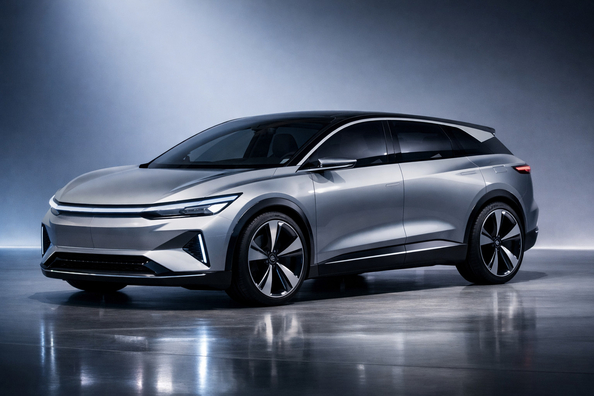
Volkswagen T8 under that name has not yet been shown by the manufacturer as a concept, a prototype, a pre-production vehicle, or a production premiere. In other words, the model’s status right now is more of an expected future index than an officially presented vehicle. In my view, the market usually understands the T8 name as the next big step in the Transporter/Caravelle family after the current wave of Volkswagen updates.
That’s exactly why it’s important here to separate facts from assumptions. There is still no dedicated manufacturer teaser, press release, or auto show reveal specifically for Volkswagen T8, so everything related to engineering, timing, and pricing is an expert forecast rather than officially confirmed data. To understand the brand’s logic in general, you can refer to existing materials on Volkswagen.
As for T8 specifically, nothing has been officially confirmed by the manufacturer so far. There has been no separate public presentation under this name, so it’s too early to talk about a finalized body, interior, or production-spec hardware as a fact. If we follow market logic, T8 should not be a show car but a practical new-cycle minibus: with a stronger focus on electrification, digital systems, and cabin modularity.
| What is known | What is expected | What is unknown |
|---|---|---|
| There has been no official reveal of the T8 model yet | The next step in Volkswagen’s large-van family | Whether the production vehicle will keep the T8 index |
| No factory photos or specifications | Multiple body types: passenger, cargo, shuttle | The exact range of versions and body lengths |
| Engines and batteries have not been officially announced | Diesel, hybrid, and EV in one family | Which powertrains will remain for specific markets |
| No debut date has been named | A public announcement closer to the end of the decade | When sales will start and where exactly |
Since there is no official data yet, the most reasonable assumption is that T8 will get a deeply electrified modular architecture designed for both cargo and passenger versions. In this class, what matters isn’t fancy slogans but body rigidity, a low floor, easy access through the side doors, and the ability to fit different cabin layouts without completely reworking the platform.
Most likely, the design will be engineered from the start for a large number of electronic assistants, cameras, and sensors, as well as for several drive types. If Volkswagen takes the practical route, T8 should have at least two wheelbases, several door configurations, and a reinforced floor for commercial duties—not only for family use.
Officially, powertrains for T8 have not been announced. By segment logic, it’s too early to abandon ICE entirely: corporate fleets, intercity transport, and markets with uneven charging infrastructure still sustain demand for diesel.
So the most likely scenario is this: basic work versions with an efficient diesel, more expensive passenger trims with a hybrid, and a full EV for big cities. In my opinion, an automatic transmission will become the default for passenger versions, while a manual could remain only in certain cargo trims—if Volkswagen even wants to keep it.
DD Tuning expert comment: the most common mistake with new generations of minibuses is ordering floor mats, seat covers, or wind deflectors before the exact body code and cabin layout are known. In the commercial segment, one model name can hide different lengths, doors, and seat-mount points, so without an official catalog it’s easy to get even the small details wrong. The practical advice is simple: wait for the VIN, photos of the exact trim, and the factory cabin description.
If T8 really appears, on the outside I expect not a fantasy concept car but a very clean, aerodynamically refined body. Fewer decorative elements, flatter sides, more compact headlights, a larger usable door opening—these bring real everyday benefits, not just a nice picture.
Inside, it’s logical to expect a large central display, a digital instrument cluster, and more USB ports and storage for work-related small items. But for this class it’s important that Volkswagen doesn’t hide all controls in the screen: climate, heating, doors, and transmission modes must remain simple and clear, because this vehicle is used with gloves on, in parking lots, in taxis, and in delivery work.
There are no claimed specifications yet, so what follows is only a careful forecast. If T8 is developed in line with the segment, it should be less about speed records and more about usable space, payload, operating costs, and long-distance comfort.
If Volkswagen T8 launches as a large multipurpose van or shuttle, it will have to compete not with crossovers but with mature production models where customers compare not design but cost per kilometer, durability, and cabin usability.
| Model | What it’s strong at today | What T8 will need to answer with |
|---|---|---|
| Ford Transit Custom / Tourneo Custom | Strong commercial base, wide choice of versions | Better cabin ergonomics and straightforward electrification |
| Mercedes-Benz Vito / V-Class | Image, comfort, and strong passenger versions | Interior quality without a sharp jump in price |
| Hyundai Staria | Bold design and a spacious passenger format | A more practical interior and a stronger work-oriented version |
| Peugeot Traveller / Opel Zafira Life | Versatility and clear positioning for family and business | Greater body-range flexibility and higher resale value |
T8’s positioning will most likely sit between an “everyday workhorse” and a “family or corporate shuttle.” If Volkswagen balances the hardware correctly, T8 has a chance to be not the most emotional, but one of the most rational players in the class.
Officially, the release date has not been announced. In my opinion, a realistic horizon for such a project is closer to the end of the decade, not anytime soon. It would be logical to expect a European debut first, because this is where emissions rules, electrification, and fleet sales matter most for this class.
As for pricing, according to a preliminary expert estimate, a base cargo T8 could start somewhere in the €45,000–€55,000 range, passenger versions noticeably higher, and electric variants could easily cross €60,000–€80,000 depending on the battery and equipment. These are not official figures, but a forecast based on current price levels in the segment.
The biggest issue around T8 is simple: the model itself still doesn’t have a clearly defined factory profile. Because of this, critical questions remain open.
From a customer case: while waiting for a new generation minibus, a person wanted to choose interior accessories right away based only on promo photos. After checking against the real seating diagram, it turned out the version had a different cabin length and different second-row mounting points. In the end, the customer waited for real measurements and bought a compatible solution without returns or extra costs.
Volkswagen T8 does not yet exist as an officially revealed production vehicle, but the direction for it reads quite clearly: more electrification, more digital systems, more cabin variants, and fewer random engineering decisions. In my opinion, it won’t be a “car from the future” in a decorative sense, but a highly pragmatic minibus that tries to cover the needs of business, family, and corporate transport at once.
The key expectation is that Volkswagen won’t sacrifice practicality for a beautiful presentation. This assessment is based not on imagination, but on real-world selection experience, practice, and real use cases for vehicles of this class, where compatibility, durability, cabin convenience, and operating economics are what decide.
Shipping to EU
Wholesale and retail
Own warehouse
Опис продукту
Подарунки не надаються при оформленні покупки у кредит під 0,01% або при покупці частинами.