19.06.2026
270
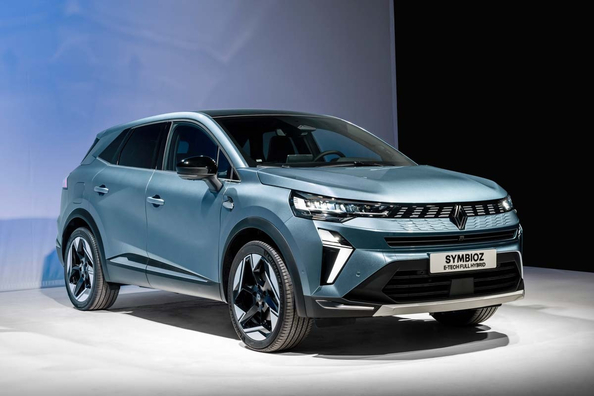
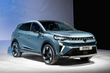
Renault Symbioz — a new compact family crossover that Renault has positioned between the Captur and the Austral. Its logic is simple: front-wheel drive, efficient hybrids, a class-leading boot and an interior that works better in everyday life than in advertising promises.
This model suits those who need one car for the city, school runs, shopping and motorway trips on holiday. It won’t suit those who expect all-wheel drive, a very soft suspension or distinctly sporty handling.
Symbioz fills the gap between the smaller Captur and the larger Austral. At 4 413 mm long, it’s still convenient in the city, yet already offers more space in the second row and the boot than typical urban crossovers. It’s easy to see the official positioning in the feature on Renault Symbioz, and you can cross-check technical reference points via the Symbioz specifications.
In practice, the focus isn’t on off-road ambitions but on family versatility for five adults. Front-wheel drive, an 11.1 m turning circle, parking assistants and an efficient hybrid make it a logical choice for those who often drive in mixed conditions.
The production Symbioz entered the market in 2024, so we are essentially talking about the first generation. Production is set up in Valladolid, and there still isn’t much long-term reliability data because the model is too new.
Early materials mentioned a 145 hp full hybrid, but in the latest official specifications for some markets E-Tech 160 is already listed. This is an important nuance: when choosing a specific car, you need to look not only at the model name, but also at the market and the year of production.
In terms of engines, Symbioz is not the same across all countries. The clearest reference points are the E-Tech 160 full hybrid and the 140 mild hybrid; in some markets Eco-G 120 also appears.
| Version | Hardware | Gearbox and drive | Performance and consumption |
|---|---|---|---|
| E-Tech 160 full hybrid | 1.8 L, 4 cylinders, 160 hp, 1.4 kWh battery | automated e-shifter, front-wheel drive | 0–100 km/h in 9.1 s, up to 180 km/h, 4.3–4.4 L/100 km WLTP |
| 140 mild hybrid | 1.3 L, 4 cylinders, 140 hp, 240 N·m | 6-speed manual, front-wheel drive | 0–100 km/h in 10.6 s, 5.9 L/100 km WLTP |
The full hybrid is the main version for city driving and a family pace. It delivers the best fuel economy, but it is also sometimes criticised for higher revs and a not-perfectly-smooth transmission response during hard acceleration or when charging the battery.
The mild hybrid feels simpler thanks to the manual gearbox, but it no longer delivers the same city advantage in consumption. If your priority is minimal fuel use in traffic, E-Tech looks stronger.
| Parameter | Value |
|---|---|
| Length | 4 413 mm |
| Width | 1 797 mm without mirrors, 2 037 mm with mirrors |
| Height | 1 575 mm |
| Wheelbase | 2 638 mm |
| Ground clearance | 169 mm |
| Boot | 492–624 L in the standard configuration; up to 1 582 L with the backrest folded |
| Fuel tank | 48 L |
| Turning circle | 11.1 m |
| Curb weight | from 1 284 to 1 393 kg depending on version |
| Seats and doors | 5 seats, 5 doors |
On paper, Symbioz hits the family brief well: not too big for a courtyard or an underground car park, yet noticeably more practical than smaller crossovers. The rear bench slides by 16 cm, so you can choose between extra knee room and a larger boot.
As for the boot, you need to read the specification carefully. Renault quotes both 492–624 L in the normal configuration and separate VDA values of 434, 548 and 1 498 dm³. The difference comes down to the measurement method and the rear bench position, but the main conclusion remains the same: the boot is genuinely one of the key arguments here.
Inside, the focus is on functionality. Even base versions get OpenR Link with Google services and a digital instrument cluster, while higher trims add a 360° camera, automatic parking, the Solarbay glass roof and a Harman Kardon sound system.
In terms of safety and driver assists, the set is rich, but there are ergonomic nuances. Rear visibility isn’t a strong point, so the camera and parking systems aren’t just a nice bonus here — they’re genuinely useful for everyday use.
As a family car, Symbioz is strong in the small things: a good driving position, five doors, a solid amount of boot space and predictable fuel consumption. For the full hybrid, the official figure is 4.3–4.4 L/100 km WLTP, and in road tests it often comes out around 4.4–4.9 L/100 km, which looks very convincing for this class.
The weak points are also easy to predict. There’s no all-wheel drive, 169 mm of clearance doesn’t make it an off-roader, and the suspension’s firmer response over sharp bumps is best checked on the exact wheels you plan to run.
| Pros | What it gives the owner | Cons | Where it shows |
|---|---|---|---|
| Large boot and sliding rear bench | easier to fit kids’ gear, suitcases, shopping | No all-wheel drive | slippery country house driveway, dirt roads, winter roads — the limits show quickly |
| Efficient full hybrid | city driving and mixed cycles cost less | The hybrid can get noisy under load | overtaking, climbing, charging the battery |
| Rich equipment and many assistants | easier parking and long-distance trips | Early complaints about minor software glitches | multimedia, camera, electronics |
| Compact exterior dimensions | easier to live with in the city | The suspension may feel firm | poor asphalt, joints, urban bumps |
Overall, Symbioz is stronger as a practical family tool than as a car for emotional driving. If your priorities are consumption, boot space, urban convenience and modern equipment, it makes sense. If a soft ride, quietness under load and all-wheel drive matter, it’s worth comparing it with larger or more expensive alternatives.
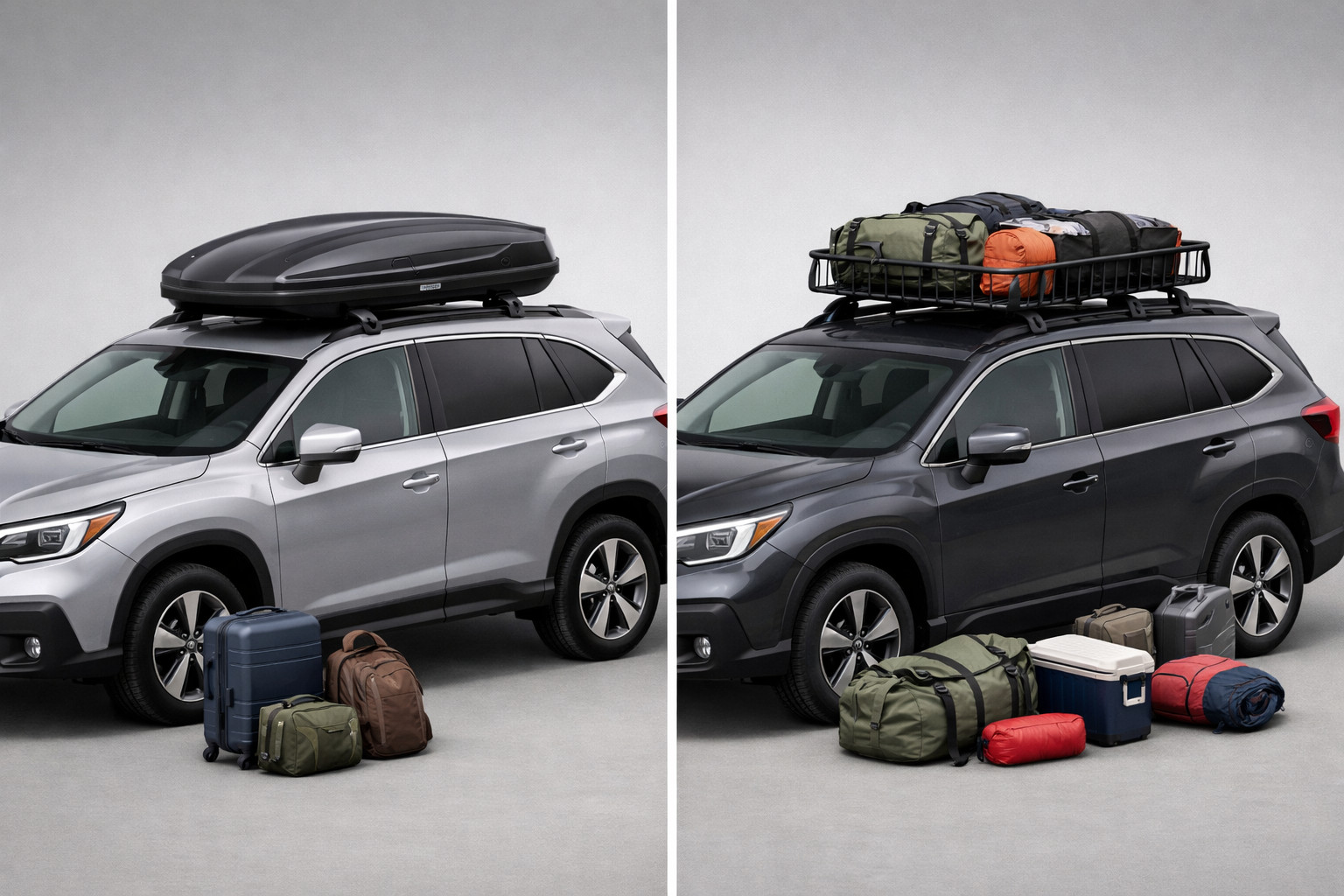
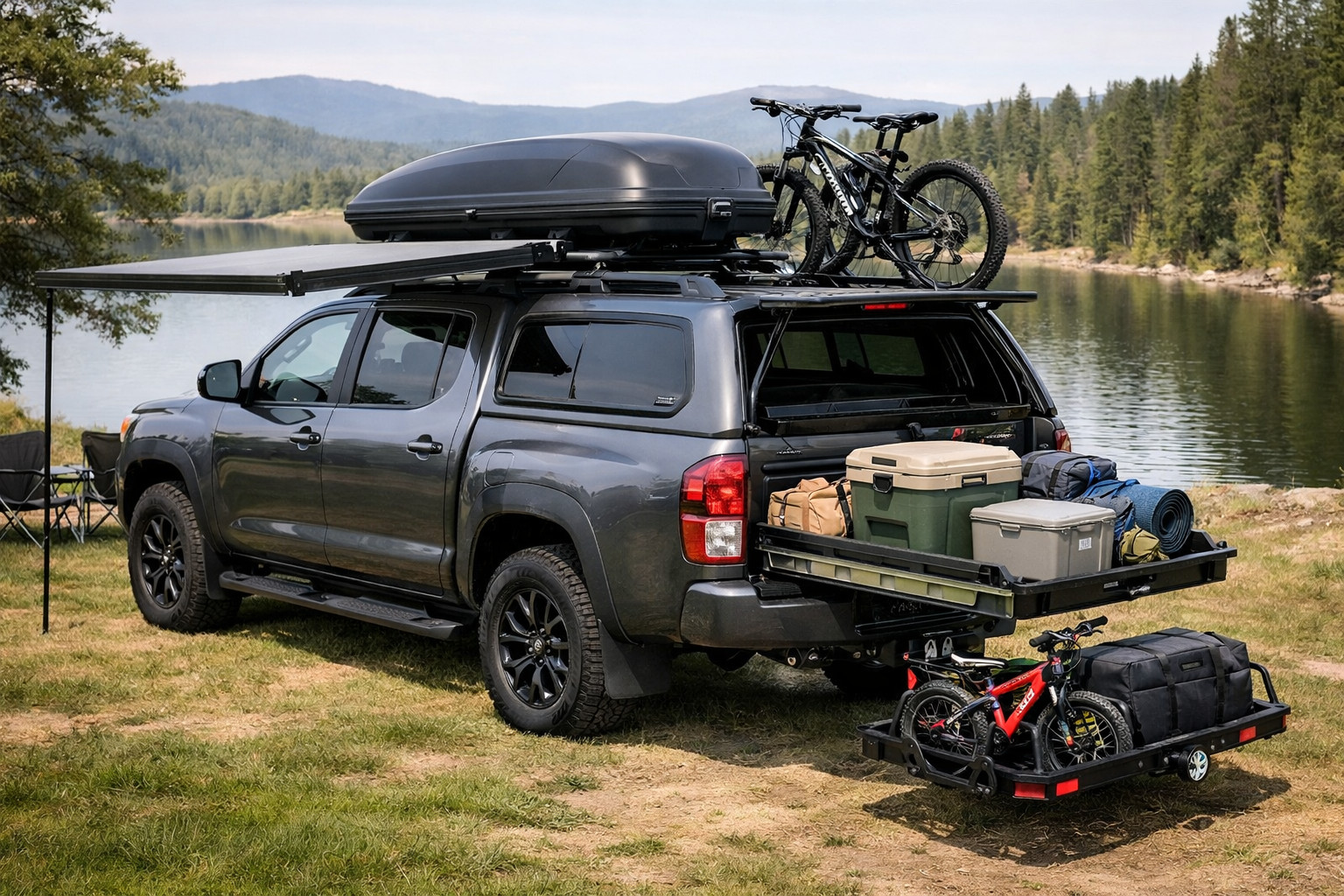
For this model, the most sensible additions aren’t decorative details, but things that genuinely simplify everyday use: cabin and boot protection, solutions for carrying bicycles or roof luggage, mud flaps, a towbar, a dash cam, a spare wheel kit. In the case of Symbioz, this fits because the car itself is designed around family scenarios.
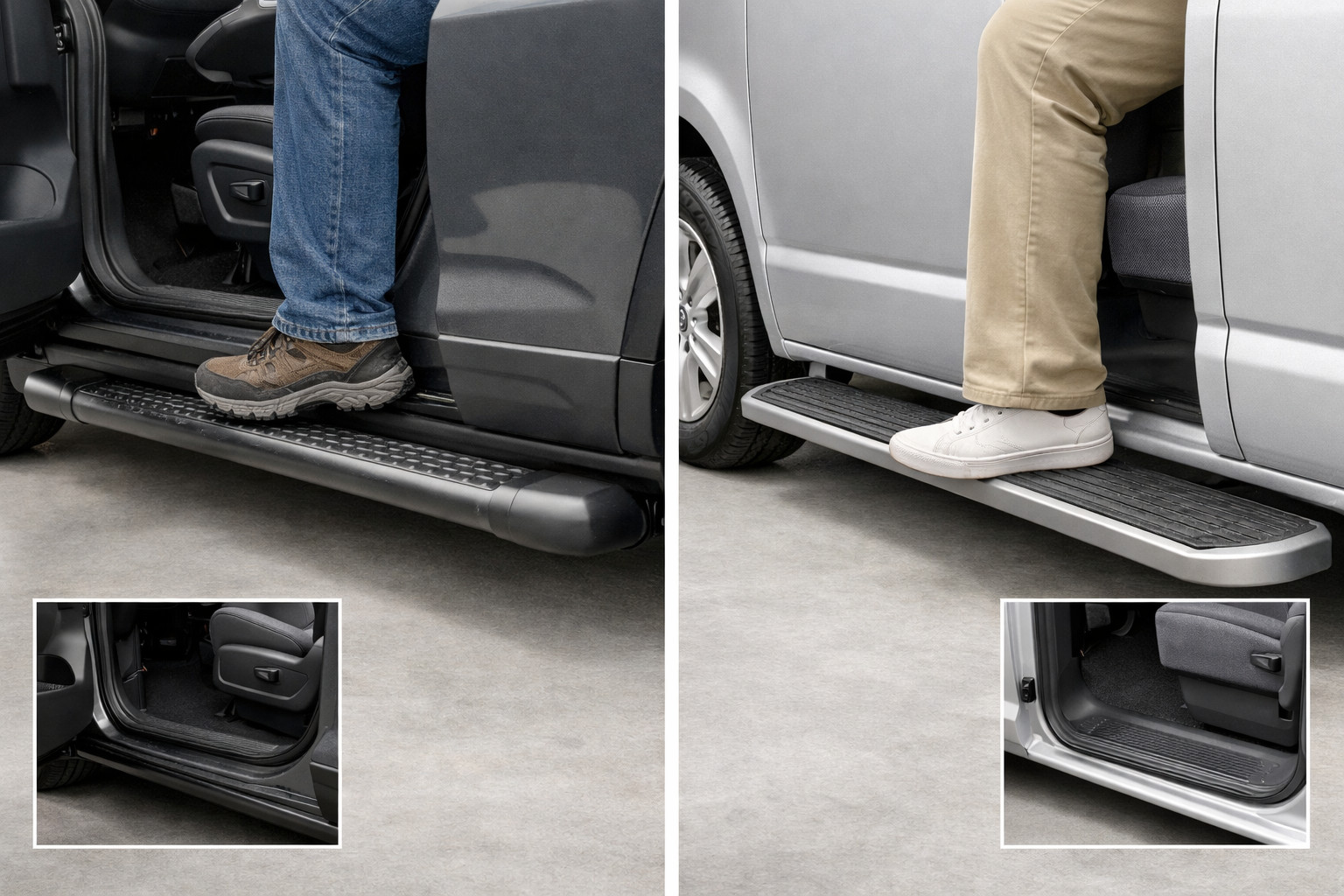
If you look at retrofitting realistically, the first things to buy are what protects the interior and saves time in daily life. Side steps or exterior decor make sense after that, not instead of it.
Renault Symbioz is a spot-on format for those for whom Captur is too small, but Austral is not yet necessary. Its main arguments are an efficient hybrid, smart interior packaging, a large boot and city-friendly convenience; its main compromises are front-wheel drive only, less-than-ideal smoothness from the hybrid transmission and a suspension that isn’t the softest.
The material is based on real selection experience, practice and real-world usage scenarios: in cars like these, people most often value not flashiness, but how easily they handle everyday family tasks without excessive fuel costs.
| ✔ | A large trunk and sliding rear bench make the Symbioz convenient for family trips, shopping, and luggage. You can choose between more space for rear passengers or a larger trunk volume. |
| ✔ | The E-Tech 160 full hybrid uses fuel economically, especially in the city and in mixed driving. For daily routes, this brings noticeable savings without the need to think about refueling often. |
| ✔ | Compact exterior dimensions make life easier in the city and in parking lots. At the same time, the car still offers more space than typical urban crossovers. |
| ✔ | The cabin and equipment are focused on practical use: OpenR Link with Google services and a digital instrument cluster are already included in the base version. Higher trims add a 360° camera, automatic parking, and a glass roof. |
| ✔ | A good set of assistants and support systems is provided, which really makes everyday use easier. This is especially useful when parking and on longer trips. |
| ✘ | There is no all-wheel drive, so on slippery roads, dirt, or winter climbs, the margin of capability quickly runs out. This is not the crossover you should choose with difficult surfaces in mind. |
| ✘ | The suspension can feel a bit firm over sharp bumps, joints, and rough asphalt. Comfort is best checked on the exact wheels planned for everyday use. |
| ✘ | The hybrid transmission does not always work quietly and smoothly under load. During overtaking, on hills, or while charging the battery, higher revs and less-than-ideal response may occur. |
| ✘ | Rear visibility is not the best, so maneuvering is not as convenient without a camera and parking systems. For everyday use, this is not a minor detail, but a real ergonomic trait. |
Shipping to EU
Wholesale and retail
Own warehouse
Опис продукту
Подарунки не надаються при оформленні покупки у кредит під 0,01% або при покупці частинами.