13.05.2024
2870
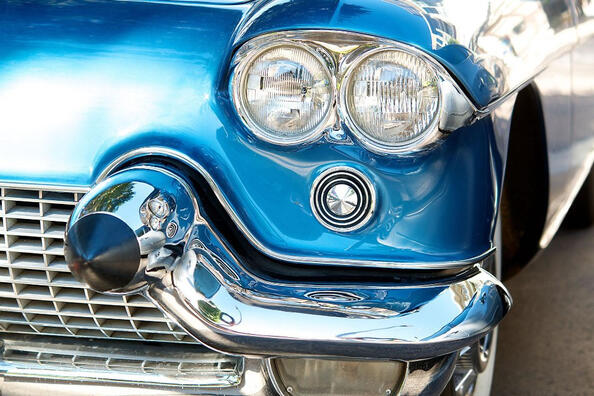

At home, chrome car parts can be safely cleaned with a pH-neutral car shampoo, warm water, and a soft microfiber cloth, then wiped dry. Everything else depends on the material: a non-abrasive metal polish can be used only on stainless steel and chrome-plated metal, while chrome-plated plastic should only be washed and protected with wax. Chlorine, acidic wheel cleaners, steel scouring pads, and abrasive powders are not suitable for any “chrome”, and in winter the main threat to it is salt and de-icing chemicals that can dry on the surface for weeks.
Contents
In cars, “chrome” refers to a shiny look, not a single material. Before cleaning anything, identify what you are dealing with, because a product that helps stainless steel can ruin plastic.
| Parameter | Chrome-plated plastic | Chrome-plated metal | Polished stainless steel |
|---|---|---|---|
| Where it’s found | grilles, emblems, mirror housings, some trim pieces | bumpers and wheels on older cars, motorcycle parts | most of our chrome trims (Carmos, OmsaLine) |
| Structure | ABS plastic, with layers of copper and nickel, topped with chrome | steel or brass, with nickel and chrome on top | a solid sheet of steel; the shine is the metal itself |
| Thickness of visible chrome | about 0.4 μm | about 0.4 μm | no coating |
| Non-abrasive metal polish | no | yes, carefully | yes |
| How to tell | lightweight, warm to the touch | heavy, with the base visible at chips | heavy, cold; the product page says “stainless steel” |
Decorative chrome is thin: according to the industry magazine Products Finishing, the visible layer is about 0.4 μm, with 5–50 μm of nickel underneath. So chrome itself is not “armor” against corrosion—it is only a shiny film with micropores, and it is through them that the nickel beneath is destroyed.
A special case is the matte “aluminum” window frames and roof rails on modern cars. This is anodized aluminum, not chrome: in its owner’s manuals, Volvo recommends washing such parts with products with a pH from 3.5 to 11.5 and never polishing them with metal polish, otherwise they lose color.
For ordinary dirt, the British Stainless Steel Association (BSSA) recommends soap or a mild detergent in warm water, a soft sponge or cloth, rinsing with clean water, and wiping dry. For chrome-plated plastic and metal, this set is just as safe:
BSSA allows removing grease and fingerprints on stainless steel with isopropyl alcohol. On add-on trims, do not pour it along the edge: solvents soften the adhesive tape that holds the part in place.
Reddish specks on a stainless trim piece most often mean not through-corrosion, but salt deposits or particles of regular steel on the surface. BSSA recommends removing them with mild, non-abrasive metal creams: apply with a soft cloth, rinse residues with clean water, then wipe dry. On brushed stainless steel, move along the grain. For limescale spots from hard water, a 25% vinegar solution with a soft brush helps—afterwards, the trim must be rinsed and wiped.
Dull film and small rust dots on an old chrome bumper are removed with a non-abrasive chrome polish, using minimal pressure. If blisters have already formed under the chrome or it is peeling, polishing will not fix it: the coating is damaged and the part needs re-chroming.
Here, only shampoo washing and protective wax work. Whitish spots that won’t wash off and blisters indicate damaged nickel under the chrome, not dirt. More on why chrome becomes dull is in the article why chrome on a car becomes dull.
De-icing mixtures are chlorides of sodium, calcium, and magnesium. According to AAA, liquid de-icers based on calcium and magnesium chlorides stay wet longer and seep into gaps, so corrosion progresses faster there. On stainless steel they cause reddish specks near edges and in seams; on chrome-plated plastic they cause spots and blisters through scratches. We covered how this happens and what to do through the winter separately: whether salt damages chrome trims and how to care for chrome in winter.
In short: rinse salt off with water before touching the part with a sponge, wash the car regularly—and more often after driving on treated roads—and flush the gaps between the trim and the bodywork. The same protection is needed for the paintwork as well—see the article how to protect the car body from salt and de-icing chemicals.
Chrome rear bumper protectors, window moldings, and door handle covers in our catalog are mostly made of stainless steel and are attached with double-sided tape. So caring for them is not only about shine, but also about intact edges.
Look for window and pillar moldings in the door trims section. Before ordering, verify the model, generation, and body style: trims that look similar from neighboring generations often do not match in shape.
We ship via Nova Poshta across Ukraine.
Shipping to EU
Wholesale and retail
Own warehouse
Опис продукту
Подарунки не надаються при оформленні покупки у кредит під 0,01% або при покупці частинами.