02.09.2026
In winter, chrome trim on a car suffers not from the cold, but from what is on the road: salt and de-icing chemicals. Stainless steel does not rot through from them, and chrome-plated plastic does not rust at all, but both materials can lose their appearance in a single season if salt dries on the surface for weeks. Here’s what exactly happens to chrome, how to wash it, and what you must not clean it with.
Contents
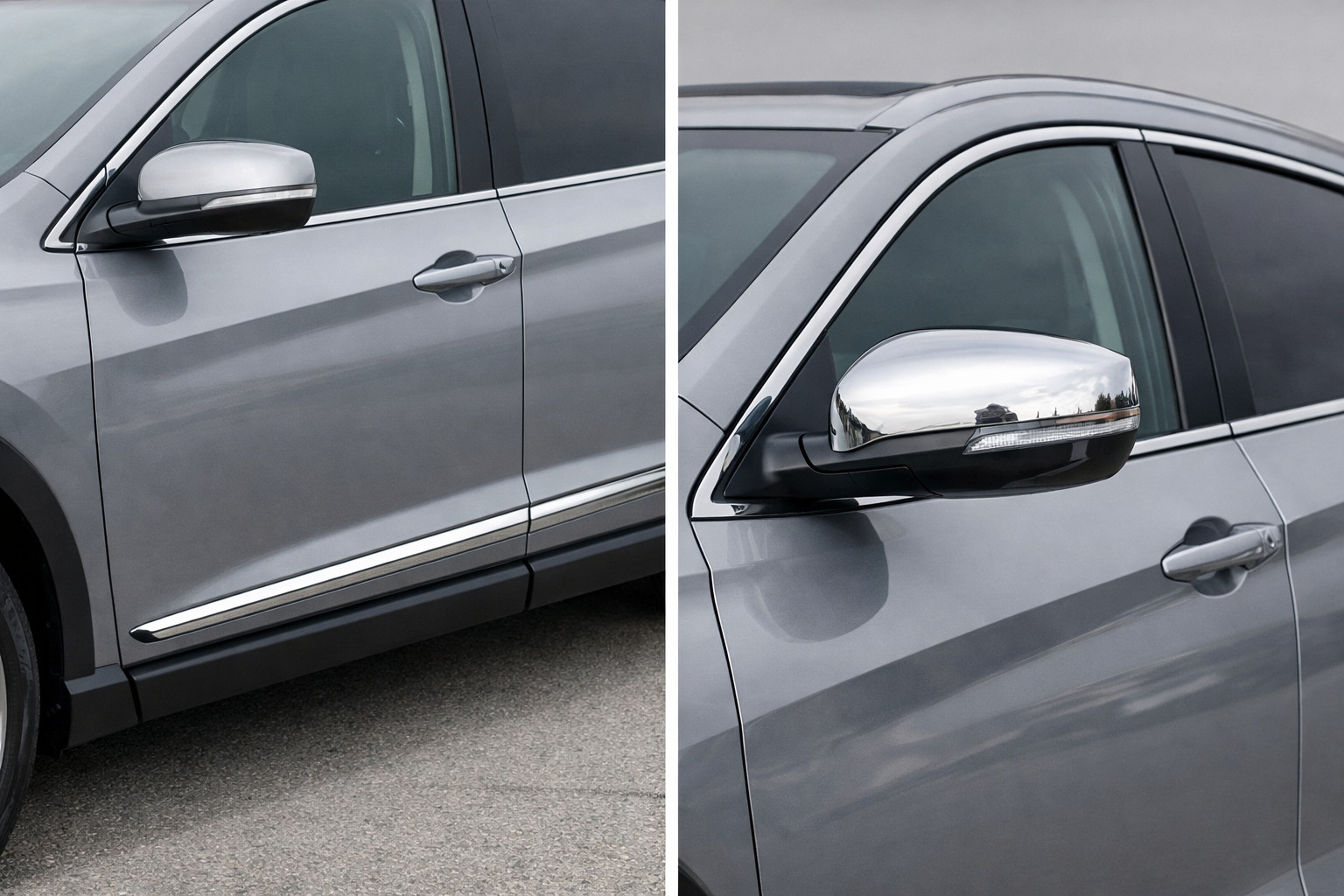
In car tuning, the word “chrome” actually covers two different materials, and they need different care. Our chrome trim catalog includes both: stainless-steel trim (for example, Carmos — Turkish steel, OmsaLine — Italian stainless steel from a Turkish manufacturer) and trim made of chrome-plated ABS plastic. Often the very same part, such as mirror covers, is sold in both versions.
| Stainless steel | Chrome-plated plastic | |
|---|---|---|
| Base | thin sheet of steel; the shine is the metal itself | ABS plastic coated with layers of copper, nickel, and chrome |
| How to tell | heavier, cold to the touch, rigid | lightweight, warm to the touch; the edge has the thickness of plastic |
| What salt does | rusty specks and pitting corrosion in gaps | spots, haze, blisters, and peeling of the coating |
| Can it be polished | yes, with a non-abrasive metal polish | no, only washing and a protective coating |
The easiest way to find out the material is to check the “Material” field on the product page or in the trim’s documentation.
De-icing mixes are mostly chlorides: ordinary technical salt (sodium chloride), as well as calcium and magnesium chlorides. The latter absorb moisture from the air, so their residue stays wet for a long time and keeps working even on a dry road.
Stainless steel holds up thanks to a thin protective film of chromium oxide on the surface. Chlorides break down this film locally, and where salt solution sits for a long time, rusty specks appear — specialists call this “tea staining.” They form fastest in gaps, on edges, and in places rain does not reach: that’s where salty moisture lingers the longest. At an early stage it is a cosmetic defect that washes off, but if you ignore it for months, tiny pits remain on the surface.
On plastic trim, the visible chrome is very thin — fractions of a micrometer, with several layers of nickel and copper underneath. The plastic itself does not rust, but salt that gets into scratches and micropores in the chrome eats away at the nickel beneath it. First dull or whitish spots appear, then blisters, and later the coating peels. Polishing will not remove such a defect: the layer is too thin, and the paste will take it down to the plastic.
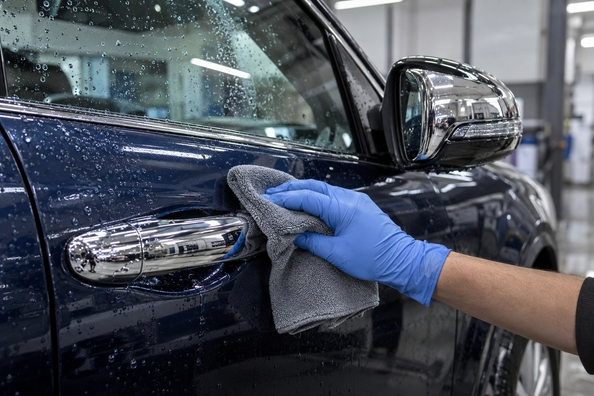
You can and should wash your car in winter; the main thing is to do it correctly (more details in the article can you wash a car in winter). For chrome, here’s what matters:
At a high-pressure car wash, do not bring the nozzle right up to the edge of the trim: a strong jet forces water under the adhesive tape.
If rusty specks have already appeared on stainless steel, remove them with a non-abrasive metal polishing paste and a soft cloth, then rinse and wipe dry. We covered how to restore shine to darkened parts separately — in the article why chrome on a car darkens and how to bring back its shine.
Before the de-icing season, wash and degrease the trim and apply wax or a polymer sealant: a thin layer prevents salt solution from clinging to the surface, and dirt then washes off more easily. Refresh the coating every couple of months, following the product instructions. Check the edges of the trim: if the tape has lifted anywhere, reattach it before salt gets packed under the edge. The same protection is worth giving the bodywork too — there is a separate article about salt and de-icing chemicals on that. And do not skip the spring wash: residue left from winter continues to eat into chrome in summer as well.
We deliver via Nova Poshta throughout Ukraine; orders from 15,000 ₴ — free of charge by our own transport.
Shipping to EU
Wholesale and retail
Own warehouse
Опис продукту
Подарунки не надаються при оформленні покупки у кредит під 0,01% або при покупці частинами.