 Author: Radomskyi Maksym Vasyliovych
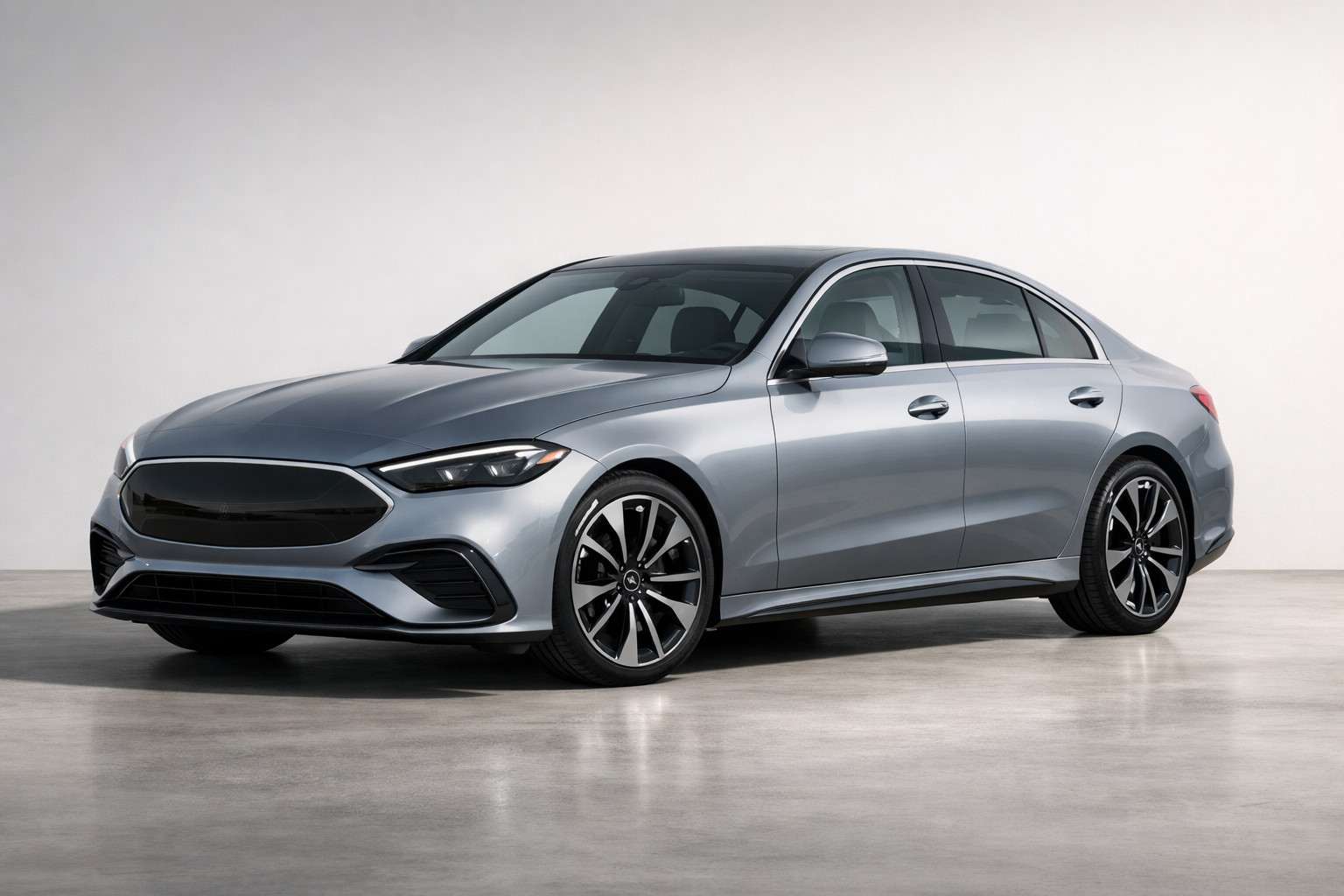
The electric C-Class for 2027 in C 400 4MATIC form isn’t just another C-Class without an internal-combustion engine—it’s a separately engineered battery sedan with an emphasis on long-distance driving. The key numbers are strong: two electric motors, 360 kW, 800 N·m, a 94 kWh battery, fast charging up to 330 kW, and an official range currently stated at 753 km on the WLTP cycle.
The 762 km figure Mercedes-Benz mentioned at the premiere should be seen as an early claim: current specifications list 753 km. For the buyer, what matters more is this: it’s a large, quiet, technically sophisticated sedan for people who do a lot of highway miles and want an EV without constantly hunting for chargers, but aren’t looking for a lightweight sporty character.
The model and its place in the market
By size and overall concept, the electric C-Class is edging closer to an entry-level executive sedan than to a classic compact premium model. The long wheelbase, large battery, all-wheel drive, and 2,460 kg curb weight shift the focus toward comfort, silence, and high-speed stability.
The model fits best for a driver who commutes in the city every day but regularly heads out on long routes. It’s less suitable for those who want the simplest possible EV, an estate body instead of a sedan, or a driver-focused feel with minimal weight.
Generations and model history
The regular C-Class line has gone through several generations: W202 1993–2001, W203 2000–2007, W204 2007–2015, W205 2014–2021, and W206 from 2022. The electric C-Class with model year 2027 stands apart from this branch: its global premiere took place in April 2026, and order books opened in some markets in May 2026.
An important nuance: this isn’t a converted gasoline or hybrid C-Class with a big battery, but a car designed as an EV from the outset. That’s why it’s better to compare it with the W206 in terms of seating position, status in the lineup, and practicality—not construction.
Motors and transmissions
For the C 400 4MATIC version, engine displacement is irrelevant: it’s an EV, so there’s no traditional “liters” here. Instead, you get a dual-motor all-wheel-drive setup with a peak output of 360 kW, or 489 hp, and 800 N·m. The claimed 0–100 km/h sprint takes 4.0 s, and top speed is limited to 210 km/h.
Official materials don’t provide a full breakdown of the mechanical side of the drivetrain, but the technical descriptions mention a separate motor on each axle; there are also references to a two-speed gearbox on the rear axle. For the buyer, this means one thing: the powertrain is tuned not only for off-the-line pull, but also for efficiency at higher speeds.
| Parameter | Value |
|---|---|
| Body | Sedan, 4 doors, 5 seats |
| Powertrain | Two electric motors, 4MATIC all-wheel drive |
| Power | 360 kW, 489 hp |
| Torque | 800 N·m |
| Battery | 94 kWh usable capacity |
| 0–100 km/h | 4.0 s |
| Top speed | 210 km/h |
| Range | 753 km WLTP now; 762 km was an early claim |
| Energy consumption | 14.3 kWh/100 km on paper; about 14.1–16.8 kWh/100 km in early tests |
| Fast charging | Up to 330 kW, 10–80% in 22 min |
| AC charging | 11 kW, full charge in about 10.5 hours |
| Dimensions | 4 883 × 1 892 × 1 503 mm |
| Wheelbase | 2 962 mm |
| Ground clearance | 148 mm standard; about 139–190 mm with air suspension |
| Trunk | 470 L rear and 101 L front |
| Curb weight | 2 460 kg |
| Towing | 750 kg as standard and up to 1 800 kg with the appropriate hitch |
Body, dimensions, and chassis
By the raw numbers, the car already steps beyond the old idea of a small C-Class: length 4,883 mm, width 1,892 mm without mirrors, height 1,503 mm, wheelbase 2,962 mm. A 12.1 m turning circle looks acceptable for everyday city use, especially with rear-axle steering.
Ground clearance with the standard suspension is listed at 148 mm, and with air suspension the range can vary roughly from 139 to 190 mm. It’s a good compromise for asphalt, tall curbs, and winter courtyards, but not a reason to treat the model like a crossover. The chassis is clearly tuned for smoothness: AIRMATIC air suspension, rear-axle steering, and aerodynamic 18–20-inch wheels are all about stability and quietness rather than nervous sharpness.
Interior, comfort, and safety
The big strength of this model is the feel of a large, modern cabin. The optional MBUX Hyperscreen almost completely takes over the dashboard; large displays are available, along with camera-based visibility, automated parking, multi-zone comfort, and navigation that can plan charging stops along the route.
In everyday life, what matters here isn’t decorative effects, but silence, good audio, a comfortable driving position, and a wide set of driver assists. If, however, the driver dislikes screen-based control and wants a simpler, less electronics-heavy interior, the electric C-Class may feel overloaded.
Everyday use
In daily use, the model’s main advantage is the combination of driving range and charging speed. On paper it’s 753 km WLTP, but in real life it’s more correct to think in scenarios: in calm mixed driving the numbers can be very close to official claims, while on a cold high-speed highway you should plan for a much more modest range—roughly around 560–600 km.
Practicality isn’t just theoretical, either: the trunk is 470 L, there’s a 101 L front trunk, and the second-row backrests fold 40:20:40. That’s handy for long trips when you want to separate cables, suitcases, and long items. In the city, cameras, automated parking, and the predictable nature of electric torque help; for a family, the ability to tow a trailer can also be useful—if the trim allows it.
Strengths and weaknesses
| Pros | Cons | What it means in practice |
|---|---|---|
| Long range and very fast charging | Real-world range depends heavily on temperature and speed | For highway driving it’s one of the most convenient electric-sedan formats, but in winter you need to calculate range conservatively |
| High level of comfort, quietness, and smoothness | High weight of 2,460 kg | On rough roads and the autobahn the car is pleasant, but don’t expect the lightness of a sporty sedan |
| Good practicality: 470 L rear, 101 L front, 40:20:40 backrests | No estate version | For a family the sedan is enough, but for those carrying lots of bulky items it may not be sufficient |
| Strong digital and driver-assist package | Complex tech and potentially expensive configuration | Comfort is high, but option pricing and the long-term uncertainty of a new model remain risk factors |
| Can tow up to 1,800 kg | The model is too new for a full reliability assessment | Functionality is broader than many electric sedans, but there’s still limited real-world ownership data |
From an owner’s perspective, the list of advantages looks very mature: the car doesn’t annoy you with frequent charging stops, it cruises quietly and calmly on the highway, it has a proper trunk, and it doesn’t force you into the typical compromises of early EVs. The main weak points are equally clear: it’s a heavy, expensive, tech-rich car, and the full picture of costs and reliability will only emerge after a few years of real-world use.
Tuning and accessories
For a model like this, the smartest “tuning” isn’t exterior decoration, but protection for the cabin and trunk, plus organization for charging accessories and the items the car carries every day. A dedicated catalog specifically for the electric C-Class may appear later, so for now the practical reference point is sections for the current C-Class W206: before ordering, it’s important to verify the floor shape, mat mounting points, and trunk geometry.
What to check out for this model
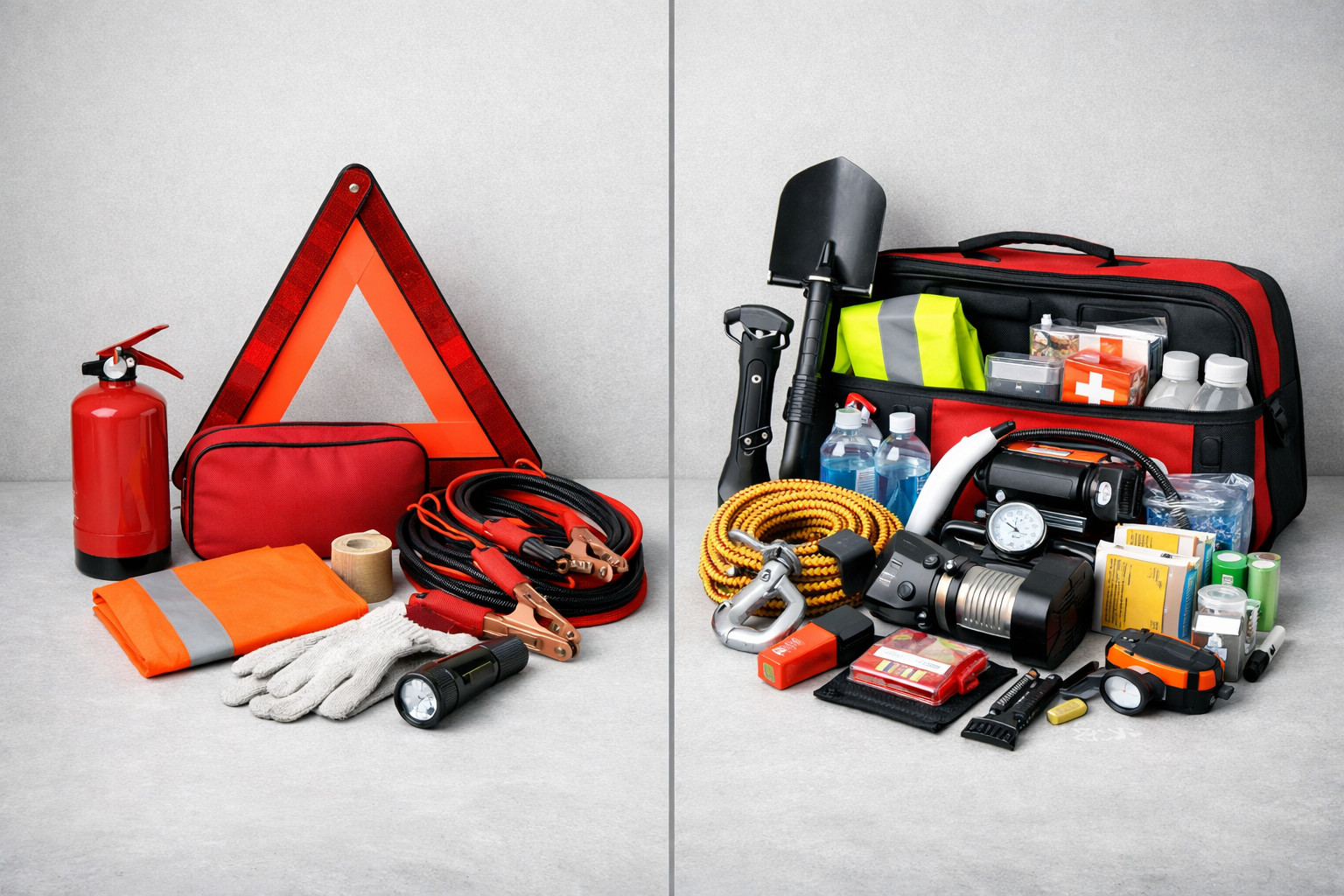
- Cabin floor mats — the first thing that makes sense for a daily car with an expensive interior and frequent trips in rain and snow.
- Trunk protection — useful if the front compartment holds cables, while the main trunk carries suitcases, kids’ items, or tools.
- Interior accessories — help organize the small things that quickly accumulate in an EV: cables, adapters, mounts, and protective elements.
Conclusion
The electric Mercedes-Benz C-Class 2027 in C 400 4MATIC guise looks very strong where owners actually spend their time: on the highway, in everyday city driving, and in mixed family use. It suits those who want a premium electric sedan with a long range, fast charging, quietness, and grown-up practicality; it’s less suitable for those who need minimal weight, simplicity, or an estate body.
The key is to look at it without the magic of the 762 km number and without fear of the EV theme itself: what matters more here is stable real-world range, charging logic, comfort, and equipment. This material is based on real selection experience, practical know-how, and real usage scenarios, so the focus isn’t on marketing promises, but on what will truly matter to the owner.
Pros and cons
Long range and very fast charging make the car convenient for highway trips: even in real-world conditions, it is one of the least troublesome electric sedan formats.
The suspension, cabin quietness, and long wheelbase are tuned for comfort, so on the autobahn and broken asphalt the car should feel calm and stable.
Practicality for everyday use is quite good here: 470 l of trunk space, another 101 l up front, and the folding 40:20:40 second row help fit both suitcases and small items, as well as long objects.
A strong set of assistants and digital functions makes city driving and trips easier: there are cameras, automatic parking, and navigation with charging stops planned along the route.
The model can tow up to 1,800 kg with the appropriate hitch, which expands its capabilities compared with many electric sedans.
A mass of 2,460 kg makes the car noticeably heavy, so you should not expect light or especially driver-focused behavior from it.
Real range depends heavily on temperature and speed, so in winter on the motorway it can drop noticeably compared with the official figures.
This is a sedan without a wagon body, so for those who often carry large or awkwardly shaped items, practicality may be lacking.
The model is new and technically complex, so long-term reliability and the real cost of ownership do not yet have full statistics.