 Author: Radomskyi Maksym Vasyliovych
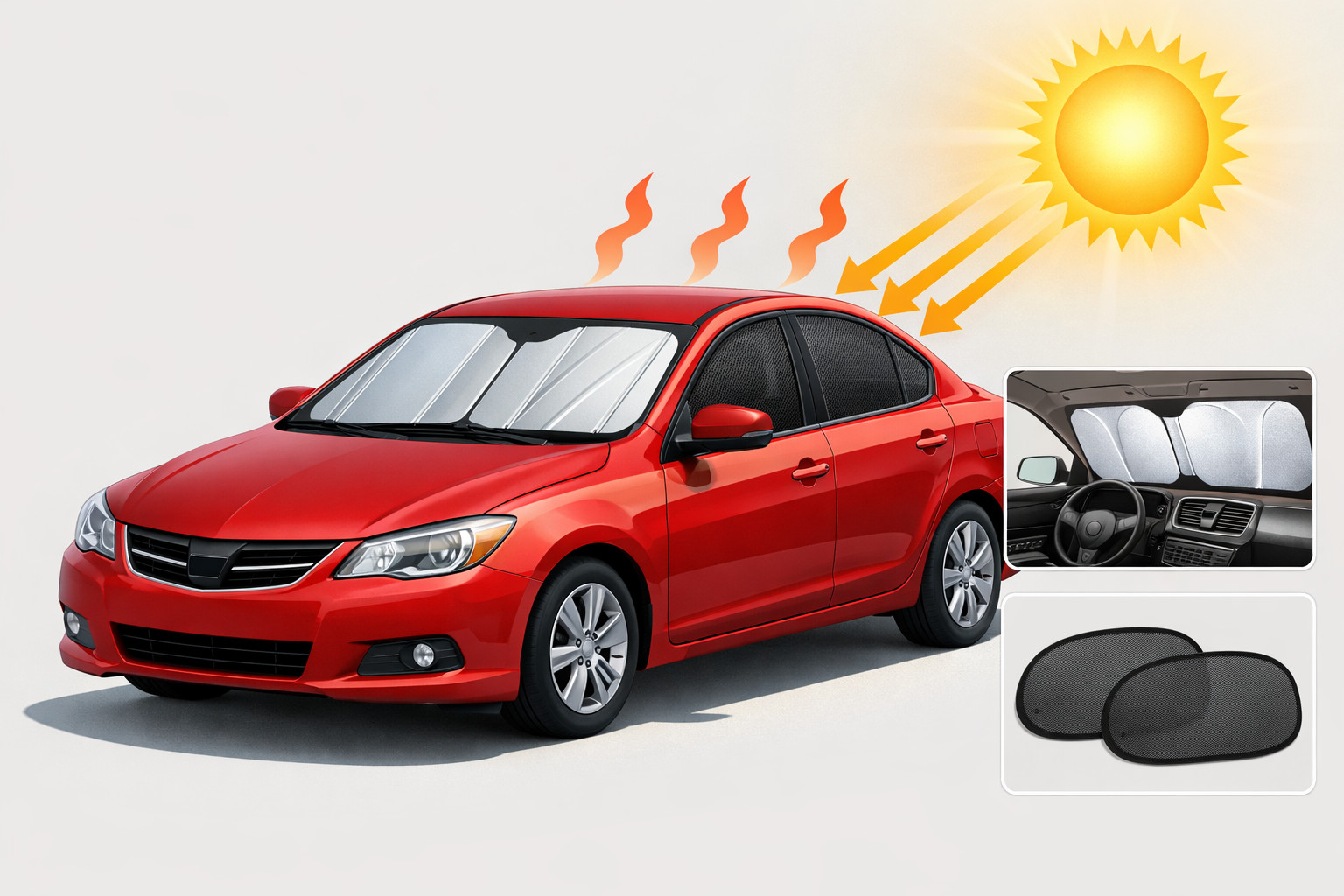
If a car sits in direct sun every day, the problem isn’t just that it’s “hot” inside. The main impact comes through the glass—first of all the windshield: the dashboard, steering wheel, and seats overheat, and the air inside quickly climbs in temperature. That’s why choosing a sunshade isn’t about the brand on the packaging, but about three things: how precisely it covers the glass, whether it really has a reflective surface, and whether it blocks the exact area through which the most sunlight enters your car.
For a car that regularly “bakes” in a parking lot, the best basic setup is simple: a custom-fitted windshield sunshade installed with the reflective side facing outward. If the car sits for a long time not only with its nose toward the sun but also under side or rear rays, a windshield screen alone is no longer enough—you’ll need to add protection for other windows or consider a longer-term solution.
Why this problem happens
In a parked car, solar radiation passes through the glass and heats the interior surfaces. Then those surfaces transfer heat to the air. That’s why you can end up not just with a warm cabin, but with a literally scorching steering wheel and dash, even when it’s not yet peak heat outside.
The windshield usually takes the biggest load: it’s large, angled toward the sun, and “shines” straight onto the dashboard. Without protection, the cabin temperature can rise to the point where it’s unpleasant to touch plastic, and dark interior elements heat up especially strongly.
Main causes
- Large windshield area. Most heat enters the cabin through it while parked.
- Gaps around the edges of the sunshade. Universal models often don’t cover areas near the A-pillars, mirror, and sensors, and sunlight keeps heating the dashboard through those spots.
- Wrong material or orientation. A thin soft shade without a proper reflective layer works weakly. If the reflective side isn’t facing outward, the effect drops too.
- Unprotected side and rear glass. During long parking periods the sun changes angle, and the cabin starts overheating not only through the windshield.
- Overestimating small measures. Cracking the windows or using a thin screen can help a little, but it doesn’t replace full protection from radiation.
How to figure out what’s causing it in your case
- After parking, check what’s hottest: the dashboard and steering wheel, the sides of the seats, or the rear shelf. This shows which glass is letting in the main heat.
- Install the sunshade and look at the car from outside. If you can see light gaps near the pillars, mirror, or the top edge, that’s where you’re losing effectiveness.
- Check which side the sunshade is installed with. The reflective surface should face outward.
- Compare two identical parking situations: one day with only a windshield sunshade, another with the windshield plus rear-half protection. If the difference is noticeable, one screen isn’t enough for you.
- Pay attention to your parking pattern. If the morning sun hits the windshield, and after lunch it hits the side or rear glass, you need not just “a sunshade in general,” but a set matched to your real parking scenario.
DD Tuning expert comment: the most common mistake is buying a universal sunshade that’s “almost the right size” and expecting model-specific results. The second typical mistake is judging a sunshade only by its shiny surface, not by how it fits around the pillars and mirror. If your car really sits in the sun every day, fit matters more than compact folded size.
Symptoms, causes, and what to do (table)
| Symptom | Likely cause | What to do |
|---|---|---|
| Dashboard and steering wheel are very hot, while the rear of the cabin is less hot | Main heat comes through the windshield | Use a tightly fitted reflective windshield sunshade |
| You have a sunshade, but the difference is minor | Gaps near the pillars/mirror or the shade is installed the wrong way | Check the fit, install with the reflective side outward, and change the model if needed |
| After lunch it bakes from the side or the rear | The sun shifts and heats through the side or rear glass | Add sunshades for the rear half or legal heat-rejecting window film |
| A child seat and the rear seat overheat more than the front | Insufficient protection for rear windows | Cover the rear side windows and rear glass, not only the windshield |
| Windows are slightly cracked open, but the cabin is still very stuffy | The ventilation gain is too small compared to heat coming through the glass | Treat cracked windows only as a secondary measure, not the main solution |
| The sunshade is easy to store, but it keeps slipping or sagging | Too soft or poorly shaped design | Choose a stiffer model or a sunshade cut more precisely to the glass |
What really helps
The most noticeable effect comes from a tightly fitted windshield sunshade. Even a basic screen already reduces cabin heat-up, and better reflective materials add a few more degrees of improvement. But the key here isn’t a magical material—it’s how well the sunshade covers the glass along the entire contour.
For daily parking in the sun, it’s worth choosing a model that holds its shape, doesn’t sag, and is secured under the sun visors. This reduces the heat удар on the dash and steering wheel and makes starting a trip noticeably easier, especially when the car has been sitting for a few hours.
If the car sits in the open for a long time, a combination really works: a windshield sunshade plus protection for the side or rear glass. This is especially noticeable on wagons, crossovers, minivans, and any vehicles with a large glass area.
For long-term use, legal heat-rejecting window film works well. It doesn’t replace a windshield sunshade in peak heat, but it consistently reduces heat inflow and the load on upholstery, plastics, and child seats.
What almost doesn’t work or only helps briefly
A universal “fits all cars” sunshade often loses not because of the material, but because of the shape. If large gaps remain, the sun still hits the dashboard and the benefit is lost.
It’s also hardly worth relying on cracking the windows alone. It can slightly reduce stuffiness, but it doesn’t remove the main cause of overheating—solar radiation through the glass.
Thin film-style shades, cardboard screens without proper fixation, or random substitutes like towels work inconsistently. They may provide a small local effect, but for daily use they quickly become annoying, slip out of place, and don’t cover the glass properly.
Umbrella-style sunshades are convenient to store, but they don’t always fit complex windshield shapes well. If your priority is maximum protection rather than compactness, this isn’t the strongest option.
When accessories or replacing components makes sense
If your car sits in the sun almost every day, start with proper sun protection shades. This is the easiest way to reduce heat without modifying the vehicle.
If you sometimes need a little ventilation during short stops or in the rain, window deflectors can help. But it’s important to understand their limits: they don’t replace a sunshade and won’t solve direct sun exposure on their own.
When a car lives outside all the time, it makes sense to explore types of window tinting and choose legal heat-rejecting film. Replacing glass with more expensive solar-reflective glass mainly makes sense when the glass already needs replacement anyway. Doing it only for a small temperature gain is usually not cost-effective.
Solutions: when they work and when it’s not worth spending money (table)
| Solution | When it works | When it’s not worth spending money |
|---|---|---|
| Custom-fitted reflective windshield sunshade | Daily parking in the sun; you need the maximum effect from one accessory | If the car is almost always parked in shade and overheating is rare |
| Universal foldable sunshade | Occasional use; compactness and low price matter | If gaps and slipping annoy you and you need stable results every day |
| Side and rear window sunshades | The sun often comes from the side or rear; there are kids or pets in the car; long parking periods | If the problem appears only during short stops and the main heat source is the windshield |
| Legal heat-rejecting window film | You need ongoing protection for glass and interior; the car spends a lot of time outdoors | If you’re not ready to check regulations or you want to solve everything without installation |
| Window deflectors | You need supplemental ventilation, especially in rain | If you expect a noticeable cabin temperature drop from deflectors alone |
| Replacing glass with solar-reflective glass during repair | The glass is already damaged or due for replacement, and it makes sense to choose a better option at the same time | If you’re changing the glass only to fight summer overheating |
In practice, the selection logic is: first, cover the windshield without gaps; then assess whether the car is heating up through the side and rear windows; and only after that decide whether heat-rejecting film is needed as a permanent дополнение.
From a customer’s experience: a person was looking for a compact universal sunshade because they didn’t want to carry a large rigid screen in the trunk. After a few weeks it turned out the main issue was gaps near the mirror and pillars, through which the dashboard kept baking. After switching to a more precisely fitted windshield sunshade and adding protection for the rear side windows, the cabin didn’t become cold—but getting into the car and grabbing the steering wheel became noticeably easier.
Conclusion
If your car often sits in direct sun, don’t chase the most compact or just “shiny” sunshade. What works is something that tightly covers the windshield, has the reflective surface facing outward, and matches your parking scenario. For daily use, the smartest order is: first a quality windshield sunshade, then—if needed—protection for the side and rear glass, and for a постоянный effect—legal heat-rejecting film. This material is based on real fitting experience, hands-on practice, and real usage scenarios—not promises on the packaging.
How it works
- Assess exactly where the overheating comes from After parking, check what gets hottest: the dashboard, steering wheel, rear parcel shelf, or the seat sides. This will help you understand through which glass the main sunlight enters the cabin.
- Choose a shade that fits the windshield tightly For everyday parking in direct sunlight, the best option is a custom-fitted reflective windshield shade. It is important that there are no gaps near the pillars, mirror, or top edge.
- Install it with the reflective side facing outward When installing, check the material orientation: the reflective side should face the sun. If the shade is turned the wrong way, its effectiveness drops noticeably.
- Check whether you also need protection for the side and rear glass If the car is parked for long periods not only facing the sun, a windshield screen alone may not be enough. In that case, add shades for the rear side windows or the rear window, especially if there are children or pets in the cabin.
- Do not rely on weak substitutes Cracked-open windows, thin films without proper fixation, or random improvised materials provide only a temporary effect. For lasting results, it is better to choose a model that keeps its shape and does not slip down.
- If the car is constantly in the sun, consider thermal film Legal thermal film does not replace a shade in peak heat, but it reduces constant heat gain and the load on the cabin. It makes sense to add it as a long-term solution if the car is regularly parked outside.
Pros and cons
A properly fitted windshield shade really reduces heat buildup on the dashboard, steering wheel, and front part of the cabin. For everyday parking in the sun, this is the most noticeable and simplest basic protection.
A reflective surface facing outward works better than a simple thin shade. In other words, not only the accessory itself matters, but also the correct orientation and material.
If the sun is hitting from more than just the front, you can add protection for the side and rear windows. This is especially useful for cars with a large glass area, when the heat shifts throughout the day.
A legal window film works as a long-term addition: it continuously reduces heat gain and the load on plastic and upholstery. It makes sense to consider it if the car is parked outdoors almost all the time.
Universal sunshades often have gaps near the pillars, mirrors, or sensors, through which sunlight still gets into the cabin. Because of this, the result can be weak even when the screen itself is present.
Cracked windows provide only slight relief, but they do not remove the main cause of overheating — solar radiation through the glass. As a primary solution, this does not work.
Soft or poorly shaped shades can slip down, sag, and hold their shape badly. In everyday use, this quickly makes them almost useless.
Umbrella-style sunshades and random substitutes like towels are not always convenient and often fit complex windshields poorly. They may provide only a short, local effect, but not stable protection.