
































































 Author: Radomskyi Maksym Vasyliovych
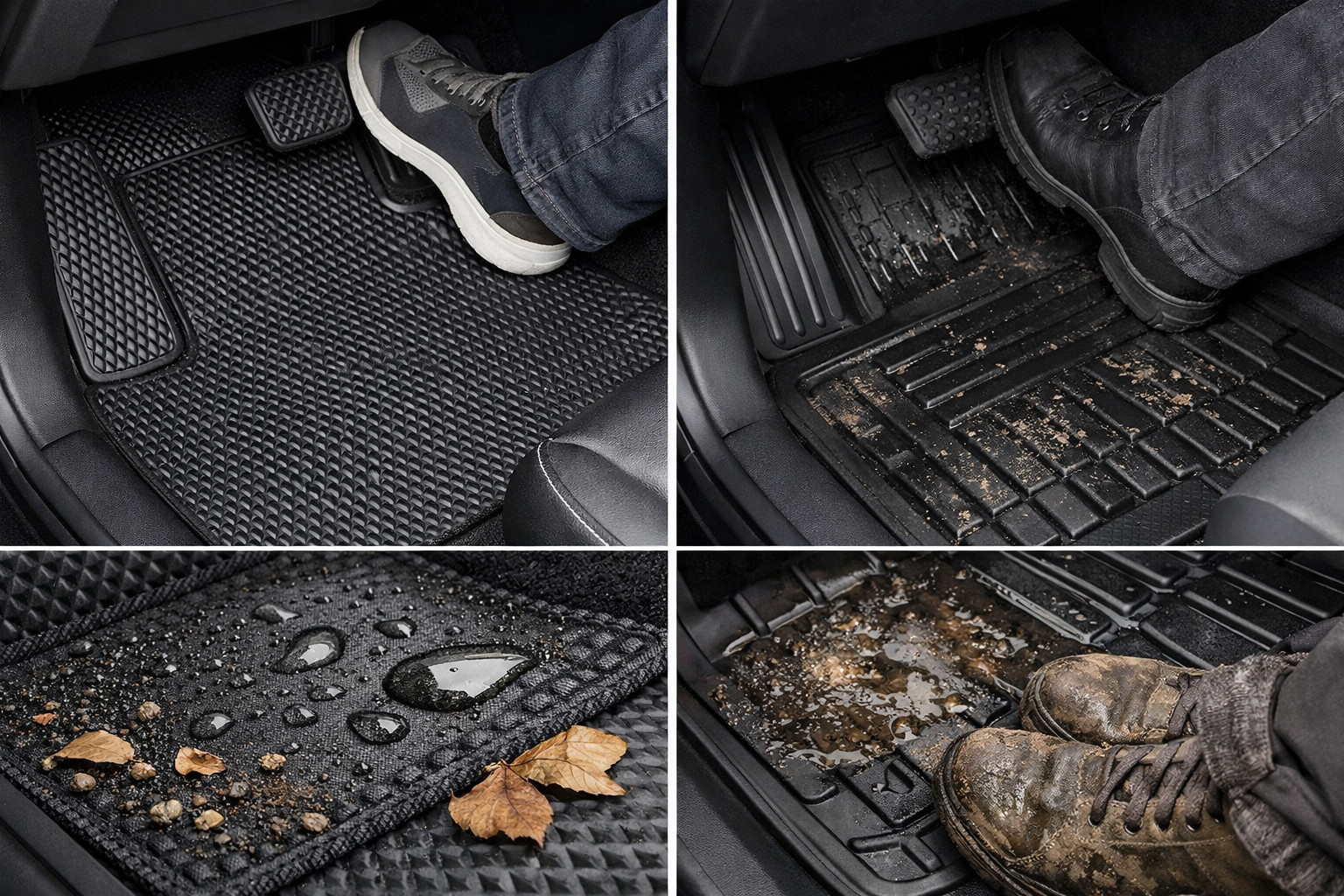
For everyday use, EVA mats most often come out on top: they’re lighter, quicker to remove, hold water and fine dirt well inside the cells, and usually keep the cabin looking tidier between washes. Rubber or rubber-like TPE mats more often shine where winters bring lots of slush, snow, and sand—and you just need to rinse everything off with water without extra fuss.
But the biggest mistake is reducing the choice to the material alone. If a mat isn’t model-specific, fits poorly around the pedals, or lacks proper fasteners, any option can end up inconvenient and unsafe.
What the choice is really about
The point isn’t that one material is “always better,” but how exactly you use your car. For city driving, short trips, kids, daily wet shoes, and wanting to see less dirt in the cabin, EVA is usually more practical. For harsh winters, country routes, construction dust, sand, or a work vehicle, rubber or TPE mats are more often the convenient choice.
With EVA, the key is the honeycomb structure: water and fine dirt don’t spread across the surface as much. With rubber/TPE, the focus is different: deeper channels, raised edges, and fast washing. So the choice is a balance between cabin neatness, cleaning speed, durability in tough conditions, and comfort underfoot.
Which criteria to compare by
Don’t look at the material name—look at five things. First is fitment: does it match the floor precisely, does the edge interfere with the pedals, are OEM fasteners provided. Second is noise and feel underfoot: softer EVA often feels quieter and more comfortable, while a stiff rubber set may feel rougher.
Third is durability: it’s not only about how long the material lasts, but how it handles daily pressure in the driver’s area, мороз, salt, and frequent washing. Fourth is practicality: what’s easier to shake out, rinse, dry, and put back. Fifth is price: sometimes a pricier set truly saves time and nerves, but sometimes you’re only paying extra for shape or a brand without a noticeable difference in your use case.
Quick comparison of options (table)
| Option | Strengths | Weaknesses | Who it’s for |
|---|---|---|---|
| EVA | Lightweight, quick to remove, localize water and sand well in the cells, can slightly dampen noise, the cabin looks clean longer | Highly dependent on accurate patterns and fasteners, sand can get stuck in the cells, heel-area lifespan depends on density and build quality | City driving, family cars, daily use, drivers who clean often and want a tidy cabin |
| Rubber or TPE | Handle slush, snow, and heavy dirt better, often have deeper channels and raised edges, easy to quickly rinse off | Can be stiffer, slippery, or have a new-material smell; feel and behavior depend heavily on the specific brand | Winter, out-of-town trips, taxis, company cars, regions with dirty seasons |
DD Tuning expert comment: most often, the ones who make mistakes are those who buy a “almost fits” universal set or don’t check the driver’s mat near the gas pedal. The second common issue is judging mats only by photos: in real life, the edges, the shape around the dead pedal area, and proper fasteners are what matter. If the car is used daily, it’s better to choose a simpler material but an exact model-specific fit.
Detailed breakdown of each option
EVA
EVA is a closed-cell material with low water absorption. For everyday use, that’s a plus: the mat doesn’t soak up water like a sponge, is easy to remove, dries quickly, and doesn’t add extra weight. The cells hold fine sand, salt, and meltwater well, so dirt is less likely to “travel” around the cabin.
Another strong point of EVA is comfort. This type of mat is usually softer to the touch and can slightly reduce noise and small vibrations underfoot. But there’s a nuance: if the pattern is inaccurate or there’s no proper fixation, water can get under the mat and the mat itself can shift. The second nuance is that the cells need to be thoroughly rinsed at least periodically—otherwise fine sand stays inside.
Rubber or rubber-like TPE
Under the name “rubber,” various blends are often sold today, including TPE, so sets can behave very differently. The overall logic is the same: it’s a solution for harsher conditions. Deeper channels and raised edges hold larger amounts of water, snow, and dirt better, and after a trip you can usually just rinse the mats and put them right back in the cabin.
For commercial use or winter driving, this is often the simplest scenario. But not all rubber/TPE mats are equally convenient: some work well in freezing temperatures, others get stiffer; some don’t slip, others behave worse without fasteners. Also, this group more often gets complaints about a new-material smell or a slippery surface feel.
In terms of durability, rubber/TPE options often handle rough use more calmly, but that doesn’t отменяет the requirement for the right shape. If the edges curl or the driver’s mat sits separate from the floor, durability won’t save it.
Which option is better for different scenarios
If your car is driven around the city every day and you want to keep the cabin looking neat without a major wash every week, EVA usually makes more sense. They’re light, don’t make cleaning a chore, and hide everyday fine dirt better. For a family car it’s convenient too: water from kids’ shoes or fine sand doesn’t spread across the whole area as quickly.
If, however, you deal with lots of slush, snow, road chemicals, out-of-town trips, or the vehicle works as a tool, it’s more practical to look at rubber/TPE. They require less “careful” maintenance: shake, rinse, put back. For taxis and company cars, this often matters more than appearance.
On the highway and in active daily driving, the main thing isn’t the material at all—it’s the fit. A well-chosen EVA set will be better than a poor rubber set, and vice versa. So the use case should always be matched with the shape, edges, and fasteners.
Use case and what to choose (table)
| Scenario | Best choice | Why |
|---|---|---|
| City, daily short trips | EVA | Easier to clean, the cabin looks clean longer, less of a rough surface feel underfoot |
| Winter with slush and road chemicals | Rubber or TPE | Handle heavy wet dirt better, convenient for quick washing, often have deeper channels and raised edges |
| Family car with kids | EVA | Collect fine sand, crumbs, and water well, while the set is lightweight and dries quickly |
| Taxi, delivery, company car | Rubber or TPE | Easier to maintain in intensive use, less time spent cleaning after a dirty day |
| Want maximum neatness in the cabin | EVA | The honeycomb surface hides fine everyday dirt better between washes |
| Trips for fishing, to the cottage, to a construction site | Rubber or TPE | Better suited to heavy dirt, clay, wet snow, and sand |
Common mistakes when choosing
- Buying a universal set instead of a model-specific one. That’s where shifting, curled edges, and issues near the pedals appear.
- Not checking the fasteners. Without anchors, even a good material can behave poorly.
- Stacking one mat on top of another. This is unsafe and should never happen in the driver’s area.
- Choosing EVA for “heavy” winter use and expecting zero maintenance. The cells need rinsing.
- Choosing rubber/TPE only because it says “all-weather” and not looking at stiffness, odor, edge height, and the driver-side shape.
- Focusing only on price. A cheaper but precise set is often better than a more expensive one that fits mediocrely.
When a more expensive option makes sense
Paying extra makes sense when it gives you not “status,” but a tangible advantage in your scenario. If the car is mostly city-driven, you want to keep the cabin neat, and you plan to remove and wash the mats often, it’s logical to look at EVA mats. If the car constantly sees slush, sand, and heavy dirt, it may be more justified to choose rubber mats.
A more expensive set is also justified when it comes to precise driver-area geometry, proper fasteners, and a well-thought-out edge design. If you’re unsure what exactly to check before buying, it’s worth first reading the material on how to choose EVA mats for your car model. It’s in the fitment details that the difference between a successful and an unsuccessful set is most often hidden.
From a customer’s experience: the owner of a city crossover was looking for something for daily use because textile mats quickly lost their appearance in winter, and the rubber set in his previous car felt heavy and rough. In the end, he chose model-specific EVA mats for the cabin because fast cleaning and a neat look between washes mattered. After a few weeks, he was happy именно with how easy the mats were to remove and that the cabin didn’t constantly look wet—but in winter he separately keeps an eye on rinsing the cells to remove sand.
Conclusion
If you need a short answer: for everyday normal use, EVA is more often the better choice; for harsh winters, slush, and work use—rubber or TPE. But the right choice isn’t made by the material name, but by fitment, fasteners, driver-area shape, cleaning habits, and real operating conditions.
So it’s worth buying not “the trendiest,” but what solves your specific scenario without compromising safety. This material is based on real selection experience, hands-on practice, and real-world use cases—not abstract promises from a catalog.
Pros and cons
EVA mats are convenient for everyday city use: they are easier to remove, dry quickly, and do not make interior cleaning harder.
The EVA cell structure holds water, fine sand, and salt well, so dirt is less likely to spread around the cabin between washes.
Such mats are usually softer and more comfortable underfoot, and they can also slightly reduce noise and minor vibrations.
Rubber or TPE mats are better suited for harsh conditions: slush, snow, sand, and road chemicals, as they have deeper channels and edges.
They are easy to rinse quickly after a trip, making them practical for winter, taxis, delivery vehicles, and service cars.
EVA depends heavily on the accuracy of the pattern and fastenings: if the fit is not exact, the mat may shift or let water seep underneath.
EVA cells need to be thoroughly rinsed from time to time, otherwise fine sand remains in them.
Rubber or TPE mats may be stiffer, and in some cases — slippery or with a noticeable smell of new material.
In this group, behavior depends greatly on the specific brand: some sets perform well in frost, while others become stiffer and less comfortable.