13.05.2026
451
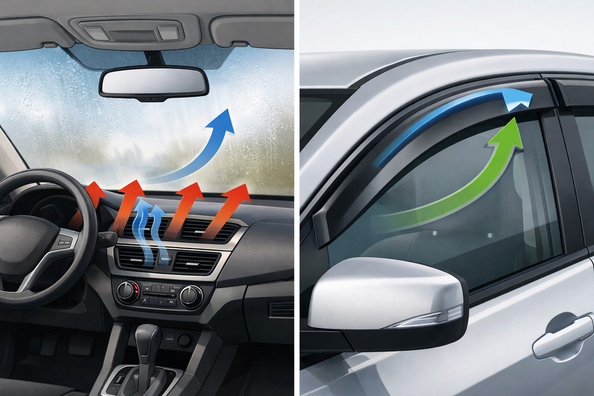
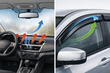
Car windows don’t fog up “because the heater is bad” by themselves — it’s mainly a temperature difference plus excess moisture. If the condensation is on the inside, there’s too much humidity in the cabin or weak ventilation; if it’s on the outside, it’s often a normal reaction of the glass to warm, humid air. Wind deflectors aren’t magic: they only help when you need a bit of ventilation in rain, snow, or damp cold.
The fastest practical fix is almost always the same: turn off recirculation, set airflow to the windshield, increase fan speed, set warm air, and switch on the A/C if the system allows it. If after that the glass clears slowly or fogs up again quickly, you need to find the cause — not keep wiping the glass endlessly.
Condensation appears when warm, humid air touches colder glass and cools to the dew point. In the cold season this most often happens on the inside: people get in, bring in snow and moisture on their shoes, turn on recirculation — and the glass quickly “grabs” the moisture.
There’s another scenario: fogging on the outside. It happens in warm, humid weather when the glass itself is colder than the air. In that case the cause isn’t in the cabin, and you should deal with it using wipers, airflow, or heating — not hunt for a fault in the climate system. You can read more about the condensation mechanism and dew point in the article on why car windows fog up, and about climate mode operation in the quick windshield defrosting tip.
| Cause | What happens | Simplest check |
|---|---|---|
| Wet cabin | Moisture builds up quickly after people get in or after snow on shoes | Feel the mats, floor, and trim near the feet |
| Recirculation | Moisture doesn’t escape outside | Turn off recirculation and see if the glass clears faster |
| Weak airflow | Air reaches the glass slowly | Compare airflow strength at different fan speeds |
| Technical leak | Humidity rises and an odor appears | Look for an antifreeze smell, moisture on the passenger side, an oily film |
First determine which side of the glass is wet. If the traces are on the outside and the wipers help right away, it’s external condensation. If the moisture is inside, then look at how the climate system behaves and at the cabin condition.
While driving, do a simple test: turn off recirculation, switch on windshield airflow, set a high fan speed, warm air, and A/C. If within a few minutes things noticeably improve, the issue is most likely cabin humidity rather than a serious failure. If the airflow is weak even at maximum, the cabin filter or the ventilation system is suspect.
Separate markers of a technical fault are also easy to spot: a sweetish smell, dampness on the passenger mat, a cloudy or oily film on the glass, a musty smell. In that case you shouldn’t just “ventilate more often” — you need to check the heating and cooling systems and the cabin condition.
DD Tuning expert comment: The most common mistake is switching on recirculation in winter so the cabin warms up faster, then wondering why all the windows fog up. The second typical story is buying wind deflectors and expecting them to dry the cabin by themselves. If there’s water under your feet or the airflow is weak, you need to remove the cause first and only then choose accessories.
| Symptom | Likely cause | What to do |
|---|---|---|
| The glass fogs up after people get in, after rain, or after snow on shoes | Excess cabin moisture | Turn off recirculation, blow air onto the glass, switch on A/C, dry the mats and floor |
| At max the fan blows weakly, the glass clears slowly | Clogged cabin filter or weak ventilation | Check and replace the cabin filter, inspect the air ducts |
| A cloudy or greasy film remains on the inside | Dirt, cabin fumes, or the beginning of a coolant leak | Thoroughly wash and degrease the glass; if there’s an odor, look for a leak |
| Sweetish smell and dampness on the passenger side | Likely heater core leak | Check the cooling system and don’t delay repairs |
| The glass is wet on the outside, wipers remove the film immediately | External condensation | Use wipers or heating; don’t waste money searching for a non-existent fault |
In hard frost, the A/C in some cars may work less actively or not switch on at all, so then the main job is done by warm airflow, fresh air, and a dry cabin. But the logic doesn’t change: remove moisture and quickly move air across the glass. If you need a short practical climate-control algorithm, it’s convenient to refer to the material on windshield airflow.
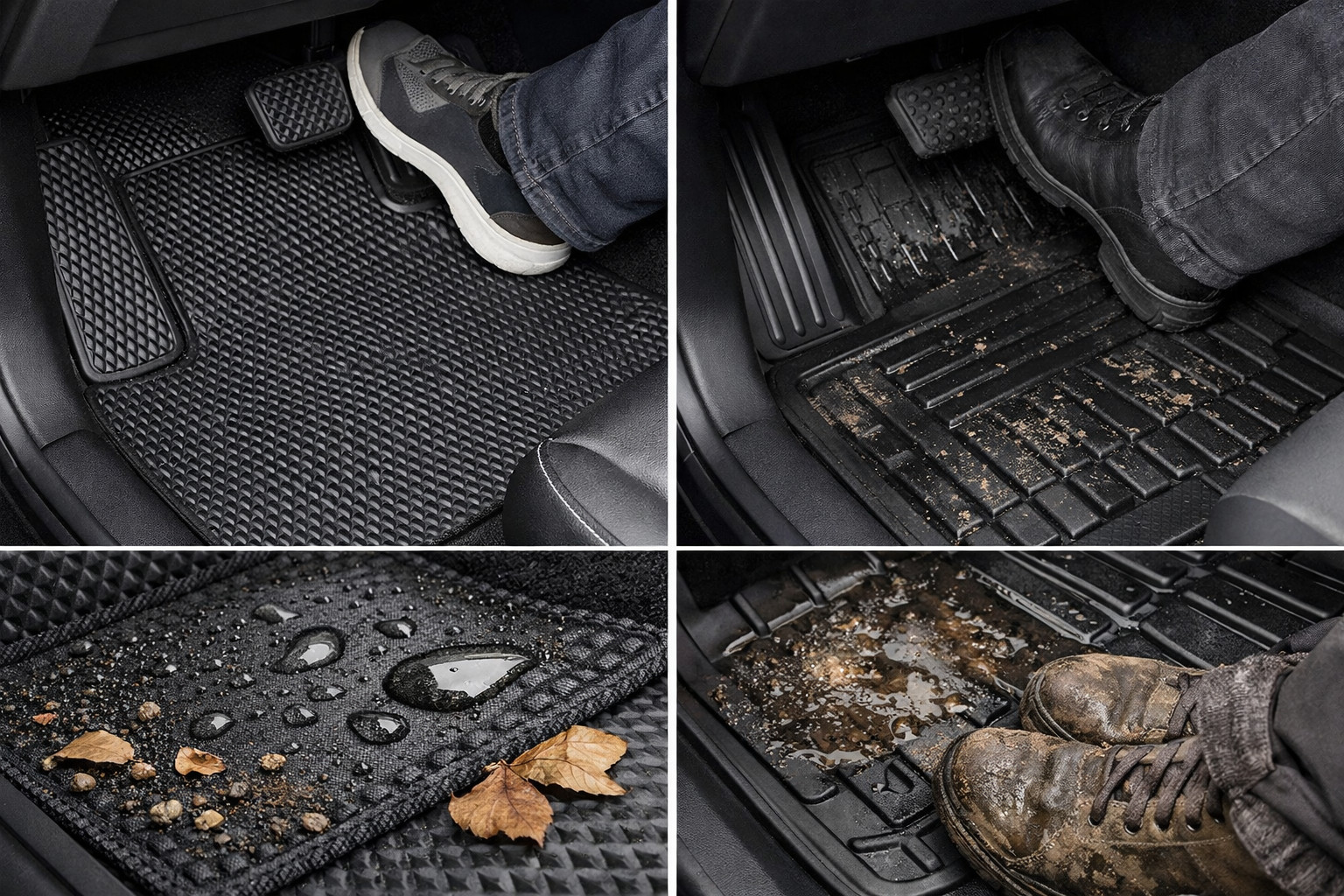
Accessories make sense when they target the actual cause. If you need constant light ventilation in rain or snow, window wind deflectors are appropriate: they let you crack the window slightly without letting precipitation blow into the cabin. If most moisture comes in on shoes, more practical are rubber floor mats or EVA mats, because they keep water localized and prevent it from quickly spreading across the floor.
But if the fan blows weakly, there’s a musty smell, or a sweet smell and dampness on the passenger side, buying accessories without replacing the cabin filter or repairing the heater core makes no sense. The cause is technical, not “aerodynamic.”
Another useful step is to check the filter service interval. If needed, it’s worth replacing the cabin filter earlier — especially if the car often drives in dust or in the city.
| Solution | When it works | When you shouldn’t spend money |
|---|---|---|
| Correct climate mode: fresh air, glass airflow, high fan, A/C | When fogging is caused by normal cabin humidity | When the glass fogs on the outside or airflow is physically weak due to a clogged filter |
| Drying the cabin and controlling water on the floor | When the moisture source is snow, dirt, wet shoes, damp clothing | When there’s a constant coolant leak or another technical seepage |
| Washing and degreasing the inside of the glass | When there’s film on the glass and condensation lingers | When the cause is weak airflow or a wet cabin — the glass isn’t the culprit |
| Replacing the cabin filter | When the fan blows weakly and the glass clears slowly | When airflow is normal and the whole issue is wet mats or recirculation |
| Window wind deflectors | When micro-ventilation is needed in rain, snow, or damp cold | When the cabin is already wet, the filter is clogged, or there’s a heater core leak |
| Heater core repair or fixing a leak | When there’s a sweet smell, dampness on the mat, a persistent film on the glass | When the problem appears only after people get in or after wet shoes and quickly goes away with proper airflow |
From a customer’s experience: someone was looking for wind deflectors because the front side windows kept fogging up every morning. After a quick check, it turned out the main problem was wet mats and constant recirculation. They installed deflectors for micro-ventilation in rain, dried the cabin, changed how they used the climate system — and the problem disappeared without extra spending on unnecessary items.
Fogging glass isn’t one single failure — it’s several different scenarios. If the moisture is inside, start with the water source, climate mode, airflow strength, and glass cleanliness. If the condensation is outside, it’s often a normal phenomenon that doesn’t require repairs.
Wind deflectors are genuinely useful when you need to ventilate the cabin steadily on a damp day without letting rain or snow inside. But they don’t replace a dry cabin, a clean filter, and a properly working heating system. The main advice is simple: first identify the moisture source, and only then spend money.
Shipping to EU
Wholesale and retail
Own warehouse
Опис продукту
Подарунки не надаються при оформленні покупки у кредит під 0,01% або при покупці частинами.