25.05.2026
259
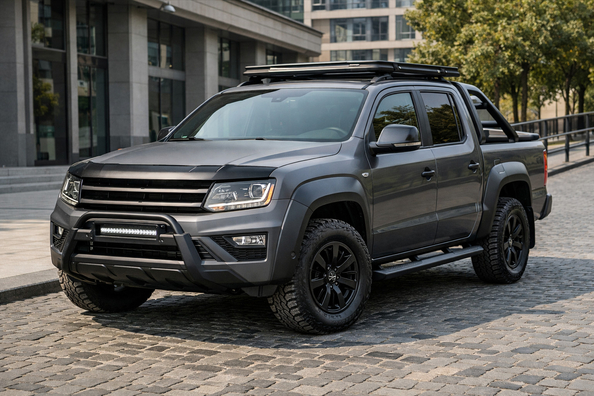
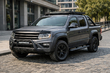
This plan is for a Volkswagen Amarok owner who spends most of the time driving in the city, parks in residential yards, hauls groceries, tools or work gear, and doesn’t want to turn the pickup into a collection of cheap decorative bits. The priority here is simple: make the Amarok more convenient for everyday use, not just bolt on everything at once.
In an urban scenario, the Amarok is already a big vehicle: over 5.3 m long, wide, and with a sizable turning radius. So the first upgrades should cover not “show,” but three real tasks: protect the cabin and the cargo bed, make maneuvering easier, and avoid blowing the budget on things that only look good in photos. If you have a newer Amarok with factory parking aids, you can safely skip part of the electronic add-ons.
In the city, the Amarok is needed not as an off-road build base, but as a large utilitarian vehicle that doesn’t annoy you every day. That means less dirt in the cabin, fewer scratches on the body, easier parking, and proper access to the cargo without extra fuss.
It’s important not to mix use cases. What’s useful off-road is often unnecessary in the city: the Amarok has more than enough ground clearance and geometry, while protecting the cabin floor, the bed sides, and having decent rear visibility delivers a noticeable effect in the very first week.
The first step is items that work every day regardless of season. That’s rubber floor mats for the cabin, cargo bed protection, and checking what you already have for parking: a camera, front and rear sensors, overall visibility. On older Amarok models, visibility during maneuvers often brings more benefit than any external bolt-ons.
The second priority in a basic set is ease of using the bed. A tailgate damper noticeably simplifies opening a heavy tailgate, and a dashcam with parking mode is an urban—not a “travel”—upgrade: in dense traffic and in parking lots it’s more useful than yet another decorative element.
| Upgrade | Why it’s needed | Who really benefits |
|---|---|---|
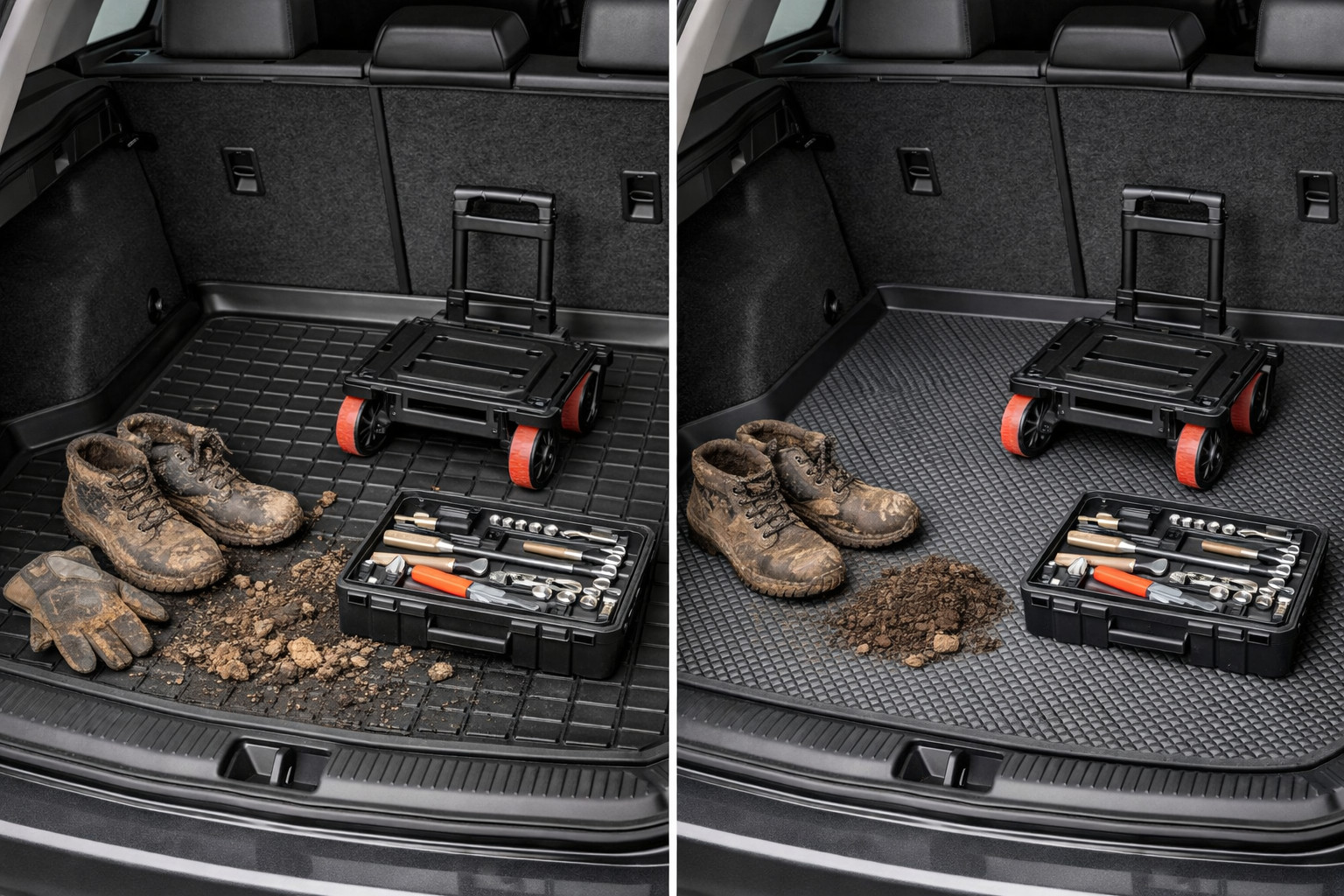
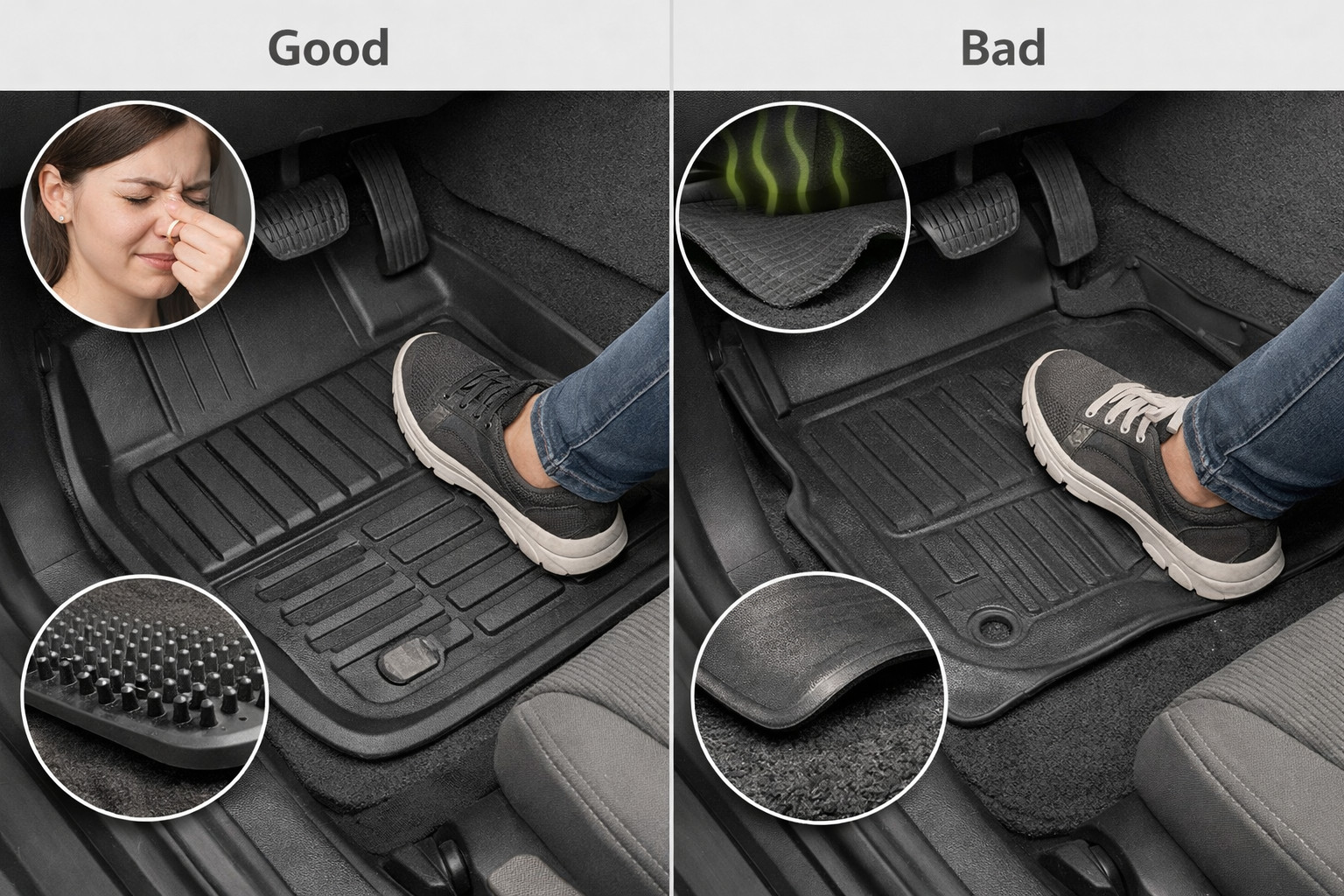
| Rubber floor mats | Hold water, sand, and dirt that a pickup brings in constantly | Basically anyone who drives daily and doesn’t want to keep cleaning the cabin |
| Cargo bed protection | Takes the scratches, impacts, and dirt from boxes, bags, tools | Anyone who uses the bed at least regularly instead of keeping it empty |
| Rearview camera or parking sensors if you don’t have them | Reduces stress when parking in tight yards and near bollards | Especially older Amarok models and anyone who parks in the city every day |
| Tailgate damper | Makes the tailgate easier to handle and daily bed use less rough | Those who open the bed often and don’t want to catch a heavy tailgate by hand |
| Dashcam with parking mode | Records minor contacts, disputed situations, and parking incidents | Those who leave the Amarok in a yard, near the office, or in public parking lots |
| Bed cover / enclosure | Hides cargo from weather and prying eyes | Those who haul items regularly and sometimes leave them in the bed |
DD Tuning expert comment: the most common mistake with an Amarok in the city is buying exterior decor before covering the basic needs for the cabin, bed, and parking. The second typical story is ordering a bed cover without understanding whether you still need the full bed length for tall cargo. First, honestly describe what you carry each week, and only then choose the upgrade format.
The second stage should be not “everything,” but only what matches your usage pattern. If tools, bags, or goods regularly sit in the bed, the next logical step is covering the platform. For the city, a roll cover is usually smarter than a canopy: it doesn’t tie you to a permanently enclosed bed and gives faster access to cargo.
But there’s a limit. If you carry tall boxes, home appliances, or something long up to the brim, any bed cover should be evaluated not by photos, but by the real loss of usable volume. For frequent city hauling, it can sometimes be better to live with an open bed and proper surface protection than to overpay for a nice-looking but inconvenient setup.
At this stage you can also install quality side steps—but only when you truly need them: for kids, shorter people, frequent entry with cargo, or a work routine. If the Amarok doesn’t create problems when getting in, you shouldn’t invent a need for side steps.
This is where the things live that the Amarok can easily do without, but that can make it nicer sometimes. Neat side steps, individual protection trims for vulnerable body areas, deflectors, or restrained exterior plastics can slightly simplify daily life and help keep the vehicle looking tidy.
The key word is restrained. For an urban scenario, any detail that adds visual noise, increases overall dimensions, or complicates parking near curbs should go through a strict filter. If you don’t feel the benefit every day, it’s not a first-step upgrade.
Most often, people waste money on things that look “serious” but don’t change life behind the wheel. That includes cheap decorative side steps, a snorkel without a real off-road use case, a suspension lift for city routes, front bull bars, fender flares, and temporary bed covers that are inconvenient to live with day to day.
The second typical mistake is duplicating what’s already in the vehicle. If your Amarok already has decent factory parking aids, there’s no need to rush to replace them just because “everyone does it.” In the city, that budget is almost always better spent on protecting the body, the cabin, or on a truly needed bed cover solution.
Another unnecessary expense is trying to turn a city Amarok into an off-road project without a real need. The pickup already has enough clearance, so a lift and heavy bolt-on gear in an urban scenario more often reduce convenience than add value.
| Install first | Can be postponed | Not mandatory |
|---|---|---|
| Rubber floor mats | Side steps, if entry is already convenient | A snorkel for a city vehicle |
| Cargo bed protection | Bed cover, if items don’t stay inside | A suspension lift without an off-road use case |
| Camera or parking sensors, if you lack them | Canopy, if you need flexibility in cargo height | Front bars and heavy bolt-on steel |
| Tailgate damper | Neat exterior plastics | Cheap decorative side steps |
| Dashcam with parking mode | Deflectors and small exterior decor | Flares and trims “just for looks” |
More expensive upgrades are justified when the Amarok works every day, not just occasionally carries shopping bags. If tools, bags, or goods are constantly in the bed, it makes sense to look at roll covers for the bed: a practical way to close the platform without a permanent bulky superstructure on top. If you need a truly enclosed volume for daily use, then it can make sense to move to a canopy, but only if you’re not bothered by reduced flexibility in cargo height.
Body kits and other exterior plastics make sense only after the practical part is covered: when the cabin and bed are already protected, maneuvering isn’t annoying, and the cargo question is solved. In the city, this isn’t a basic need, but a purchase for whatever budget remains.
From a customer’s experience: an Amarok owner initially wanted side steps, fender flares, and exterior plastics because the vehicle seemed “empty.” After proper selection, he started with mats, bed protection, and a dashcam, and added a bed cover later—when he actually began leaving tools inside. In the end, he got less dirt, less stress in parking lots, and didn’t spend money on things that wouldn’t work for his daily route.
For a city Volkswagen Amarok without cheap posturing, the right start looks like this: first protect the cabin and cargo bed, then improve visibility and bed usability, then—if needed—add an expensive bed cover solution, and only at the end go for exterior items. This order cuts out marketing clutter and prevents overpaying for looks before paying for real usefulness.
The material is based on real selection experience, practical know-how, and real use cases. That’s why the main advice here is simple: in the city, the Amarok shouldn’t be “built up,” it should be assembled smartly for your everyday tasks.
| ✔ | Rubber floor mats, cargo bed protection, and a tailgate damper really make everyday use easier: less dirt in the cabin, fewer scratches in the bed, and the heavy tailgate is easier to open. |
| ✔ | A rearview camera or parking sensors are especially useful in the Amarok’s city use: they reduce stress when parking in courtyards, near posts, and in tight spaces. |
| ✔ | A dash cam with parking mode is a practical help for a yard, office, or public parking lot, as it records minor contacts and disputed situations. |
| ✔ | An approach that prioritizes basic protection and visibility helps avoid duplicating factory systems and wasting budget on unnecessary items. |
| ✔ | If cargo is carried regularly, a bed cover can be chosen to match real needs: a roll cover gives more flexible access to the load than a canopy. |
| ✘ | The Amarok is big for the city on its own: its dimensions and turning radius make parking difficult, especially in courtyards and tight parking lots. |
| ✘ | Closing off the bed can reduce usable volume and make transporting tall or long items inconvenient if the actual cargo format is not taken into account. |
| ✘ | Side steps, exterior plastic, wheel arch extensions, and other trim in a city scenario easily turn into unnecessary expense if they do not provide everyday benefit. |
| ✘ | A suspension lift, snorkel, and heavy add-on equipment for city routes tend to reduce comfort rather than add practicality. |
Shipping to EU
Wholesale and retail
Own warehouse
Опис продукту
Подарунки не надаються при оформленні покупки у кредит під 0,01% або при покупці частинами.