07.06.2026
424
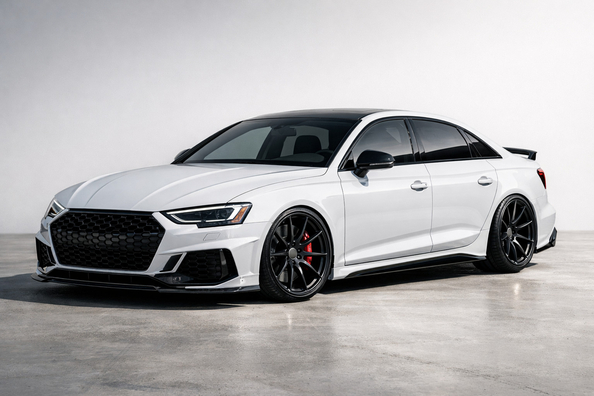
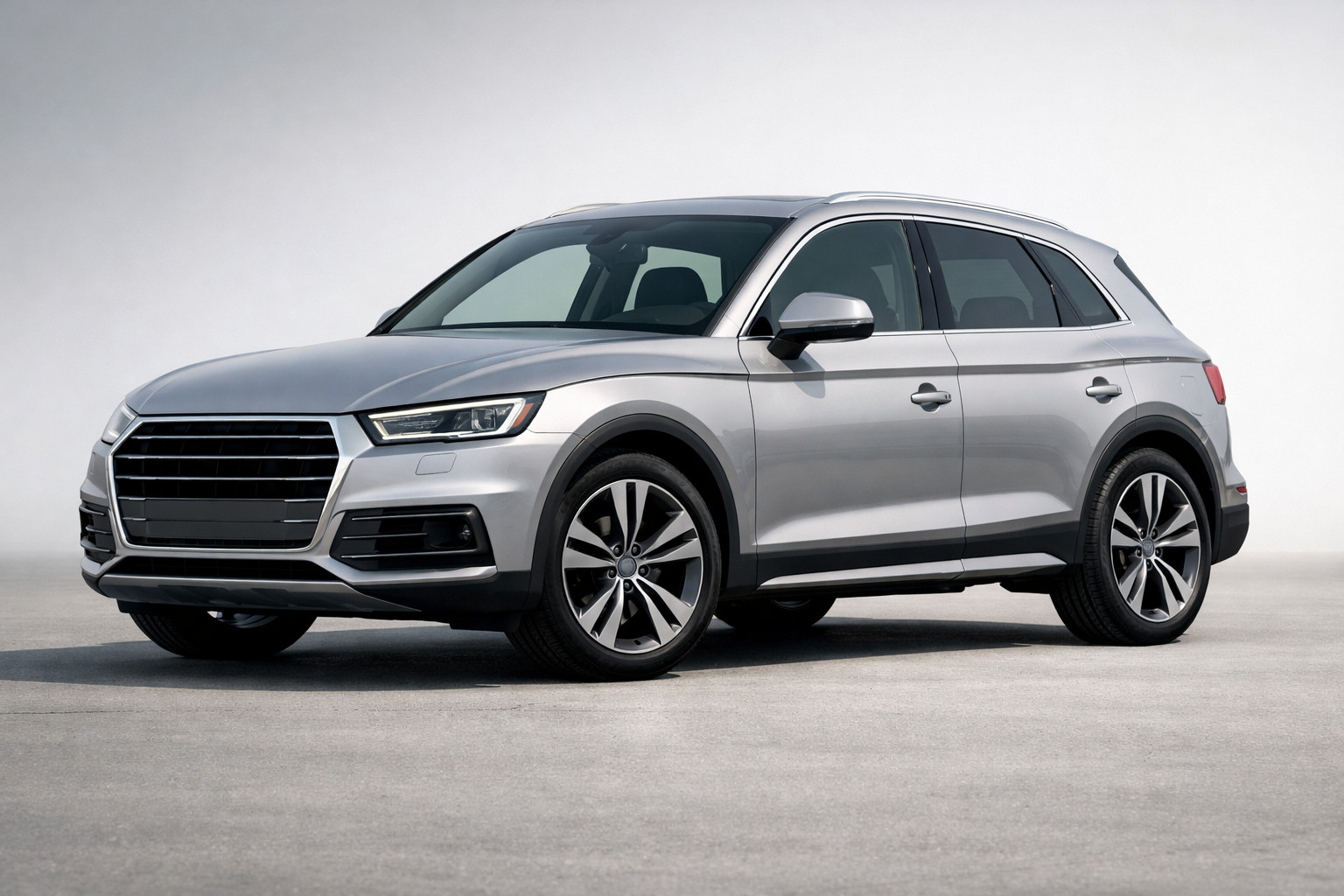
If you look at Audi as a base for accessories and styling rather than just a set of trim levels, the most interesting body styles are pretty obvious: A3 Sportback, A5 Sportback, Q5, A6 Avant, and Q8. These are the models that combine strong design, real-world practicality after retrofitting, and sensible spending logic—from a compact city hatchback to a large coupe-like crossover.
In short: A3 Sportback is the most affordable entry point, A5 Sportback is the best balance of shape and everyday usability, Q5 is the most rational crossover for roof cargo systems, A6 Avant is the most interesting wagon for grown-up functional styling, and Q8 is for those who care about a strong visual presence. Q7 is also worth a look, but it’s more of a family tool than a body style you want to build around exterior impact.
In different classes, Audi goes up against very specific rivals: A3 competes with the BMW 2 Series Gran Coupe and Mercedes-Benz CLA, A5 Sportback with the BMW 4 Series Gran Coupe, Q5 with the BMW X3 and Mercedes-Benz GLC, A6 with the BMW 5 Series and Mercedes-Benz E-Class, and Q7 and Q8 with the X5, GLE, and the coupe-style versions of this class. But for accessories, something else matters: not the entire lineup is equally good as a retrofit platform.
For city driving and daily use, the A3 Sportback works best: compact, efficient, with a proper 380 L trunk. For those who want a sleek silhouette without giving up practicality, the A5 Sportback remains the better choice. If the car has to carry a family, suitcases, a bike rack, or a roof box, the healthiest compromise is the Q5. The A6 Avant suits those who want a large premium wagon without moving to a bulky SUV, while the Q8 is for those who knowingly pay for looks and presence. It’s not very logical to buy a Q8 if your main request is economy and calm everyday driving, and it’s not very logical to expect the A3 to offer family capacity at the Q5 level.
In the accessories market, it’s not only new cars that matter, but also the generations that already have a solid selection of compatible parts. That’s why the most “alive” choices remain the body styles where fresh design meets a well-formed retrofit ассортимент.
| Body style | Generations and years that are actually interesting | Why it matters for accessories |
|---|---|---|
| A3 Sportback | 2012–2020 and newer cars | Compact format, plenty of options for light exterior updates and everyday interior protection |
| A5 Sportback | 2016–2025 and the new generation from 2024 | One of the best body styles for clean styling: spoiler, grille, diffuser work without overloading the look |
| Q5 | 2017–2025 and the new generation from 2024 | A strong base for roof cargo systems, mats, trunk protection, and travel scenarios |
| A6 | C8 2018–2025, C9 from 2025 | The Avant wagon makes more sense for accessories than the sedan: roof, cargo, rails, road-trip functionality |
| Q8 | From 2018 | One of Audi’s most expressive platforms for wheels, black trim, grilles, and exterior image details |
If we’re not talking about the brand’s history in general but about real-world selection, the best body styles today aren’t necessarily the newest. Often, a generation that’s been on the market for a few years offers a better accessories choice and more predictable results after retrofitting.
The logic here is simple. For the A3 and A5, the best setups are 2.0-liter or 1.5-liter petrol versions with a dual-clutch gearbox: they deliver solid performance without extra front-end weight. For the Q5, the main workhorse option is the 2,0 TFSI with all-wheel drive. The A6 range is broader: there’s 2,0 TFSI, 2,0 TDI, and 3,0 V6 TFSI. In the Q7 and Q8 the character is different: 3,0 TFSI, an 8-speed automatic, and permanent all-wheel drive are about mass, torque, and long trips.
| Body style | Real-world engines | Transmission and drivetrain | Dimensions and trunk |
|---|---|---|---|
| A3 Sportback 35 TFSI | 1,5 TFSI, 150 hp, 250 N·m | 7-speed gearbox, front-wheel drive | 4 352 mm, wheelbase 2 635 mm, trunk 380/1 200 L |
| A5 Sportback 40/45 TFSI | 2,0 TFSI, 190 or 249 hp | 7-speed S tronic, front-wheel or all-wheel drive | 4 757–4 871 mm, wheelbase 2 829–2 831 mm, trunk 465 L |
| Q5 / Q5 Sportback | 2,0 TFSI, 204–245 hp | 7-speed S tronic, quattro | 4 682–4 689 mm, wheelbase 2 819–2 824 mm, trunk 515–520 L |
| A6 range | 2,0 TFSI 204 hp; 2,0 TDI 204 hp; 3,0 V6 TFSI 367 hp | Depends on version; in 40 TFSI sedan — 7-speed S tronic and front-wheel drive | A6 Avant: length 4,99 m, wheelbase 2 927 mm, trunk up to 503 L |
| Q7 55 TFSI quattro | 3,0 TFSI, 340 hp, 500 N·m | 8-speed automatic, permanent all-wheel drive | 5 072 mm, wheelbase 2 995–3 005 mm, trunk 867 L |
| Q8 55 TFSI quattro | 3,0 TFSI, 340 hp, 500 N·m | 8-speed automatic, permanent all-wheel drive | 4 992 mm, wheelbase 2 998–3 003 mm, trunk 605/1 755 L |
If you need a lively daily driver for light styling, the least questionable picks are A3 35 TFSI, A5 40 TFSI, and Q5 2,0 TFSI quattro. If you want a higher class and extra torque reserve, look at the A6 3,0 or the Q8. But the maintenance budget increases, and so does the cost of mistakes when choosing wheels, tires, and body parts.
The body style is what decides whether styling will feel appropriate. The A3 Sportback, at 4 352 mm long, remains a city car: it has the right proportions for small changes without the risk of turning the car into a show project. The A5 Sportback is longer and lower, so even simple parts like a spoiler or a different wheel design already read well. The Q5 is more practical: a more upright body, normal roof height, easy access to the trunk. The A6 Avant wins with aerodynamics, a long wheelbase, and the wagon silhouette. The Q8 builds its image through a wide body and coupe-like profile.
With ground clearance on these Audis, you shouldn’t look for one universal number. It depends on the market, the S line package, wheel diameter, and suspension type; for the A6 Avant, air suspension changes things even more if the specific version has it. That’s why, for choosing lips, side skirts, roof racks, or winter wheels, it’s more important to know the car’s real configuration than to rely on an average forum number.
The A3 Sportback is strong because you can retrofit it without complex вмешательство: the model has logical packages for driver assistance systems, comfort, and multimedia. The A5 Sportback wins in seating position and cockpit feel, but the roofline costs rear space. The Q5 is one of the most convenient Audis for everyday life: comfortable seating, good access to the cabin and trunk, fewer day-to-day compromises. The A6 Avant is a different level of highway quietness and a more cohesive feel. The Q8 adds strong visual effect and a richer cabin impression, but pays for it with more mass and a more expensive ownership scenario.
If safety and assistants are the priority, Audi in general is strong именно in its package-based equipment logic. But the more complex the car, the higher the chance that, with age, some electronics will need attention. For the owner, that means something simple: a used Q8 or A6 should be evaluated not only by the interior and body, but also by the condition of all electronic options.
In the city, the easiest one to live with is the A3 Sportback: it’s compact, fuel consumption in the 35 TFSI is low, and the trunk is enough for daily tasks. The A5 Sportback is more practical than it looks, but it’s still a car for two or a small family, not for the role of the only large vehicle. The Q5 is the smartest all-rounder for every day: seating position, weather, curbs, trips, kids’ stuff, a roof box—everything fits together without unnecessary drama.
The A6 Avant shines best on the highway and on long trips, especially if the driver values quietness, stability, and proper trunk loading without moving into the large SUV class. The Q8 is less rational in daily life: it’s big, heavy, and expensive in the small details, but if someone consciously chooses it for the shape and status of the body, there are fewer complaints about the logic. The Q7 is worth choosing when you truly need seven seats and a large trunk, not just a “big Audi.”
| Body style | Pros from an owner’s perspective | Cons from an owner’s perspective |
|---|---|---|
| A3 Sportback | Compact size, efficiency, a convenient city format, easy and affordable visual upgrades | Small rear row and trunk by family-car standards |
| A5 Sportback | Excellent balance of silhouette, handling, and practicality, 465 L trunk | Cabin isn’t very spacious; as a long-term project the model sits on the edge of a generation change |
| Q5 | Best overall versatility in the lineup, well suited to roof cargo systems and travel | Possible hesitation off the line, intrusive assistants, minor questions about ergonomics and reliability |
| A6 / A6 Avant | Highway quietness, mature comfort, a strong all-round body in the Avant version | More expensive service, possible questions about the transmission and electronics, and storage for small items in the cabin |
| Q7 | Family capacity, large trunk, rich equipment | Third row isn’t luxurious, some ergonomics are debatable, repairs can be expensive |
| Q8 | The strongest exterior image among Audi SUVs, takes styling well | Weaker rational value for the money, more expensive to run, some owners mention mechanical issues |
If you boil it down to one line: A3 is the smart start, A5 is the best-looking compromise, Q5 is the most practical choice, A6 Avant is the most grown-up wagon, and Q8 is the most striking—but also the most expensive scenario.
For Audi, the rule “function first, decor second” works well. On the A3 and A5, it makes sense to start with restrained exterior styling: spoiler, grille, diffuser, neat interior and trunk accessories. For the Q5 and A6 Avant, the first step is more often practical items: mats, trunk protection, roof cargo systems. For the Q8, it already makes sense to play from the image—large wheels, black trim, exterior elements—but it’s important not to ruin the factory cohesion.
If you haven’t decided on a body style yet, it’s worth starting with the selection of Audi accessories. For a travel scenario, the strongest entry point is a roof rack for Q5: it’s one of the few accessories that truly changes the car’s day-to-day usefulness. For a light visual accent on a liftback, the best option is spoilers for A5, because they emphasize the silhouette without грубое вмешательство in the body.
If you need a short answer, the most interesting Audi body styles for accessories and styling are A3 Sportback, A5 Sportback, Q5, A6 Avant, and Q8—but with very different ownership logic. A3 is about an easy entry, A5 is about balance, Q5 is about versatility, A6 Avant is about a mature functional approach, and Q8 is about visual impact and a willingness to pay for it. This conclusion is based not on decorative descriptions, but on real подбор experience, practice, and typical use cases where accessories either reinforce the character of the body or simply don’t make sense.
| ✔ | A3 Sportback is not very suitable if you need truly family-sized space. It has a small rear row and trunk by the standards of a car for a large family. |
| ✔ | A5 Sportback has limitations in the rear cabin. In addition, the article notes that as a long-running project it is already standing on the brink of a generational change. |
| ✔ | Q5 may have minor questions about ergonomics and reliability, as well as intrusive assistants. It is no longer quite a "problem-free" option if you look specifically at everyday ownership. |
| ✔ | A6 and A6 Avant are more expensive to maintain, and may also have questions about the transmission and electronics. The cabin also mentions a lack of small-item storage spaces. |
| ✔ | Q8 is less rational for its money than the other body styles, and more expensive to maintain. The article also mentions individual mechanical issues, so this is not the calmest choice for economical ownership. |
| ✘ | A3 Sportback is a compact and economical option for the city, which does not require a large budget for a light visual upgrade. For daily driving, this is the easiest start for accessories without complicated intervention. |
| ✘ | A5 Sportback successfully combines a beautiful silhouette and practicality. The article directly states that the spoiler, grille, and diffuser work neatly on it without overloading the image. |
| ✘ | Q5 looks like the most rational crossover in the lineup for cargo systems and travel. It is convenient in everyday use, has normal access to the cabin and trunk, and is well suited for a roof box or bicycle mount. |
| ✘ | A6 Avant gives more sense for accessories than the sedan, because the wagon makes better use of the roof, trunk, and roof rails. This is a strong choice for those who want a large premium car without moving into a bulky SUV. |
| ✘ | Q8 is best suited for exterior styling, because it has a distinctive coupe-like profile and a strong presence. The article calls it one of Audi's most expressive platforms for wheels, black trim, and grilles. |
Shipping to EU
Wholesale and retail
Own warehouse
Опис продукту
Подарунки не надаються при оформленні покупки у кредит під 0,01% або при покупці частинами.