21.03.2026
192
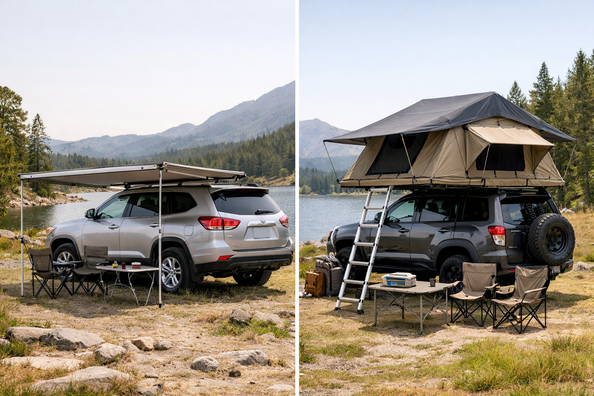
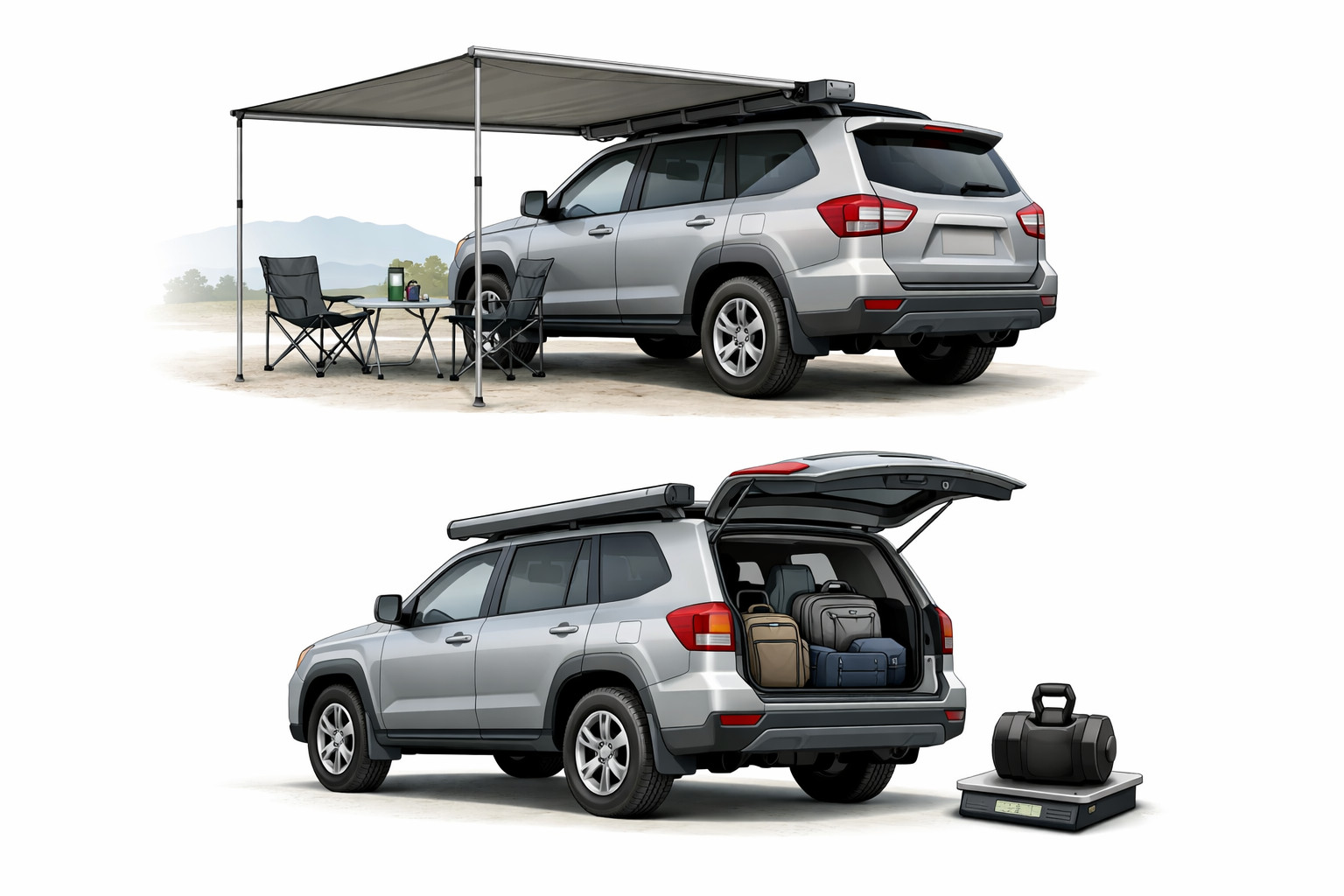
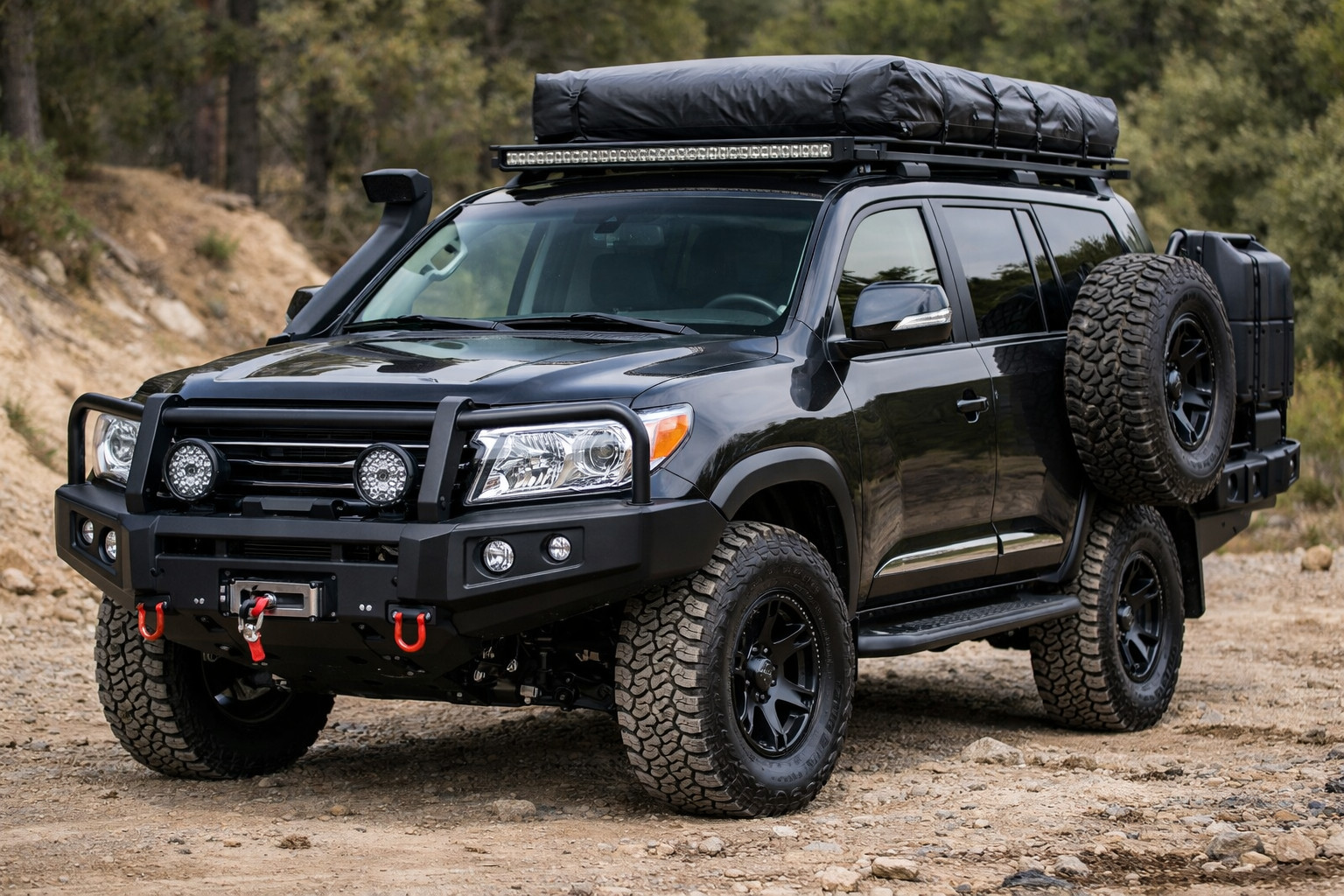
If you need shade, a quick shelter for a rest, lunch, or your gear during short stops, an awning is more convenient. If the priority is an overnight stay, privacy, and an enclosed space in rain, wind, or cool weather, a tent is more practical.
Sellers often mix these names, so below an awning is an open vehicle canopy, and a tent is a more enclosed rooftop tent or sleeping module. This is exactly where confusion most often arises when choosing.
The difference is not only about comfort, but also about how you use it. An awning solves daytime tasks: quickly create shade, cover a table, protect equipment from a short rain, and take a break on the road without setting up camp. A tent solves nighttime tasks: where to sleep, how to close off from wind, insects, and prying eyes, and how not to look for a flat, dry patch of ground.
So the choice boils down to a simple question: do you stop for an hour more often, or do you sleep out regularly? If 80% of your trips are day outings—fishing, beach, picnic, service trips—an awning gives more value for less money and puts less load on the vehicle. If your trips are built around overnights, a tent justifies the weight, price, and more complex installation.
| Option | Strengths | Weaknesses | Who it’s for |
|---|---|---|---|
| Awning | Fast to deploy, lighter, cheaper, convenient for short stops and daytime shade | No sleeping space, performs poorly in strong crosswinds, almost no privacy without walls | Those who often drive during the day, rarely sleep out, and don’t want to overload the roof |
| Tent | Provides an enclosed sleeping space, better weather protection, higher privacy | Heavier, more expensive, more demanding on the roof and roof rack, more often adds noise on the highway | Those who regularly sleep out on trips and are ready to accept weight and price for comfort |
In short, it’s simple: the awning wins on speed, weight, and everyday convenience; the tent wins on overnights and weather protection.
DD Tuning expert comment: the most common mistake is buying a tent “just in case,” and then carrying it every day for two trips a year. Another typical story is looking only at the product price and not calculating whether the crossbars and roof can handle the real load. If you’re unsure, first count how many nights you’ll actually sleep out per season—and only then pay for an enclosed module.
The main advantage of an awning is speed. It gives you what you most often need on the road: shade over a table, shelter from a short rain, a place to change clothes or repack gear. In terms of weight, it’s usually a noticeably lighter solution than a tent, so the load on the roof and the base requirements are simpler.
But its wind protection is weaker. An open awning doesn’t like gusts, driving rain, or the habit of “leaving it for half an hour.” If you add side walls, comfort increases noticeably, but part of its main advantage—simplicity—disappears. You also need to watch the fabric after rain and periodically check the mounts, especially if the vehicle drives on dirt roads.
A tent follows a different logic. It doesn’t just shield you from the sun—it creates a separate sleeping space above the ground. That means better privacy, protection from moisture, dirt, and insects, and on longer trips it genuinely reduces fatigue: you don’t have to keep looking for a clean, dry spot and pitching a ground tent every time.
The weak point of a tent is weight and dependence on the base. For some models, it’s tens of kilograms more than an awning, so not every vehicle and not every set of crossbars is suitable without caveats. In addition, a tent affects noise, vehicle height, parking access, and everyday comfort more noticeably. In terms of durability it can be very reliable, but only if you don’t neglect care for mounts, hinges, the ladder, and the fabric.
| Parameter | Awning | Tent |
|---|---|---|
| Installation and deployment | Mounting to a roof rack takes about 15 minutes; on site it deploys in roughly 1 minute by one person | Mounting to rails or a roof rack takes a few minutes; opening fast hard-shell models takes from seconds to 3–4 minutes |
| Weight | About 10 kg for light 2-meter models | Can weigh dozens of kilograms, for example about 67 kg without the ladder |
| Working format | Open canopy for shade and shelter | Enclosed sleeping space with interior height and a sleeping area |
| On-road behavior | Affects the vehicle less, but requires attention to wind | More often adds noise and is more sensitive to roof compatibility |
For short roadside stops, fishing, the beach, field work, or a family day trip, an awning is more practical. It doesn’t require rebuilding the whole vehicle into a touring setup and doesn’t occupy the roof as aggressively as a tent.
For routes with frequent overnights, when you change camp spot every day, a tent is more convenient. It’s more expensive, but it pays back the investment not with a “nice picture,” but with quick setup, a dry sleeping place, and less hassle in bad weather.
There’s also a middle option: if you need daytime comfort but don’t necessarily need to sleep on the roof, an awning with walls can cover most everyday tasks. But if the main question is “where to sleep,” an awning won’t replace a tent—no matter how many accessories you add to it.
| Scenario | What’s better to choose | Why |
|---|---|---|
| Day trips, picnic, beach, fishing | Awning | Quickly provides shade and doesn’t require setting up a sleeping space |
| Trips with regular overnights | Tent | Provides an enclosed sleeping space and protects better from the weather |
| Vehicle used daily in the city | Awning | Less weight, less impact on vehicle height and everyday use |
| Routes with frequent moves between campsites | Tent | Saves time on daily camp setup and teardown |
| A base for daytime relaxation for the whole group | Awning | Gives useful covered space for several people, not just a sleeping spot for two |
| Trips in unstable weather with wind and rain | Tent | Handles the overnight scenario better, where a canopy is no longer enough |
A more expensive solution makes sense when you truly use its advantages. If overnights are regular, routes are long, and you have to tear down and set up camp often, an expensive tent pays off in comfort and travel pace. If you mainly need daytime shade but want more protection, it can be smarter to invest in a quality awning with accessories rather than jumping straight into a heavy rooftop sleeper.
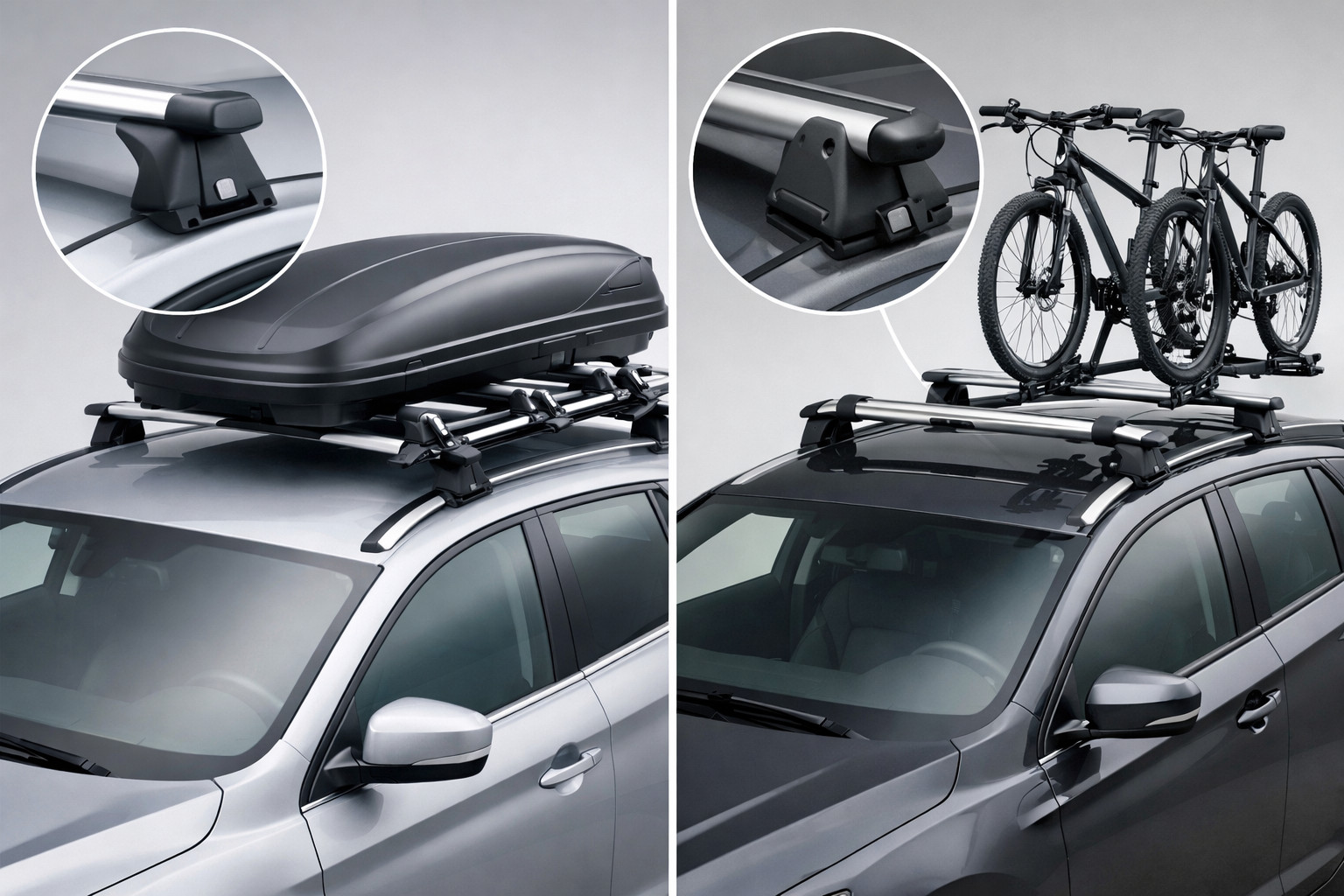
If you’re building a complete touring setup, it’s logical to look not only at awnings and tents, but also at the base: a roof rack or a roof rack for roof rails. The base often determines whether an expensive tent will be truly convenient—or just a heavy accessory on the roof.
From a customer’s experience: most often, after the first season everything becomes obvious. Someone was looking for a tent because they wanted “maximum capability,” but in reality they took day trips and slept out only a few times—so they ended up keeping the awning, because it was used almost every week. The opposite scenario is also typical: after a series of multi-day routes, an owner switched to a tent and appreciated the fast, dry overnight stay—not just the fact of having an accessory on the roof.
In short, an awning is better where you need shade, speed, and minimal hassle. A tent is better where the trip truly includes overnight stays, privacy, and weather protection. The mistake starts when you expect one format to do the other’s job.
This material is based on real selection experience, hands-on practice, and real use scenarios. So the simplest rule is: if you stop more often during the day—get an awning; if you sleep on the road more often—look toward a tent.
| ✔ | Provides shade and shelter quickly for short stops without setting up a full camp. It’s convenient for a picnic, beach trip, fishing, or a rest on the road. |
| ✔ | An awning is lighter and usually puts less load on the roof and cargo system. Because of this, it’s easier to integrate into a car that’s used every day. |
| ✔ | It installs and unfolds much faster, often by one person in a minute. For frequent daytime trips, this saves time and doesn’t require extra effort. |
| ✔ | A basic awning is cheaper than a tent, and installation and maintenance costs are usually lower. It’s a more practical solution if overnight stays on trips are rare. |
| ✔ | It interferes less with everyday car use, including due to its lower weight and smaller impact on the vehicle’s height. So it’s a better fit for those who don’t want to turn the car into a purely touring vehicle. |
| ✘ | It does not provide a sleeping place and does not replace a closed module for overnight stays. If sleeping is the main purpose of the trip, an awning is not enough even with additional accessories. |
| ✘ | It offers less protection from strong side wind, slanting rain, and cool weather. The open design is better suited to calm conditions and short-term use. |
| ✘ | It provides almost no privacy without side walls, and with them it loses part of its simplicity. So for a comfortable enclosed space, you have to buy additional elements. |
| ✘ | You need to keep an eye on the fabric and mounts after rain and driving on rough roads. If the awning is often left wet or the fastening isn’t checked, its service life drops quickly. |
Shipping to EU
Wholesale and retail
Own warehouse
Опис продукту
Подарунки не надаються при оформленні покупки у кредит під 0,01% або при покупці частинами.