09.06.2026
303
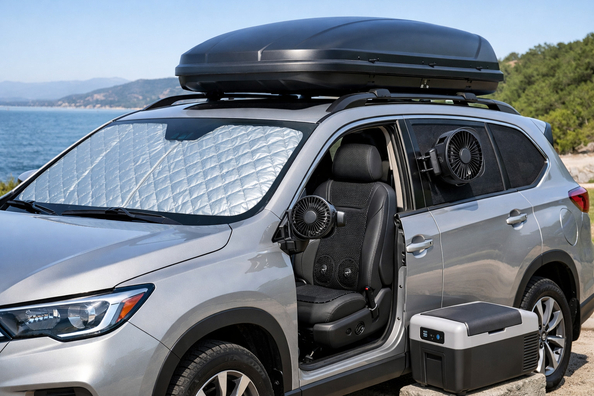
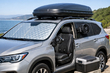
This summer upgrade plan is for anyone whose car sits in the sun every day—and then the first 10 minutes of driving happen in an overheated cabin with a scorching steering wheel and seats, and slow cooling. The idea is simple: not to make the car “cold” after a long parking session, but to noticeably reduce overheating, bring the cabin back to normal faster, and avoid spending money on things that only look useful.
The logic here is strict: first, block the sun while parked; next, get the A/C and your recirculation habits in order; and only then look at film, a panoramic roof, and more expensive solutions. This order usually delivers the biggest effect per hryvnia spent.
In hot weather there are two different problems, and they’re often confused. The first is reducing cabin heat buildup while parked. The second is reducing the “oven” feeling while driving, when the sun hits through the side windows, windshield, and roof. If you mix these tasks, it’s easy to overpay for a solution that works well in only one scenario.
The main heat gain in a car comes through the glass, and most of the heating happens in the first half hour. So a summer upgrade should target glazing, not small dashboard accessories. For crossovers, minivans, sedans with large windshields, and cars with panoramic roofs this is even more important: more glass area means stronger overheating.
The right result of this set of upgrades is not a “freezer” after parking, but less scorching touch points, a lower peak cabin temperature, and faster comfort recovery after you start the A/C. If those are the expectations, it’s easy to allocate a budget without unnecessary spending.
The first step is almost always the same — a windshield sunshade. It delivers the most noticeable effect in the “car sits in the sun” scenario: it lowers the average cabin air temperature and noticeably cools the dashboard and steering wheel. If the car is parked outside every day, this isn’t a small accessory—it’s a basic tool.
The second step is a properly working A/C system and a clean cabin filter. If the system blows weakly or cools lazily, there’s no point trying to compensate with films, covers, or fans. What matters here isn’t a one-time “top-up for effect,” but proper diagnostics and fixing the issue if the cooling performance is being lost.
The third step is recirculation at the right moment. Once the cabin has started cooling down, reusing interior air speeds up the result. It’s not an item in the catalog, but it’s a real part of the summer package—because without correct operation, even a healthy system performs worse than it could.
There’s an exception for cars with panoramic roofs: if there’s a lot of glass overhead and the factory shade is weak, roof protection can jump in priority almost to the first stage. In these bodies, the roof often adds more heat than the owner expects.
| Upgrade | Why it’s needed | Who it really benefits |
|---|---|---|
| Windshield sunshade | Reduces heating of the dashboard, steering wheel, and upper cabin area while parked | Anyone who often parks outdoors; especially cars with large windshields |
| A/C service and cabin filter | Restores normal cooling performance and airflow | Those whose cabin takes a long time to cool, airflow is weak, or cooling is inconsistent |
| Recirculation | Speeds up cooling once the system has started dropping the temperature | City driving, traffic jams, short trips in the heat |
| IR or ceramic window film | Reduces solar heat while driving, eases the load on the A/C | Those who drive a lot during the day, especially on highways or in southern regions |
| Shade or heat-reflective solution for a panoramic roof | Reduces heat gain from above, where a large glass area quickly heats the cabin | Crossovers, wagons, and all cars with panoramic roofs |
| Reflective parking cover | Gives a strong effect specifically during long parking in direct sun | Those whose car sits outside all day without shade |
DD Tuning expert comment: the most common mistake is this—people choose dark tint “so it won’t be as hot,” but don’t verify whether it actually blocks heat, and at the same time they drive with a weak A/C. The second typical mistake is buying a universal sunshade that doesn’t fit, leaving big gaps along the edges, and expecting full results. If the car has a panoramic roof, you can’t ignore it either: that’s often where part of the result is lost.
The second stage starts when the basics are already done: you have a windshield shade, the A/C works properly, and the cabin filter isn’t clogged. After that, the most logical next step for those who drive a lot in sunny hours is IR or ceramic film. You feel it most while moving: less burning on your hand, shoulder, the side of the cabin, and the A/C can maintain comfort more easily.
If the car sits for hours in an open lot, the second stage may be not film but an external reflective cover. It’s a less universal solution, but in the harsh scenario of constant outdoor parking it gives more than decorative interior accessories.
For cars with panoramic roofs, the second stage often becomes roof-focused work. If there’s a large glass area overhead, the effect of side films without roof protection will be incomplete. For EVs this stage is also justified earlier, because every extra heat gain is later paid for by the climate system.
There are upgrades that aren’t useless, but they don’t solve the main problem of cabin overheating. These include a steering wheel cover, a seat cover, a dashboard mat, light window darkening for privacy, decorative visors. They can make contact with hot surfaces more pleasant or help preserve the interior, but they don’t replace fighting heat gain through the glass.
These items only make sense after the basic set. If you buy them first and postpone the sunshade, A/C service, and protection of large glass areas, the impression will be typical: money spent, and the cabin is still overheated.
The first unnecessary expense is very dark tint chosen for looks rather than real heat protection. Darker doesn’t mean cooler, while night visibility may get worse—and legal issues still exist. If the goal is heat, you shouldn’t look for “blacker,” but for the ability to block thermal radiation.
The second mistake is expecting a big effect from slightly cracked windows, mini fans, cheap cooling seat covers, and similar small stuff. Some of it gives minimal or inconsistent benefit, and some works only when the cabin is already cooler thanks to a properly working A/C.
The third common story is overpaying for “nice-to-touch” accessories in hopes of cooling the whole cabin. They can make certain contact points less hot, but they don’t solve air temperature, don’t reduce dashboard heating, and don’t shorten the time the A/C needs.
| Scenario | What to install first | What can be postponed | What is not required |
|---|---|---|---|
| Daily parking in direct sun | Windshield sunshade, A/C service, cabin filter | Film on side windows, cover for long-term parking | Decorative covers, dark tint for looks |
| Lots of daytime driving, but parking mostly in shade | A/C service, recirculation, heat-blocking film | Windshield sunshade if parking is short | Dashboard mat, small fans |
| Car with a panoramic roof | Windshield sunshade, roof protection, properly working A/C | Film on side windows | Only a steering wheel or seat cover without addressing the glass |
| EV or hybrid in a hot climate | Windshield sunshade, A/C, heat-blocking film | External parking cover | Any solutions that don’t reduce heat gain through the glass |
More expensive solutions make sense not when you simply “want to install something,” but when the basic set is already covered and you’re running into the limits of your harsh scenario. If the main headache is a scorching cabin after parking, it’s worth looking at car sunshades first and only then thinking about more complex expenses.
If the car constantly stands outdoors and overheating repeats daily, you can consider a broader set of sun protection products. And when the main problem shows up while driving, it’s logical to study types of window tinting and choose film not by darkness, but by real heat protection.
In a moderate climate, that’s often enough. In very hot regions, on cars with a large glass area, or in EVs, more expensive solutions pay back faster because they work every day, not just a few weeks a year.
From a customer’s experience: a typical scenario goes like this—an SUV owner first installed darker tint and a steering wheel cover, but after a workday the car was still scorching. After switching to a proper windshield shade and servicing the A/C, the first minutes in the cabin became much easier, and as a second step he added heat-blocking film for highway trips. The greatest satisfaction didn’t come from “a nice look,” but from the fact that the steering wheel, dashboard, and cabin air stopped being critically hot.
For a summer anti-heat scenario, the right order is almost always the same: first block the sun while parked, then get the A/C in order, and only after that invest in film, the roof, or other more expensive solutions. Most mistakes happen when people buy accessories that don’t match their scenario, or overpay for looks instead of real heat-gain reduction. This material is based on real selection experience, practice, and real usage scenarios, so the main advice is simple: start with what’s useful, then what’s desirable, and everything else—only if it truly solves your task.
| ✔ | A windshield sunshade gives the fastest and most noticeable effect when parked in the sun: the dashboard, steering wheel, and upper part of the cabin heat up less. |
| ✔ | Air conditioning service together with a clean cabin filter really restores normal airflow and cooling speed if the system is blowing weakly. |
| ✔ | Recirculation after starting cooling helps lower the cabin temperature faster, especially in city traffic jams and on short trips. |
| ✔ | IR or ceramic film is useful while driving: it reduces heat from the sun through the glass and makes the air conditioner’s job easier during daytime trips. |
| ✔ | For cars with a panoramic roof, separate roof protection makes practical sense, because a large glass area noticeably increases cabin heat buildup. |
| ✘ | Expensive or secondary accessories like a steering wheel cover, seat covers, or a dashboard mat do not solve the main problem of heat entering through the glass. |
| ✘ | Very dark tint chosen only for appearance may not provide noticeable cooling, and it can also reduce night visibility and create legal risks. |
| ✘ | Partially opened windows, mini-fans, and cheap cooling seat covers provide minimal or inconsistent effect, so it is easy to waste money on them. |
| ✘ | A universal sunshade of the wrong size or with large gaps along the edges works worse than expected and does not provide full protection from the heat. |
Shipping to EU
Wholesale and retail
Own warehouse
Опис продукту
Подарунки не надаються при оформленні покупки у кредит під 0,01% або при покупці частинами.