
































































 Author: Radomskyi Maksym Vasyliovych
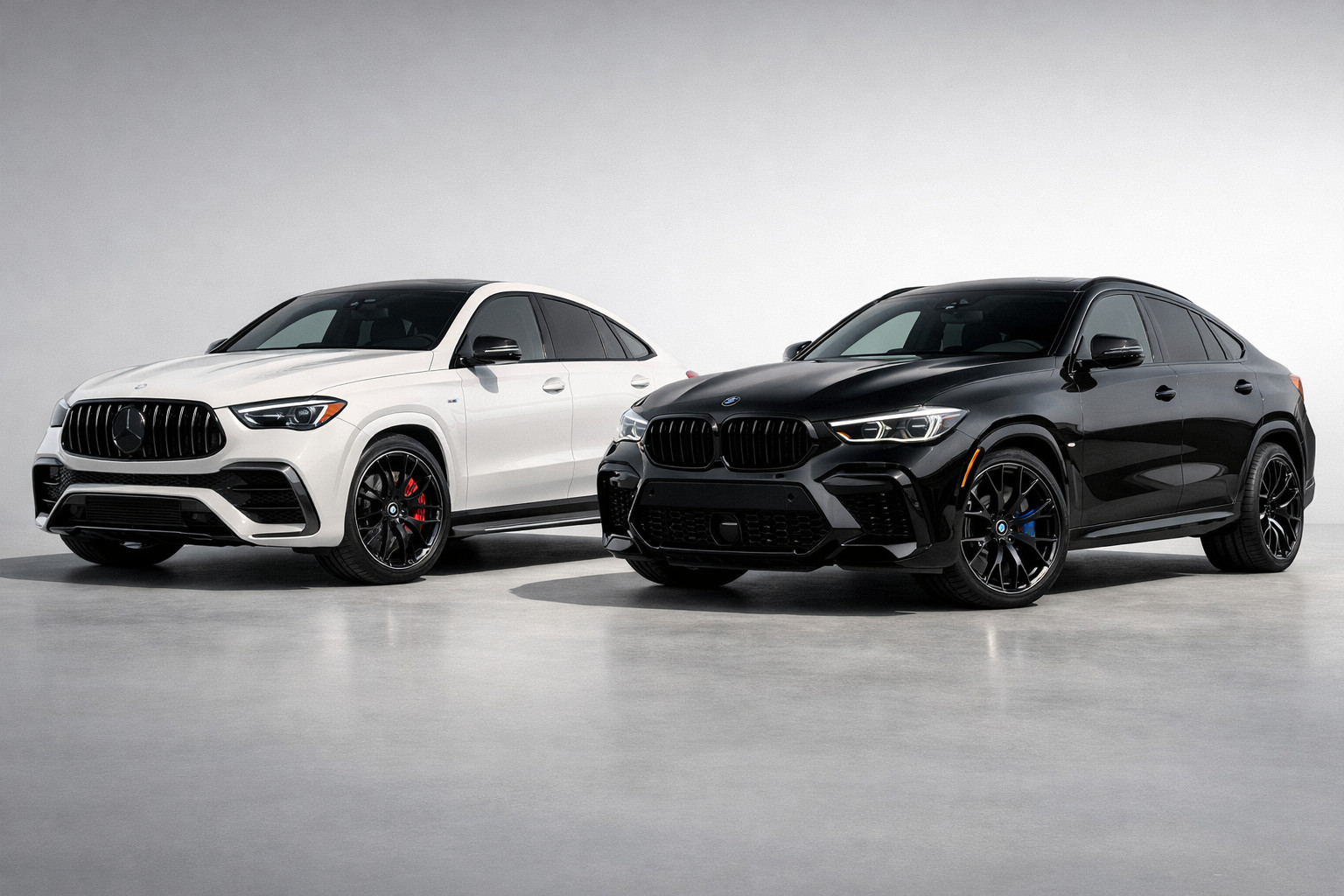
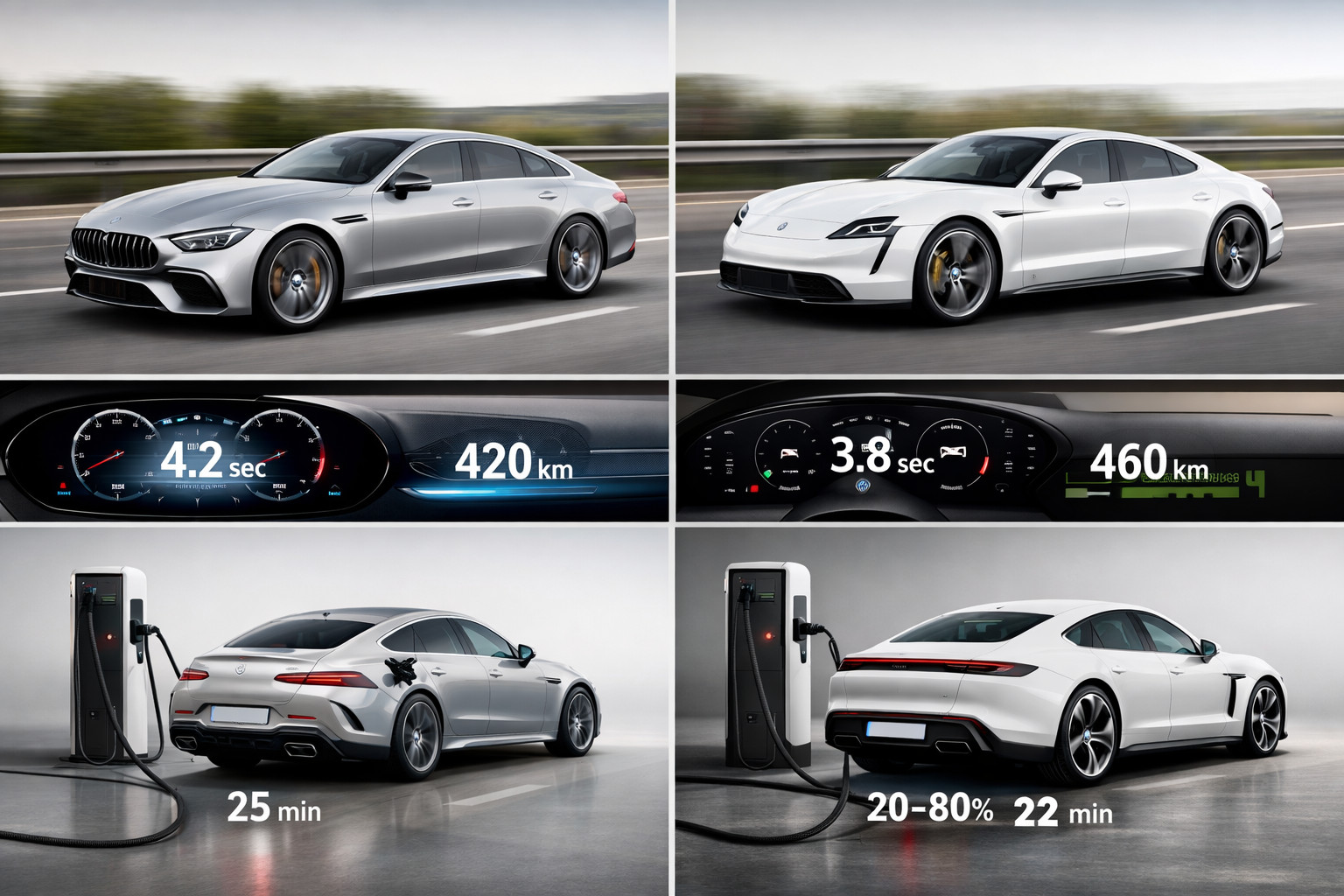
Here the choice isn’t between two equally convenient, fast liftbacks, but between two different life scenarios with a powerful car. The Mercedes-AMG GT 53 is stronger where long trips without pauses and simpler logistics matter: refueling takes minutes, the entry price is lower, and the rated range from a full tank looks convincing. The Porsche Taycan 4S answers with a sharper launch, lower day-to-day energy costs, and very fast charging—but only if decent infrastructure is close at hand.
For most buyers, it’s not the brochure horsepower that decides, but everyday life. If you have home or office charging and your main route is urban, the Taycan 4S looks more logical. If the car often runs between cities, operates on an unpredictable schedule, and shouldn’t depend on stations and weather, the GT 53 fits real life more calmly.
What the choice is really about
The Mercedes-AMG GT 53 is the more classic grand tourer: six cylinders, all-wheel drive, a large tank, and straightforward long-distance logistics. The Porsche Taycan 4S is an electric sporty liftback that impresses much more off the line and with city efficiency, but asks for charging discipline.
The price gap at the start is not cosmetic either: the Taycan 4S is about $18,800 more expensive. So the extra cost makes sense only if you will actually use its strengths: fast charging, short daily routes, a quieter powertrain, and better city maneuverability.
Which criteria you should compare by
- Range logistics. In the GT 53, it’s not only consumption that matters, but the fact that the 79.9 L tank provides long autonomy without hunting for infrastructure. In the Taycan, you shouldn’t focus on a pretty range number, but on where and how exactly you charge.
- Infrastructure setup. For the Taycan, having or installing a home charging point is part of the purchase. For the GT 53, that question simply doesn’t exist.
- Noise. The Taycan has no engine background, so you hear tires and road more clearly. GT 53 owners also sometimes mention aerodynamic noise, but the noise profile is different: it depends less on the absence of an engine and more on speed and surface.
- Longevity. For the Taycan, long-term battery capacity and winter range loss matter. For the GT 53 there’s no battery degradation, but there are consistently expensive fuel, tires, and brakes.
- Practicality. The Taycan has two luggage areas totaling 491 L and a smaller turning circle. The GT 53 offers more classic grand-tourer space and may be not only a four-seater.
- Cost of ownership. The GT 53 has a lower buy-in, but higher day-to-day fuel spend. The Taycan has a higher entry price, but if you have your own charging, daily use is usually easier and cheaper.
Separately, it’s important not to mix data from different markets. For the Taycan, range figures and even acceleration depend on the test method, so comparisons should be made within the same specification—otherwise the conclusion will be skewed.
Quick comparison of the options (table)
| Option | Strengths | Weaknesses | Who it suits |
|---|---|---|---|
| Mercedes-AMG GT 53 | Lower entry price, simple long-distance logistics, large tank, familiar refueling routine, wide set of driver assists | Higher fuel consumption, more expensive daily running costs, firm character on poor roads, possible complaints about noise at speed | For those who often travel between cities, don’t want to depend on chargers, and value the classic grand-tourer character |
| Porsche Taycan 4S | Quicker launch, lower energy costs in the city, very fast charging at 800-volt stations, better maneuverability, two luggage compartments | Higher entry price, dependence on infrastructure, noticeably slower charging at 400-volt stations, sensitivity to cold and road noise | For those who have home or office charging, mostly drive short routes, and care more about instant torque than gasoline autonomy |
Detailed breakdown of each option
Mercedes-AMG GT 53
The GT 53 wins not on paper, but in usage rhythm. If a day can suddenly turn into 400–600 km with highway, traffic jams, and a return without planning, a gasoline AMG is simply easier. With the rated consumption and an almost 80 L tank, highway range comes out very decent, and refueling doesn’t tie you to station type, battery temperature, or a busy charger.
In performance, it’s not a slow car, but its strength isn’t a shocking launch—it’s how it holds pace at high speed. It’s also cheaper to get into. Practically, it matters that the cabin and overall seating layout are closer to an everyday grand tourer than a technology experiment.
The weak point is cost per kilometer and consumables. In the city, the official consumption is high, and the class of car automatically implies not-cheap tires and brakes. Comfort-wise it’s not a soft sedan either: suspension firmness and occasional noise complaints do happen, so you shouldn’t buy the GT 53 expecting relaxed business-class comfort.
Porsche Taycan 4S
The Taycan 4S wins because it feels more expensive than its mass in the very first meters. Instant torque, 0–100 km/h in about 3.5–3.7 s, and very quick pedal response make it subjectively faster in almost any city scenario. Add a smaller turning circle, front and rear trunks, and better suitability for short daily routes.
Its main advantage works only with the right infrastructure. At a fast 800-volt station it really can charge very quickly, but at a 400-volt station the difference is already noticeable. If there’s no charging at home or work, part of the Taycan’s advantages simply evaporates, and in winter the logistics become even more sensitive to temperature and battery preconditioning.
In terms of longevity, the picture isn’t catastrophic: there’s a clear long-term capacity retention framework for the battery. But that doesn’t cancel the reality where frost reduces range, and road noise plus stiff low-profile wheels can annoy on rough surfaces. In other words, the Taycan 4S is excellent as a well-thought-out premium daily EV, but not as a universal replacement for a gasoline grand tourer in all conditions.
Which option is better for different scenarios
For the city and close suburbs, the Taycan 4S looks more convincing. It’s quicker off the line, quieter in terms of the powertrain, cheaper in daily driving, and feels better in the “home — office — gym — back” rhythm. If charging is available at two out of three key locations, the electric scenario becomes very convenient.
For long trips, irregular schedules, and routes where there’s no time to plan stops, the advantage shifts to the GT 53. Here, what’s valued isn’t only autonomy, but the fact that it doesn’t depend on station type, queues, frost, or highway congestion right after a fast-charge stop.
If you need one expensive car for all roles without infrastructure compromises, the GT 53 is the safer choice. If a second—or primary—car lives in a predictable city cycle, the Taycan 4S delivers more of that modern-speed feeling in everyday use.
Use case and what’s better to choose (table)
| Scenario | What to choose | Why |
|---|---|---|
| Daily city driving, home charging available | Porsche Taycan 4S | Lower daily costs, sharper launch, convenient overnight charging, better maneuverability |
| Frequent intercity trips without a clear plan | Mercedes-AMG GT 53 | Doesn’t depend on stations, gets back on the road faster after a stop, simpler logistics |
| Car for winter and cold regions | Mercedes-AMG GT 53 | Less impact of temperature on range and the pace of replenishing energy |
| Short daily routes of 20–80 km | Porsche Taycan 4S | The strengths of electric drive are realized almost fully, while long-distance logistics drawbacks hardly interfere |
| One car in the family for everything | Mercedes-AMG GT 53 | Fewer dependencies and surprises on trips, more versatility in any schedule |
Common mistakes when choosing
- Buying a Taycan 4S without a charging plan. If you don’t have home charging or a stable workplace option, you’ll constantly spend time on infrastructure instead of enjoying the advantages of an EV.
- Comparing only acceleration numbers. On paper it’s tempting, but in real life what matters more is how much time you spend replenishing range.
- Expecting the GT 53 to cost like a regular six-cylinder sedan. It’s a heavy and powerful car, so fuel, tires, and brake costs should be accepted upfront.
- Ignoring the noise profile. In the Taycan, road noise can annoy; in the GT 53, firmness and aerodynamic sounds at high speed. You should check this on your own route, not in a short city test.
- Mixing figures from different markets. This especially applies to the Taycan: range and some performance numbers should be cross-checked only within one methodology.
When the more expensive solution makes sense
Paying extra for the Taycan 4S is justified if you truly use its electric nature: you have your own charging, drive mostly in the city, value very quick launches, and want to spend less per daily kilometer. If your decision is already leaning that way, it’s worth taking a look right away at solutions for Taycan and practical floor mats for Taycan—for a car like this, minor cabin protection quickly stops being a minor detail.
The pricier scenario around the GT 53 makes sense differently: not because of savings, but because of versatility without being tied to the network. If you need a car that looks equally appropriate in the city and goes far without extra questions, then it’s more logical to invest in a gasoline grand tourer. For further upgrades, it’s useful to separately evaluate accessories for AMG GT X290.
Conclusion
The Mercedes-AMG GT 53 is the rational choice for those who drive a lot and don’t want to build their routine around charging. The Porsche Taycan 4S is the choice for those who already have infrastructure and want to get the most from daily electric dynamics. The key takeaway: in this pair, what decides isn’t absolute speed, but where exactly and how exactly you will live with the car every day.
Pros and cons
A large 79.9 L fuel tank and quick refueling in minutes make the Mercedes-AMG GT 53 more convenient for long trips without relying on charging infrastructure.
The GT 53 has a lower starting price, so getting into the purchase is less painful than with the Taycan 4S.
The Porsche Taycan 4S delivers a very sharp launch and better urban dynamics, especially on short routes and in stop-and-go traffic.
The Taycan 4S has lower daily energy costs in the city, and with home or office charging available, operation becomes easier.
The Taycan 4S supports very fast charging at 800-volt stations and has two cargo areas with a combined 491 L, which adds practicality in the city.
The Taycan 4S depends heavily on having proper charging infrastructure; without it, some of its strengths are partly lost.
At 400-volt stations, the Taycan charges noticeably slower than at 800-volt ones, so not every trip will be convenient.
In cold weather, the electric car faces reduced range, and the battery requires more careful planning.
The GT 53 has high fuel consumption in the city, and it also comes with expensive tires and brakes.
Both cars are not ideal on poor roads: the GT 53 is noted for suspension stiffness and noise, while the Taycan has road noise and stiff low-profile wheels.