04.10.2026
71
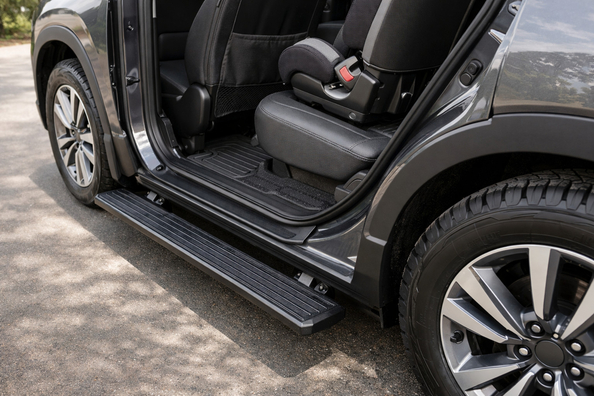
This upgrade plan is for the owner of a family crossover who drives kids every day, often opens the doors in rain, snow, and mud, and is tired of scuffed door sills. The scenario is simple: make getting in more convenient, and make the lower body and entry areas less vulnerable to dirt and shoes.
The main logic here isn’t to bolt on massive side steps right away. First you need to reduce the actual flow of water, snow, and road debris, then cover the constant contact areas, and only after that decide whether the family really needs an extra foot support.
In this scenario, the upgrade needs to solve three practical tasks at once: less dirt on the lower parts of the doors and body, fewer scratches on the sills, and easier entry for kids, older passengers, or anyone who finds it hard to lift a leg high. If the vehicle isn’t tall, the third task may not be a priority at all.
An important nuance: the benefit of side steps depends heavily on the height of the specific body, the generation, and passenger height. And compatibility of any kits must be checked specifically for your model and mounting points.
First priority — mud flaps. They address the cause, not the result: they intercept some water, slushy snow, and small debris before it starts flying onto the doors, sills, and the lower edge of the body. For a city-driven family car, this is the most rational first purchase.
Second step — door-sill covers or protective film on contact areas. This is exactly where scuffs appear from kids’ shoes, heels, shopping bags, carriers, and rushed entry. If the interior gets dirty quickly, it also makes sense at this stage to add all-season floor mats: they don’t protect the body, but they reduce how much moisture gets tracked through the cabin.
Side steps still aren’t mandatory at this stage. If the family gets in without issues and the main complaint is dirt and scuffed sills, protection will deliver more benefit for less money than any bulky exterior add-on.
| Upgrade | What it’s for | Who really benefits |
|---|---|---|
| Vehicle-specific mud flaps | Reduce the flow of water, snow, sand, and stones onto the lower body | Almost all family vehicles, especially those driven in the city in winter and shoulder seasons |
| Door-sill covers | Take the scratches, scuffs, and shoe impacts | Families with kids, frequent in/out, pets |
| Protective film for contact areas | Protects the paint in places often touched by hands, shoes, and luggage | Those who want to keep a neat look longer without rigid covers |
| Fixed side steps | Make entry easier and provide an intermediate foot support | Kids, older passengers, shorter people, on taller vehicles |
| All-season floor mats | Contain water, snow, and dirt in the footwell area | Those who often drive in wet weather and don’t want to constantly clean the interior |
If the budget is limited, the first two items are enough. They best match your exact scenario: less dirt outside and fewer contact marks in the entry area.
DD Tuning expert comment: The most common mistake is buying side steps before mud flaps, because it seems like they’ll instantly solve both entry and dirt. In reality, if the source of the problem is constant splashes and scuffed inner sills, side steps without basic protection deliver a smaller effect. Also check compatibility by generation and body: even within the same model, mounting points can differ.
The second stage is fixed side steps, but only if entry is truly inconvenient. This makes sense on taller crossovers—when a child has to reach into the cabin, an older passenger has nowhere to place a foot, or you regularly use a roof box and need an intermediate step on the side.
It’s important not to overdo the size. Very wide steps add weight, can reduce ground clearance, and aren’t always needed for everyday city driving. If the car occasionally drives on poor roads, even mud flaps and steps should be evaluated from the viewpoint of the vehicle’s lowest point—not just convenience.
This group usually includes wide decorative side steps, polished trim pieces, and complex solutions that change the perceived look of the car more than real day-to-day use. They can be appropriate if you want a different appearance or need easier access to the roof, but for fighting dirt and scuffed sills they’re no longer the baseline.
This is where the typical overpayment for looks happens: the family asks for easier entry and less sill cleaning, but the budget goes to a big exterior piece that doesn’t remove the root cause of the dirt. If the main headache is wet sand, salt, and shoe marks, protective elements work noticeably more pragmatically.
Most often, what turns out to be unnecessary isn’t the cheapest items, but the wrongly chosen ones.
If you’re unsure, focus not on a side photo of the car, but on the family’s route: the yard, school, supermarket, snow, puddles, how often kids get in and out. That’s where you can see what’s truly needed.
| What to install first | What can be postponed | What isn’t mandatory |
|---|---|---|
| Mud flaps for basic protection from water, snow, and sand | All-season floor mats, if the interior isn’t suffering from dirt yet | Very wide decorative side steps |
| Door-sill covers or film on contact areas | Fixed side steps, if both adults and kids can get in comfortably anyway | Electric retractable systems for a typical city routine |
| Model-specific selection by body and generation before purchase | Protection for secondary areas if the main sills still aren’t covered | Universal kits with questionable compatibility |
This order works for most family vehicles. The exception is a truly tall body or passengers with limited mobility: then side steps can move higher on the list.
More expensive upgrades make sense when the basic protection is already handled and the entry problem hasn’t gone away. This is a typical case for tall family vehicles that regularly carry kids, older relatives, or people who struggle with a high step. In such a scenario, a more expensive fixed side step can be justified because it provides daily value, not just a change in appearance.
If you compare costs realistically, start with mud flaps and door-sill covers, and only then move on to side steps and running boards. This order usually separates useful upgrades from marketing clutter much better. Electric retractable systems are worth considering only when you truly can’t do without them and you consciously accept a more complex design.
From a customer’s experience: In a similar family scenario, the owner initially wanted to install expensive side steps because the kids had trouble climbing in after school. After reviewing the day-to-day routine, it turned out the biggest annoyance was dirty lower doors and quickly scuffed sills, so they installed mud flaps and sill protection first and postponed the steps. As a result, the daily effect appeared immediately, and the side-step question came back only after the season—when it became clear they weren’t truly necessary for everyone.
For a family scenario, the smartest order is: mud flaps first, then protection for sills and contact areas, then floor mats, and only after that—side steps, if there’s a real need to make entry easier. This approach helps you avoid overpaying for visual effect and focus on what works every day in mud, snow, and constant in/out use.
This material is based on real selection experience, hands-on practice, and real usage scenarios: first remove the source of the dirt, then protect the contact points, and only then invest in more expensive solutions. That’s the easiest way to build an upgrade package that serves the family—not just looks convincing in photos.
| ✔ | Mud flaps are the first to reduce the flow of water, snow, sand, and stones onto the doors and sills, meaning they tackle the cause of dirt rather than just clean up the result. For a city family car, this is the most rational first step. |
| ✔ | Door sill trims or protective film take the wear from shoes, bags, and child seats. This is especially practical for families where getting in and out happens often and not very neatly. |
| ✔ | All-season floor mats help keep water, snow, and dirt in the footwell area, so less moisture gets spread around the cabin. This is useful if children regularly bring wet mud and sand into the car. |
| ✔ | Fixed side steps really do make entry easier for children, elderly passengers, and people with a high step-in, but only when the body is high and there is a real need for extra support. In other words, they provide a noticeable everyday benefit in a specific scenario, rather than just changing the car’s appearance. |
| ✔ | The article clearly sets out the order of upgrades, helping avoid spending the budget on unnecessary items: first basic protection, then comfort. This approach reduces the risk of buying an expensive part that will have little impact on daily use. |
| ✘ | Side steps do not solve the dirt problem on their own if the root cause is constant splashes on the doors and sills. Without mud flaps and protection for the contact areas, their effect will be smaller. |
| ✘ | Fixed side steps do not make sense on all cars: if the family already gets in without difficulty, they are an unnecessary expense. For a low or ordinary city crossover, their benefit may be minimal. |
| ✘ | Wide decorative side steps can add weight and partially reduce ground clearance. For cars driven on poor roads, this is not a very good compromise. |
| ✘ | Universal kits without body-specific fitment may sit poorly or require adjustment. Because of this, you can lose time and money even before proper installation. |
Shipping to EU
Wholesale and retail
Own warehouse
Опис продукту
Подарунки не надаються при оформленні покупки у кредит під 0,01% або при покупці частинами.