06.02.2021
1427
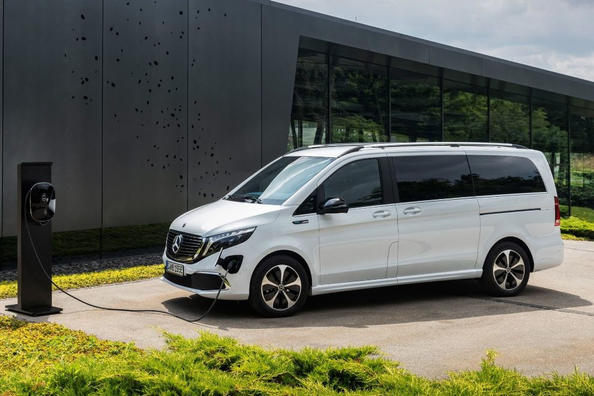
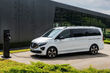
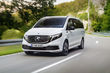
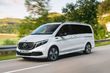
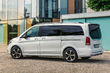
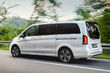
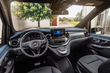
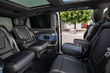
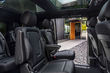
Mercedes-Benz EQV is the brand’s first series-production electric minivan and, essentially, an electric version of the V-Class (W447 body): the same 6–8-seat space, the same long and extra-long versions, but with a traction battery under the floor and an electric motor under the hood instead of a diesel. The Mercedes EQV debuted in 2019, received a facelift at the end of 2023, and in 2026 got a successor on a new platform. We break down what the EQV is like today, its real-world range and charging speed, and what to expect next.
Contents
The EQV concept was shown in March 2019 at the Geneva Motor Show, and the production version in September of the same year in Frankfurt. Mercedes did not create a separate platform: the electric minivan was built on the basis of the V-Class, so the body, doors, interior, and most equipment are shared. This is both a plus and a minus: the EQV got a proven body and all the “hardware” of a premium minivan, but the layout remained that of an internal-combustion vehicle — with front-wheel drive and a battery integrated into the floor.
The only variant for a long time was called EQV 300: one electric motor on the front axle with a peak output of 150 kW (204 hp) and a 100 kWh gross battery, of which 90 kWh are usable. Later, a version appeared with a smaller battery with 60 kWh of usable capacity.
Mercedes-Benz presented the updated EQV and V-Class in the summer of 2023, with orders opening in January 2024. The facelift barely touched the hardware — the exterior, interior, and electronics were updated.
Power figures and dimensions are for the version with the 90 kWh battery (EQV 300). The dimensions are given for the 2020–2024 body; the facelift changed the bumpers, so the length of the updated vehicle may differ by a few centimeters.
| Parameter | Mercedes-Benz EQV (90 kWh) |
|---|---|
| Drive | front, single electric motor |
| Power peak / continuous | 150 kW (204 hp) / 70 kW (95 hp) |
| Torque | 362 Nm |
| 0–100 km/h | 12.1 s |
| Top speed | 160 km/h (limited) |
| Battery | 100 kWh gross / 90 kWh usable (there is a 60 kWh version) |
| WLTP range (after facelift) | 277–365 km depending on version |
| WLTP consumption | 27.04–29.43 kWh/100 km |
| Charging AC / DC | up to 11 kW / up to 110 kW |
| Length | 5 140 mm (Long) / 5 370 mm (Extra-Long) |
| Wheelbase | 3 200 / 3 430 mm |
| Width / with mirrors | 1 928 / 2 244 mm |
| Height | 1 901 mm |
| Curb weight | about 2 635 kg |
| Trunk | 1 030 L with all rows, up to 4 630 L without seats |
In the first announcements in 2019, Mercedes promised more than 400 km on a single charge — those are the figures still circulating in listings. For the updated vehicle, the manufacturer states a range of 277–365 km on the WLTP cycle. The difference is explained by the version, wheel size, and equipment: a minivan weighing over 2.6 t with “box” aerodynamics is very sensitive to tires and speed.
The reality is this: in the city and on suburban roads, the EQV comes close to the official figures, but on the highway at 110–130 km/h the range drops noticeably — the large frontal area consumes energy more aggressively than in a sedan or crossover. In winter, energy use rises further due to heating the large cabin. So for intercity trips, it is better to plan your route with fast-charging stations in mind.
Charging:
110 kW is a modest figure by 2026 standards: modern EVs on an 800-volt architecture charge two to three times faster. For the EQV, this is the key technical limitation — and it is what the successor addresses.
Up front there are two separate seats; in the rear you can order two three-seat benches or four individual seats. With all rows installed, the trunk holds about 1,030 L, and without the rear seats up to 4,630 L, so the vehicle easily turns from a passenger shuttle into a cargo van. The sliding side doors and tailgate can be equipped with electric drives.
The battery is located under the floor and, according to the manufacturer, does not take away cabin space. But there are limitations worth knowing before buying: the EQV is not designed for towing a trailer, and the payload is about 940 kg. For VIP transport, airport transfers, and large families within the city this is not an issue; for camping with a trailer — it is.
The EQV’s successor has already been unveiled. On March 10, 2026 in Stuttgart, the Mercedes-Benz VLE premiered — the first model on the new VAN.EA electric platform for minivans and vans. The company is not continuing the EQV name: the VLE designation emphasizes that in terms of equipment the model is positioned alongside the E-Class. More about the new lineup is in our article about Mercedes VLE, VLS, and VLS Maybach.
What is known from official Mercedes-Benz data:
Series production of the VLE began in June 2026 at the plant in Vitoria (Spain). An even more luxurious VLS version is being prepared on the VLE basis. With the arrival of the VLE, today’s EQV becomes the previous model, and its direct competitor in the large electric minivan class remains the Volkswagen ID. Buzz.
The EQV’s body and interior are shared with the W447 generation V-Class, so most interior and exterior accessories fit both vehicles. The most essential items for a minivan that carries a lot of people: full-coverage floor mats, window deflectors, and trunk organizers. A selection is available in the Mercedes Vito / V-Class W447 tuning section, including EVA mats for the full cabin. Before ordering exterior tuning parts (bumpers, grilles, lighting), уточнюйте compatibility specifically with the EQV: the front end of the electric minivan differs from the diesel version. Ideas for a first upgrade are in the piece about the starter W447 upgrade for passenger trips and highways.
We deliver via Nova Poshta throughout Ukraine; orders from 15,000 ₴ are delivered free of charge by our own transport.
Shipping to EU
Wholesale and retail
Own warehouse
Опис продукту
Подарунки не надаються при оформленні покупки у кредит під 0,01% або при покупці частинами.