23.07.2025
284
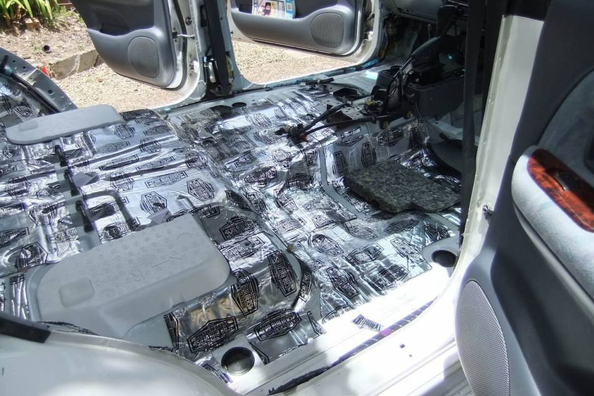

Car soundproofing increases comfort by reducing the noise level in the cabin, but adds weight due to the materials used. How much does the weight of the car increase and does this affect its characteristics? Let's analyze the key aspects and figures. Tuning accessories, a large selection of which is available in our online store, will also help you improve comfort in the car cabin and add coziness.
The bulk is added by vibration-damping materials. These are dense sheets on a bitumen or butyl rubber base with a foil coating. They are applied as the first layer to the body metal to dampen vibrations. The second and third layers are light, porous sound absorbers and sound insulators that weigh significantly less.
On average, full soundproofing of a mid-range passenger car (sedan or hatchback) adds 45 to 60 kg to the total weight. For a large SUV or minivan, this figure can reach 70–80 kg.
What does this mean in practice? This increase in mass is comparable to the weight of a fully filled fuel tank in some models. For a modern car, this is a minor increase that has virtually no effect on acceleration dynamics, handling or fuel consumption. The changes will be within the measurement error. At the same time, the acoustic comfort in the cabin increases significantly, which fully justifies the small complication.
Shipping to EU
Wholesale and retail
Own warehouse
Опис продукту
Подарунки не надаються при оформленні покупки у кредит під 0,01% або при покупці частинами.