 Author: Radomskyi Maksym Vasyliovych
Electric MOKE Mk2 — the second generation of the British beach electric car — was unveiled at the Paris Motor Show on 12–18 October 2026. The headline changes: a 23.5 kWh battery instead of 10.8 kWh and a WLTP range of up to 170 km versus 54 miles (about 87 km) for its predecessor — nearly double. The body is now fully aluminium, there is a new 86-litre front trunk, and the recommended price in Europe is €35,000.
Contents
- What MOKE is and where it came from
- How much farther the new MOKE will go
- What changed in the body and cabin
- How and how long to charge the MOKE Mk2
- How much it costs and where it will be sold
What MOKE is and where it came from
MOKE is an open car with no doors and a soft top instead of a roof, associated since 1964 with beaches, resorts and films. The original Mini Moke was first built in the UK, then from 1966 in Australia, and later in Portugal as well. Today’s company Moke International owns the original European trademark and has been producing an electric version since 2022. According to the company, more than 500 Electric MOKE have been sold worldwide, through ten partner dealers in America and Europe.
The car is still hand-assembled in Warwickshire, England — a few miles from where the first MOKE were made in the 1960s. The new Mk2 is on display in Paris in Hall 7.1 (Stand B01) alongside premieres from major groups, even though in scale it is a niche product for resorts, rentals and weekend trips by the sea.
How much farther the new MOKE will go
The biggest problem with the first Electric MOKE was its short range: about 54 miles on the WLTP cycle. In the Mk2, the battery has been increased by more than double, and the official mixed-cycle WLTP range is now up to 170 km (105 miles). In real-world city and coastal driving, the company’s tests managed up to 185 km. Motor1 cites a slightly different WLTP figure — 106 miles — the difference is down to rounding.
| Parameter | Electric MOKE Mk2 (2026) | Electric MOKE Mk1 (since 2022) |
|---|---|---|
| Battery | 23.5 kWh | 10.8 kWh |
| WLTP range | up to 170 km (105 miles) | about 87 km (54 miles) |
| Electric motor | 33 kW (44 hp), rear | 33 kW (44 hp) |
| Top speed | 80 km/h | — |
| On-board charger | 6.6 kW (AC) | — |
| Body | aluminium | steel |
| Front trunk | 86 L, lockable | none |
Performance has not changed: the same 33 kW (44 hp) electric motor and about 100 N·m, with a top speed of 80 km/h according to the company (Carscoops reports 53 mph, about 85 km/h). For a MOKE, this is a deliberate choice: the car is designed for promenades, resort villages and coastal roads, not the motorway.
Who the MOKE Mk2 is for
The doubled range changes the usage scenario. With the first Electric MOKE, you had to plug it in after every trip, so it mainly lived in rental fleets on short routes. With 170 km WLTP on a single charge, you can spend several days driving around a resort, between beaches and restaurants, and charge the car overnight from a regular socket. That is exactly how MOKE is sold: to hotels, villas, coastal rental companies, and owners of seaside holiday homes who need a second, “weekend” car.
The limitations are important to understand, too. There are no doors and no roof in the classic sense — only a soft top — so it is a seasonal car for warm climates. The maximum 80 km/h does not allow confident driving on high-speed roads, and the lack of DC fast charging makes long trips inconvenient. In other words, the MOKE Mk2 is not a replacement for a normal car, but resort transport that has finally stopped depending on a midday top-up.
What changed in the body and cabin
According to MOKE representatives quoted by TopElectricSUV, the body is now fully aluminium instead of steel: the car is less afraid of salt water and sand, but it has become about 10–15% heavier due to the larger battery. Weight distribution between the axles is now 50:50 versus 60–65% on the front axle previously, which should improve handling. The cabin was widened by about 9 cm on each side, with more legroom.
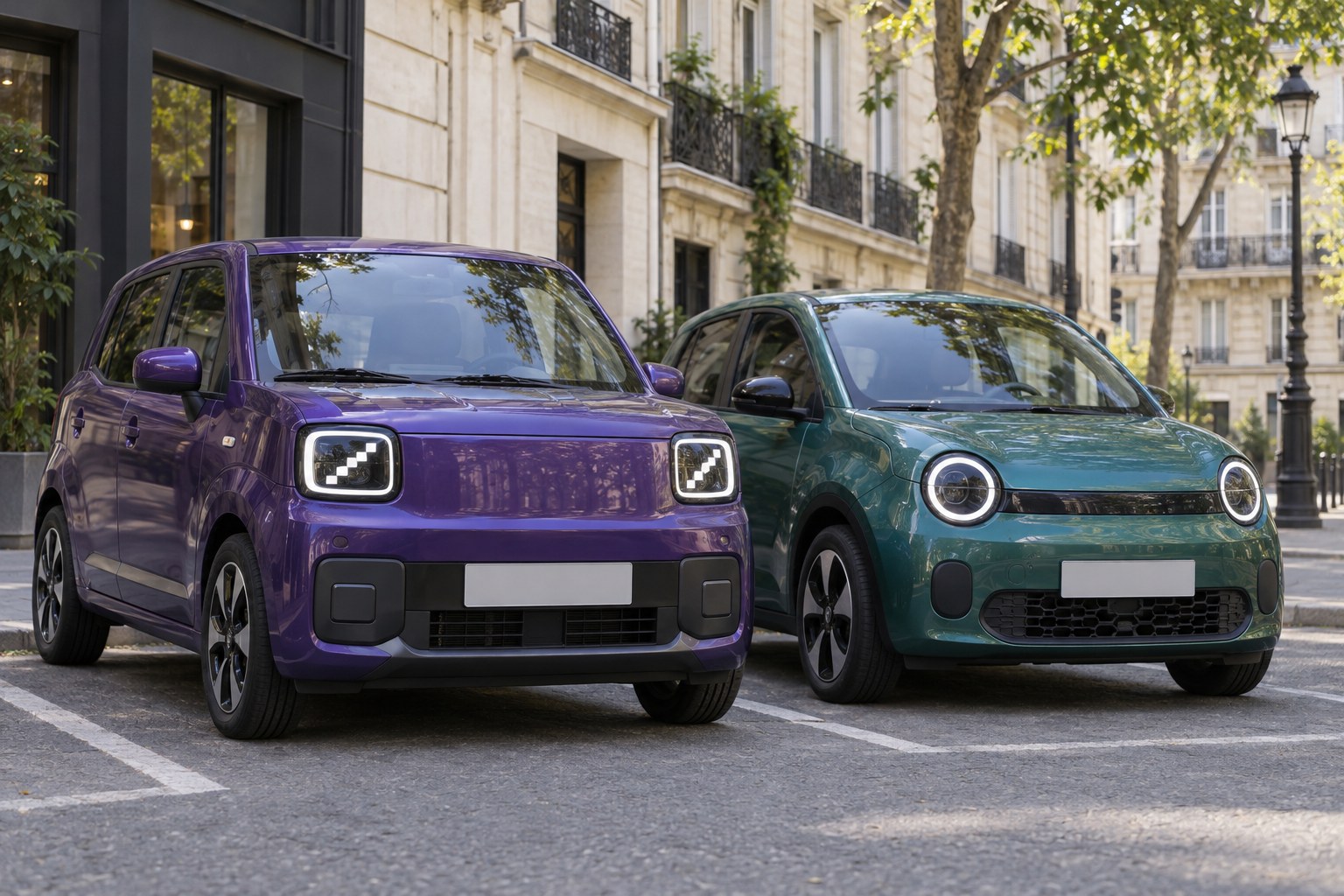
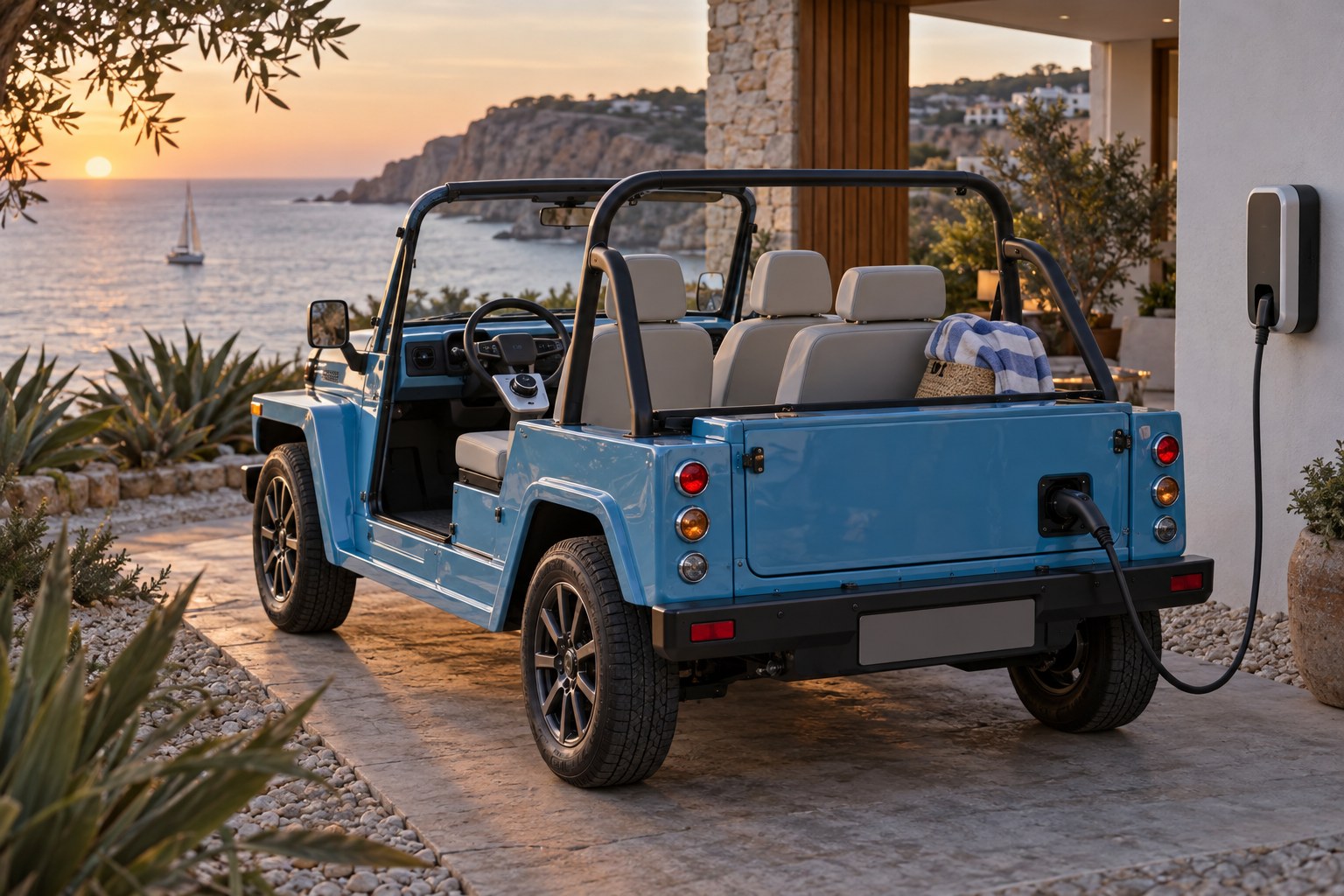
Under the bonnet there is now a closed 86-litre compartment — for the first time in a MOKE you can leave a bag or beach gear unattended. The charging port has been moved to the rear. Inside there is a new central control panel, a round transmission-mode selector, more prominent indicator lights, USB-C, a 12 V socket, and cupholders for rear passengers. There are nine colours across three collections: California Collection (Sonoma Red, Laguna Blue, Venice White — previously US-only), Original Colour Collection (Wave Blue, Sunlight Yellow, Sunset Orange) and Earth Naturals (Shell White, Eucalyptus Green, Palm Green).
How and how long to charge the MOKE Mk2
There is no DC fast charging on the MOKE — only AC. With the 6.6 kW on-board charger, the battery charges from 20 to 80% in about two hours (at 25 °C); from a regular household 3.2 kW supply, a full charge takes around seven hours. For a beach car that stands by a hotel or villa during the day and sits on a socket overnight, that is enough: the doubled range removes the need to top up in the middle of the day.
How much it costs and where it will be sold
The recommended retail price in Europe is €35,000, excluding local taxes and government incentives; in the UK, according to Carscoops, it starts at £36,000. The MOKE Mk2 can already be test-driven, rented or bought in several European markets. In the US, the car is planned to be introduced in early 2027 with deliveries in spring–summer; the estimated price is around $40,000, but it will still depend on US certification.
MOKE CEO Lorne Very says the Mk2 was created to make open-air electric driving “easier, more enjoyable and more practical than ever”. Other show premieres are in our overview of the Paris Motor Show 2026, and the latest updates are in the auto news section.
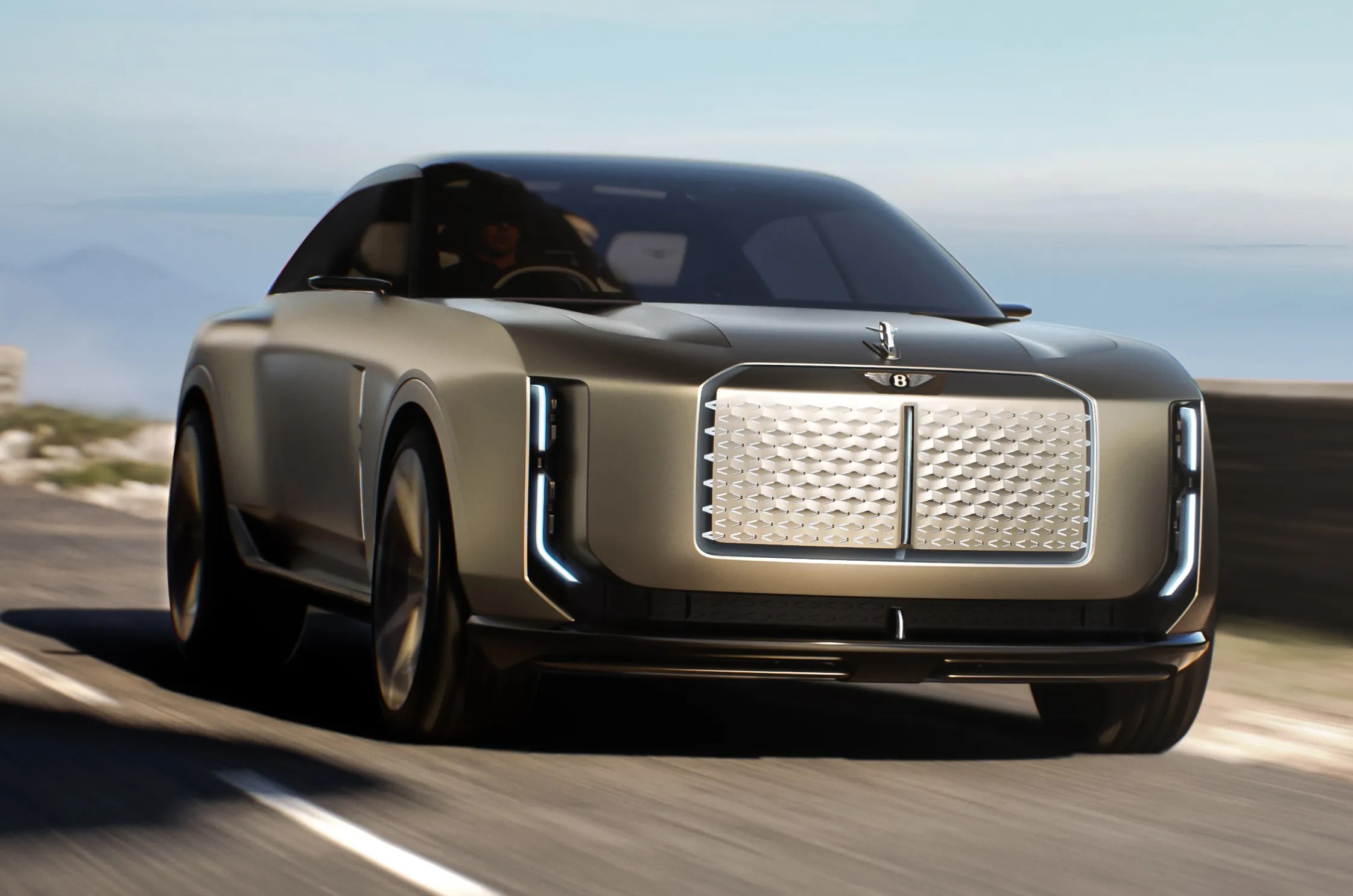
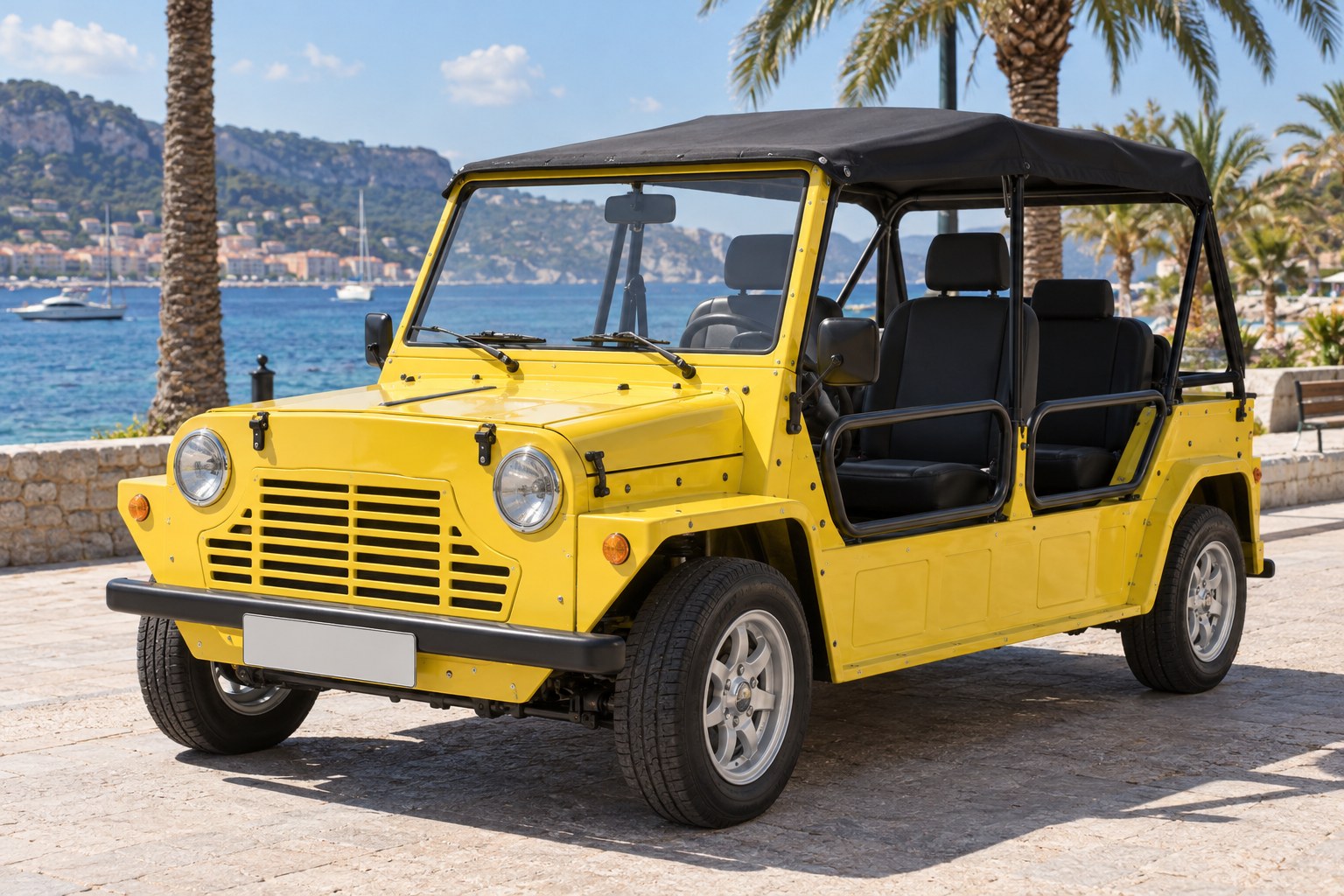
Images in the article are illustrations created from MOKE’s official description, not factory photos.
We deliver via Nova Poshta throughout Ukraine.
Pros and cons
Range of up to 170 km under WLTP — almost twice as much as the Mk1
The aluminum body better withstands salt water and sand
Lockable front trunk with 86 l
50:50 weight distribution and a wider cabin
No fast DC charging
Top speed of only 80 km/h
The car became 10–15% heavier
High price for a niche beach car