04.10.2026
128
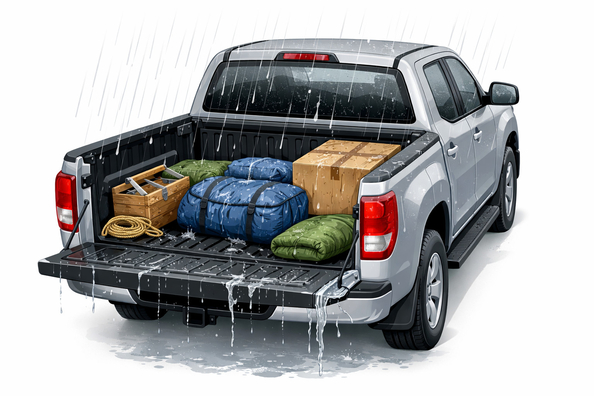
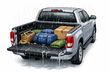
If cargo in a pickup bed gets wet while still being visible, the issue is usually not a single failure. The bed itself has factory gaps, and most tonneau covers, roller shutters, and canopies only reduce water ingress—they don’t make the bed completely watertight.
That’s why it’s not about finding a “magic” cover, but following a proper sequence: locate the water entry point, eliminate the specific gaps, check the drainage, and only then decide whether a cover is enough—or whether you already need a rigid enclosed top to keep the load out of sight.
A pickup bed is not designed to be a dry trunk. Most often, water doesn’t enter through the cover panel itself, but via the tailgate, the front corners by the cab, holes under the side rails, or stake pocket areas. If a cassette-style roller shutter is installed, some water is designed to go into the cassette and should exit through the drains.
The “visible from the outside” problem is separate. A low-profile cover or roller shutter only hides what sits below the bed-rail line. If the load is tall, placed close to the rear window, or sits under a canopy with transparent side panels, sealing alone won’t make it less noticeable.
Separately, assess the height of the load. If items protrude above the bed rails or are visible through the canopy’s side glass, the issue isn’t the seals—it’s the cover format itself.
DD Tuning expert comment: The most common mistake is buying an expensive roller shutter and expecting it to eliminate tailgate leakage by itself. The second typical mistake is sealing every joint indiscriminately and blocking the drains. First you need to find the exact entry point, then align the system, and only after that add sealing.
| Symptom | Likely cause | What to do |
|---|---|---|
| Wet mostly near the tailgate | Tailgate gaps or weak cover compression at the rear | Check the gap, adjust the fit, add a tailgate seal |
| Droplets appear in the front corners near the cab | Gaps under the rails, open holes, or stake pocket areas | Reinstall the rails, seal the problematic holes, check corner seals |
| After rain, water pools inside the roller shutter | Clogged drains or debris in the cassette | Clean the cassette and drain tubes, make sure they discharge outside |
| Leaks after a pressure wash, but stays almost dry in rain | Normal water-resistance limit of the system | Don’t chase full watertightness; add extra protection for sensitive cargo and don’t test the system only with a hard jet |
| Cargo is drier, but still visible from the outside | Low-profile cover, tall cargo, or transparent side panels | Switch to a rigid canopy, solid side panels, or at least tinted glass |
When you need both dryness and concealment, a rigid enclosed top with a lock works best. It hides tall cargo better than a soft cover or roller shutter, but even then the biggest difference comes from installation quality.
If your cargo is usually below the bed-rail line and you need basic weather protection, it makes sense to start with a pickup bed cover. If fast daily access matters, but you accept a compromise on sealing, take a look at roller shutters for the bed. And if you need to cover tall items and keep them out of sight, it’s worth separately figuring out how to choose a pickup canopy.
Replacing seals or correcting the fit is justified when the system itself is intact but has localized leaks. A full replacement makes sense when the current cover is structurally wrong for your cargo height, doesn’t provide a lock, or simply can’t properly close the bed for your use cases. Before buying, check compatibility with your specific tailgate and its equipment.
| Solution | When it works | When it’s not worth spending money |
|---|---|---|
| Tailgate seal | When most water comes in from the rear and the cover is generally aligned | When leaks come from the front corners or from under the rails |
| Reinstalling the cover or rails | When you can see uneven gaps, weak compression, or post-install shift | When the components are already deformed or damaged |
| Cleaning cassette roller shutter drains | When water pools in the cassette or moisture appears after prolonged rain | When you don’t have a cassette system or water enters through the tailgate |
| Sealing holes and stake pocket areas | When the front corners and the area near the cab are wet | When the only problem is that the cargo is simply visible from outside |
| Rigid canopy or cap with a lock | When you need both concealment and better weather protection for tall cargo | When you often carry oversized items above the roofline or the bed needs to remain open |
From a customer’s experience: a pickup owner carried tools under a roller shutter and complained about two things at once: after highway driving in the rain, the bags got damp, and the tools were visible if he loaded above the bed rails. Inspection showed leakage near the tailgate and open gaps at the front. After sealing the tailgate, correcting the fit, and switching to a rigid top for tall cargo, the bed became noticeably drier and the items stopped drawing attention.
A pickup almost never achieves absolute watertightness, so the right solution doesn’t start with buying the most expensive cover, but with finding the specific leak point. Most often, the winning combination is proper installation, tailgate sealing, sealing the front areas, and maintaining the drainage.
If the cargo also needs to be invisible, evaluate not only the seals but the type of cover itself: a low-profile cover isn’t always suitable, and for tall and valuable items a rigid enclosed top is the more logical choice. This material is based on real selection experience, practical work, and real use scenarios—not promises of a “completely dry” bed in any weather.
Shipping to EU
Wholesale and retail
Own warehouse
Опис продукту
Подарунки не надаються при оформленні покупки у кредит під 0,01% або при покупці частинами.