03.09.2025
1005
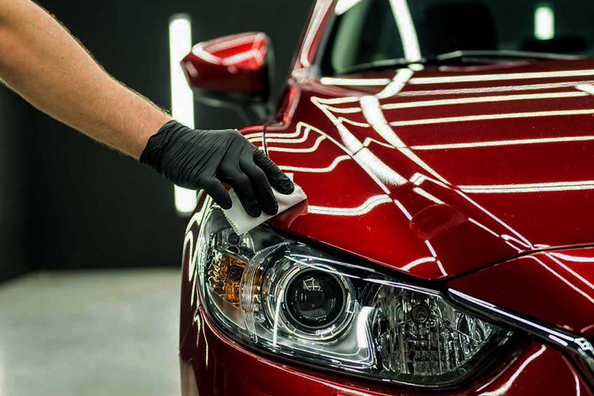

Keeping your car's paintwork in perfect condition is no easy task. Scratches, chips, chemicals and ultraviolet rays constantly threaten its appearance. Protective coatings come to the rescue. But what to choose: liquid glass or ceramics ? Let's figure it out. In addition, you can give your car expressiveness and presentability by using tuning accessories, which are available in a wide range in our online store.
Liquid glass is a silicon oxide-based polymer coating that creates a thin but strong film on the surface of the body.
Advantages of liquid glass:
The service life of liquid glass is usually from 6 to 12 months.
Ceramics (based on SiO2 and SiC) are a premium solution for body protection. They form a strong and hard layer on the surface, comparable in hardness to quartz.
Advantages of ceramics:
Ceramic coating requires professional surface preparation and application.
The choice depends on your goals and budget. If you need reliable but temporary protection with a great shine, liquid glass is your option. If you want maximum, long-term protection and are willing to invest, ceramics will be the perfect solution.
Shipping to EU
Wholesale and retail
Own warehouse
Опис продукту
Подарунки не надаються при оформленні покупки у кредит під 0,01% або при покупці частинами.