
































































 Author: Radomskyi Maksym Vasyliovych
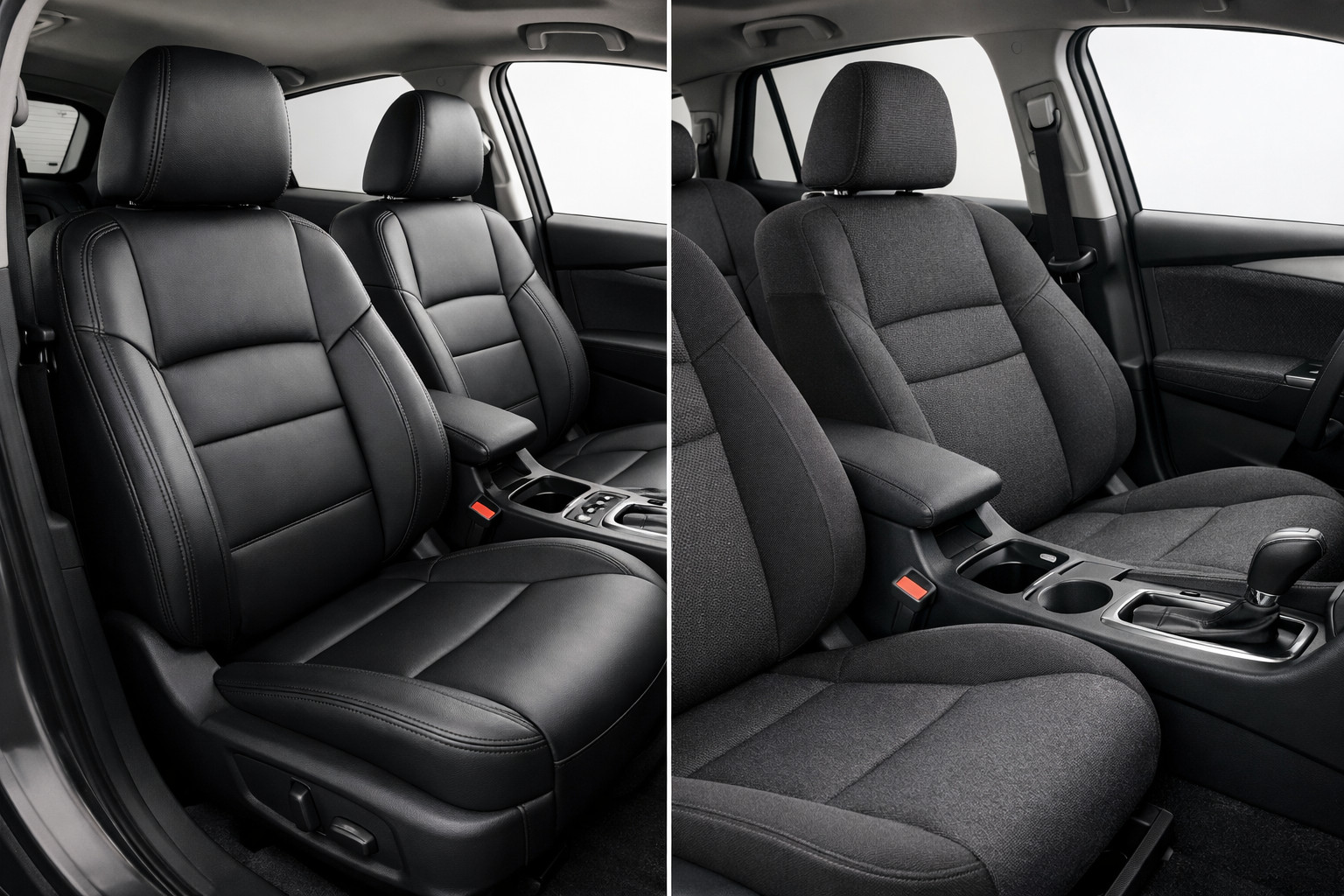
If you need a truly practical interior, in most cases quality fabric seat covers win: they breathe better, feel less sweaty in the heat, are more comfortable in winter, and are better suited for kids, pets, and work trips. Eco-leather makes sense when a neat look, quick wipe-downs, and the feel of a more premium cabin matter more.
The main mistake is reducing the choice to the material alone. The result is just as influenced by the precision of the pattern, compatibility with side airbags, backing thickness, the presence of perforation, and installation quality. So the right question is: which option will best withstand your specific use case.
What the choice is really about
Eco-leather and fabric solve different tasks. Eco-leather is convenient where the cabin often needs to be tidied up quickly: wiping off dust, clothing marks, water drops, or dirt after short city trips. Fabric is stronger where people sit in the car for a long time, the car stands in the sun, and the interior gets daily wear from kids, bags, tools, or animals.
For a practical interior, what usually matters most isn’t shine or visual effect, but surface temperature, everyday usability, wear resistance, and how the cover behaves after a few seasons. That’s why good fabric often turns out to be a smarter choice than cheap smooth eco-leather.
What criteria to compare by
- Installation and fit. The more precise the pattern for a specific seat, the fewer wrinkles, shifts, and risks of covering factory seams or seat functions.
- Noise and cabin feel. Fabric dampens small sound reflections better, while smooth eco-leather usually feels stiffer and can be slightly noisier.
- Lifespan. Durability depends not on the material name, but on its grade, density, backing, and sewing quality. Practical fabric lines often last longer than budget eco-leather.
- Practicality. Eco-leather keeps liquids on the surface better, but fabric often handles daily contact with the body and clothing better.
- Price. Look not only at the purchase, but also care, cleaning frequency, the risk of quick replacement, and loss of comfort.
- Compatibility with equipment. If there are side airbags, heating, or ventilation, the cover must be designed specifically for that.
Quick comparison of options (table)
| Option | Strengths | Weaknesses | Who it’s for |
|---|---|---|---|
| Eco-leather | Easy to wipe clean, looks neat, holds accidental liquids on the surface well | Heats up more in the sun, feels colder in winter, breathes worse without perforation | Those who want a tidy interior and quick cleanup without frequent washing |
| Fabric seat covers | Breathe better, more comfortable in heat and frost, often quieter and nicer for daily use | Absorb moisture, odors, and dirt faster; require washing or deeper cleaning | Family cars, work vehicles, long trips, transporting pets and gear |
DD Tuning expert comment: Most often, people make a mistake when they buy a material based on photos instead of their usage scenario. Cheap smooth eco-leather without perforation often disappoints in summer, and a universal kit—even from good fabric—can shift and fit poorly on contoured seats. If the car has side airbags, heating, or ventilation, an exact pattern is more important than a loud material name.
Detailed breakdown of each option
Eco-leather
In automotive products, eco-leather usually means a synthetic material on a textile backing. Its strong point is everyday convenience: dirt doesn’t soak in as quickly, the surface is easy to wipe, and the interior looks put-together. For a company car, city car, or executive vehicle, this is a solid plus.
But in practical use there are nuances. Smooth eco-leather without perforation removes heat and moisture worse, so it’s less comfortable to sit on in hot weather. In winter it more often feels cold at the start of a trip. If the set is thick or installed poorly, the seat heater may feel slower. The most sensible eco-leather format is a model-specific pattern, soft backing, reasonable thickness, and well-thought-out compatibility with seat safety features.
Fabric seat covers
Fabric isn’t one material but a whole group of solutions: from softer everyday options to dense, wear-resistant ones. Its main advantage is real-life comfort. These covers breathe better, feel less sweaty, depend less on cabin temperature, and are usually more pleasant on long trips.
Another underrated advantage is acoustic comfort. Textile surfaces absorb sound better, so the cabin feels calmer. The downside is also obvious: fabric more often accumulates stains, salt, odors, and moisture. If the car is used in dirty conditions, you either need a dense practical fabric with a water-repellent treatment, or be ready for regular washing.
Which option is better for different scenarios
If the car is a family vehicle, often stands in the sun, and you drive with kids or a dog, the advantage is usually on the side of quality fabric. It forgives long trips, is less irritating in the heat, and doesn’t create a sticky surface feel. For work vehicles, this is also often the better path, especially if you need extra wear resistance.
Eco-leather wins where the interior needs to look clean quickly: taxi, office car, a vehicle for short daily routes where ease of care matters. But even here it’s worth avoiding the cheapest smooth kits. If you choose eco-leather, go for a proper fit, ideally with perforation, and with no compromises on safety.
When the car has heated or ventilated seats, both materials can work fine—but only with the right pattern and moderate thickness. In other words, the question again comes down not only to the material, but to the specific execution.
Usage scenario and what to choose (table)
| Scenario | Best choice | Why |
|---|---|---|
| Family car for everyday use | Fabric seat covers | More comfortable in terms of temperature, practical on long trips, less sweaty |
| Work vehicle, tools, dirty clothing | Dense practical fabric | Handles constant friction and load better, less critical in heat |
| City sedan or company car | Eco-leather | Quick to wipe down and keeps a neat look longer between cleanings |
| Car that often sits in the sun | Fabric or perforated eco-leather | Smooth eco-leather is most often the least comfortable in this mode |
| Trips with a dog or children’s items | High-strength fabric | Better for constant load and contact with claws, belts, bags |
| Car with seat heating and complex seat contours | Any material, but only a model-specific pattern | Precise fit matters more here than surface type |
Common mistakes when choosing
- Buying a universal kit instead of an exact pattern. This is what causes wrinkles, misalignment, and fast wear along the edges.
- Not checking compatibility with side airbags. On seats with such airbags, this isn’t a minor detail but a must.
- Choosing eco-leather only for the looks. Without considering heat, mileage, and trip duration, it may turn out uncomfortable.
- Ignoring maintenance. Fabric needs washing or cleaning; eco-leather needs regular wiping and should not be dried out with aggressive chemicals.
- Not considering cover thickness. Layers that are too bulky can transmit heat from the seat heater worse and distort the fit.
- Confusing practicality with cheapness. The cheapest kit is rarely the most cost-effective over long-term use.
When a more expensive solution makes sense
A more expensive kit is justified when you’re installing covers not for a season, but as long-term interior protection. In that case, it makes sense to look right away at model-specific car seat covers, where fit, seams, and cutouts for seat functions are usually thought out better.
If you’re unsure whether you need full seat coverage, it’s worth separately comparing covers with seat protectors. For some, the more expensive solution proves justified only for the front seats, not the whole cabin.
Another case where you shouldn’t save is a demanding use scenario: sun, kids, pets, frequent getting in and out. Before buying, it’s useful to check out a separate comparison of covers and seat protectors so you don’t overpay for a format that doesn’t suit you.
From a customer’s experience: the owner of a family crossover initially wanted eco-leather for easy cleaning, but the car was parked in the sun every day and kids rode in the back constantly. In the end, they chose dense fabric seat covers with a practical coating and a model-specific pattern for the seats. The result was appreciated specifically for comfort in the heat and because the interior didn’t look tired after a few months of active use.
Conclusion
If we’re talking specifically about a practical interior, quality fabric seat covers most often win: they’re more comfortable temperature-wise, calmer in everyday use, and better suited to family and work scenarios. Eco-leather is appropriate when quick wipe-downs, a neat look, and the feel of a more premium cabin matter more—but it’s worth choosing only in a well-made version.
The key takeaway is simple: compare not only the material, but also the pattern, safety, compatibility with seat functions, and your real operating conditions. This article is based on real selection experience, hands-on practice, and real usage scenarios, so the main guideline here isn’t fashion, but what’s truly convenient for you.
How it works
- Assess your usage scenario First, determine exactly how you use the car: family trips, work routes, taxis, transporting pets, or long parking in the sun. For a practical interior, this matters more than the appearance of the material.
- Compare eco-leather and fabric for comfort Eco-leather is convenient when you need a neat look and quick wiping, but it handles heat worse and can feel cold in winter. Fabric covers breathe better, trap less heat, and are usually more comfortable for everyday use.
- Check compatibility with the seats and safety Before buying, be sure to find out whether the car has side airbags, seat heating, or ventilation. The cover must be made for these functions and preferably have a precise cut so it does not block the factory seat elements.
- Evaluate the cut quality, thickness, and installation Do not choose a set based only on the material or photos. Precise fit, padding thickness, perforation in eco-leather, and proper installation without wrinkles or shifting are important.
- Choose an option for your driving conditions For a family car, trips with children, pets, or work, dense practical fabric is often the better choice. Eco-leather is better suited to a city or company car, where quick cleaning and a neat appearance are the priority.
- Do not save on the weakest point The cheapest universal sets often disappoint quickly because of poor fit, overheating, or wear. If you are buying covers for a long time, it is better to look right away at model-specific solutions with proper care and normal compatibility with the interior.
Pros and cons
Fabric covers breathe better and are less stuffy in hot weather, so they feel more comfortable for everyday use. They are also usually nicer in winter, when the cabin is still cold.
For a family car, trips with children, pets or cargo, fabric seems more practical. It handles long-term use better and does not create a sticky surface feel.
Eco-leather is easy to wipe clean, so it is convenient to keep looking neat between cleanings. This is useful for city routes, taxis or company cars.
Eco-leather holds liquid on the surface better, so accidental drops or dirt can be removed faster. For a cabin that needs to be cleaned often and quickly, this is practical.
Fit quality and precise cutting are more important here than the material itself. A well-matched set fits the seats better, does not block seat functions and shifts less.
Smooth eco-leather without perforation removes heat and moisture worse, so it can be uncomfortable in hot weather. On long trips, this is felt more strongly than on short city routes.
In winter, eco-leather often feels colder at the start of a trip, and a thick or poorly installed cover may transfer heat from the seat heater more slowly.
Fabric covers absorb stains, odors, salt and moisture more often, so they need deeper washing or cleaning. For dirty operating conditions, this adds to maintenance.
A universal set without an exact cut may shift, wrinkle and wear out faster at the edges. This is especially noticeable on contoured seats or where there are side airbags.